Deep Learning Transformers Explained
Introduction to Deep Learning
The Brain of the Machine
At the heart of deep learning is the neural network, an idea inspired by the web of neurons in the human brain. Think of it not as a literal brain, but as a powerful system for finding patterns in data. It's made up of simple, interconnected processing units called neurons.
Neuron
noun
A computational unit in a neural network that receives input signals, processes them, and passes the result to other neurons. It's the fundamental building block of the network.
These neurons are organized into layers. The first layer is the input layer, which receives the raw data—like the pixels of an image or the words in a sentence. The last layer is the output layer, which produces the final result, such as identifying the image as a 'cat' or translating the sentence. In between are one or more hidden layers, where the real work of computation and pattern recognition happens. The 'deep' in deep learning simply means a network has many hidden layers.
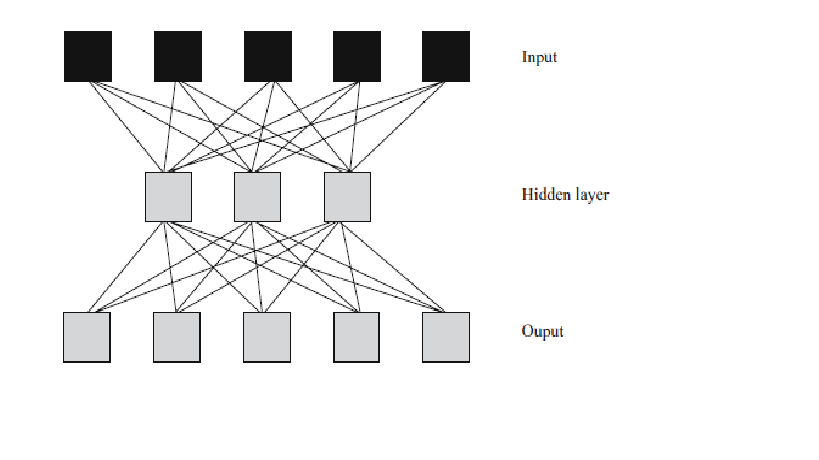
Each connection between neurons has a weight, which is just a number. This weight determines the strength of the signal passing through that connection. A high weight means the signal is important, while a low weight means it's less so. Neurons also have a bias, which is another number that can shift the neuron's output up or down. The network learns by adjusting these weights and biases.
Making the Switch
If neurons just passed weighted sums of their inputs along, a neural network would be nothing more than a complex linear equation. It couldn't learn complex patterns, like the difference between a dog and a cat. To handle this, each neuron uses an activation function.
An activation function acts like a switch or a dimmer. It takes the neuron's total input signal and decides what the output signal should be. This step introduces non-linearity, allowing the network to learn far more intricate relationships in the data.
Without activation functions, even a deep neural network would behave like a simple, single-layer model. They are the key to its power.
One of the classic activation functions is the sigmoid function. It squishes any input value into a range between 0 and 1. This is useful for outputs that represent a probability, like the chance that an email is spam.
While sigmoid is historically important, modern networks often use the Rectified Linear Unit, or ReLU. It's simpler and often works better. ReLU's rule is straightforward: if the input is positive, the output is the same as the input. If the input is negative, the output is zero. This simple function helps networks learn faster.
Learning from Mistakes
So how does a network actually learn? It starts by making a guess. For a given input, it passes the data through its layers of neurons and produces an output. Initially, this output is random and almost certainly wrong.
The network then compares its guess to the correct answer using a loss function, which calculates a score for how wrong the guess was. A high loss means a big mistake; a low loss means it was close. The goal of training is to minimize this loss.
This is where backpropagation comes in. It's the algorithm that tells the network how to adjust its internal weights and biases to reduce the loss.
Think of it like a game of 'hot or cold' played by thousands of people at once. The loss function tells the network how 'cold' it is. Backpropagation is the process of figuring out which specific weight or bias in the entire network needs to be turned up or down to get 'warmer'.
It does this by calculating the gradient of the loss function. The gradient points in the direction of the steepest increase in error. To reduce the error, the network adjusts its weights in the opposite direction. This process, called gradient descent, is repeated thousands or millions of times with many examples, until the network's predictions are consistently accurate.
Through this cycle of guessing, measuring error, and adjusting itself, the neural network slowly fine-tunes its millions of parameters, gradually transforming from a random system into a sophisticated pattern-recognition machine.
What is the primary role of the hidden layers in a neural network?
The term 'deep' in 'deep learning' specifically refers to a neural network having...