Deep Learning Fundamentals
Introduction to Deep Learning
What is Deep Learning?
Deep learning is a powerful type of machine learning that teaches computers to learn by example, much like we do. Instead of being explicitly programmed with rules, a deep learning model learns to recognize patterns from large amounts of data, like images, sounds, or text. It's the technology behind things like voice assistants, recommendation engines, and self-driving cars.
Think of it this way: traditional machine learning requires a lot of guidance from a human to understand what features of the data are important. Deep learning figures out those important features on its own.
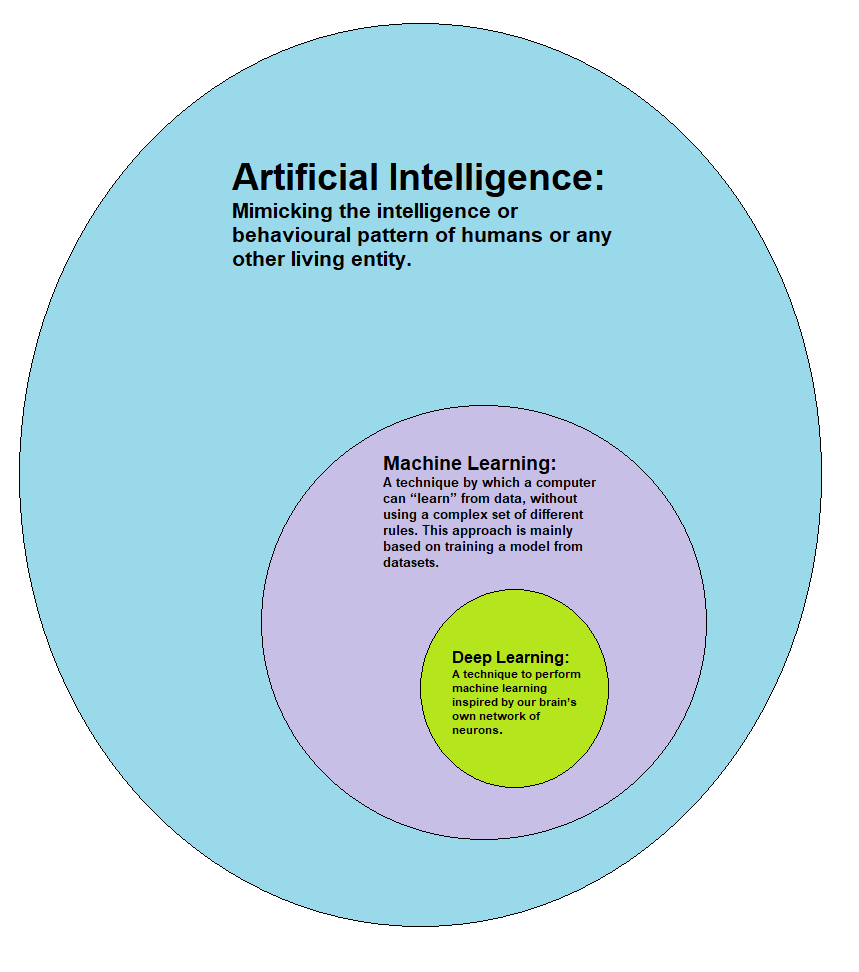
This ability to learn automatically comes from its structure, which is inspired by the human brain. Deep learning uses complex, multi-layered structures called artificial neural networks. The “deep” in deep learning refers to the many layers in these networks. Traditional machine learning models are typically “shallower,” meaning they don't have this layered complexity.
Inside a Neural Network
An artificial neural network is made up of interconnected nodes, or “neurons,” organized into layers. There are three main types of layers:
- Input Layer: This is the network's front door. It receives the initial data, like the pixels of an image or the words in a sentence.
- Hidden Layers: These are the intermediate layers between the input and output. This is where most of the computation happens. Each hidden layer learns to detect increasingly complex features from the data passed on by the previous layer.
- Output Layer: This is the final layer. It produces the result, such as identifying an object in an image or predicting the next word in a sentence.
Each neuron receives inputs from neurons in the previous layer. It performs a simple calculation on these inputs and then uses something called an activation function to decide what signal to send to the next layer. It's this process, repeated across thousands or even millions of neurons, that allows the network to learn complex patterns.
Activation Function
noun
A mathematical function inside a neuron that determines its output. It introduces non-linear properties, allowing the network to learn more complex relationships in the data.
An activation function essentially acts as a gatekeeper, deciding whether a neuron “fires” and passes information along. A simple example is the Rectified Linear Unit (ReLU), which outputs the input directly if it's positive, and outputs zero otherwise.
A Brief History
The core ideas behind neural networks have been around since the 1940s and 50s. The first trainable neural network, the Perceptron, was invented in 1958. However, for decades, these models were limited by a lack of data and computing power. They could only solve very simple problems.
Things changed dramatically in the 2010s. The explosion of the internet created massive datasets, and the development of powerful graphics processing units (GPUs) provided the computational muscle needed to train much larger, “deeper” networks. This combination of big data and powerful hardware kicked off the modern deep learning revolution, leading to breakthroughs in image recognition, natural language processing, and many other fields.
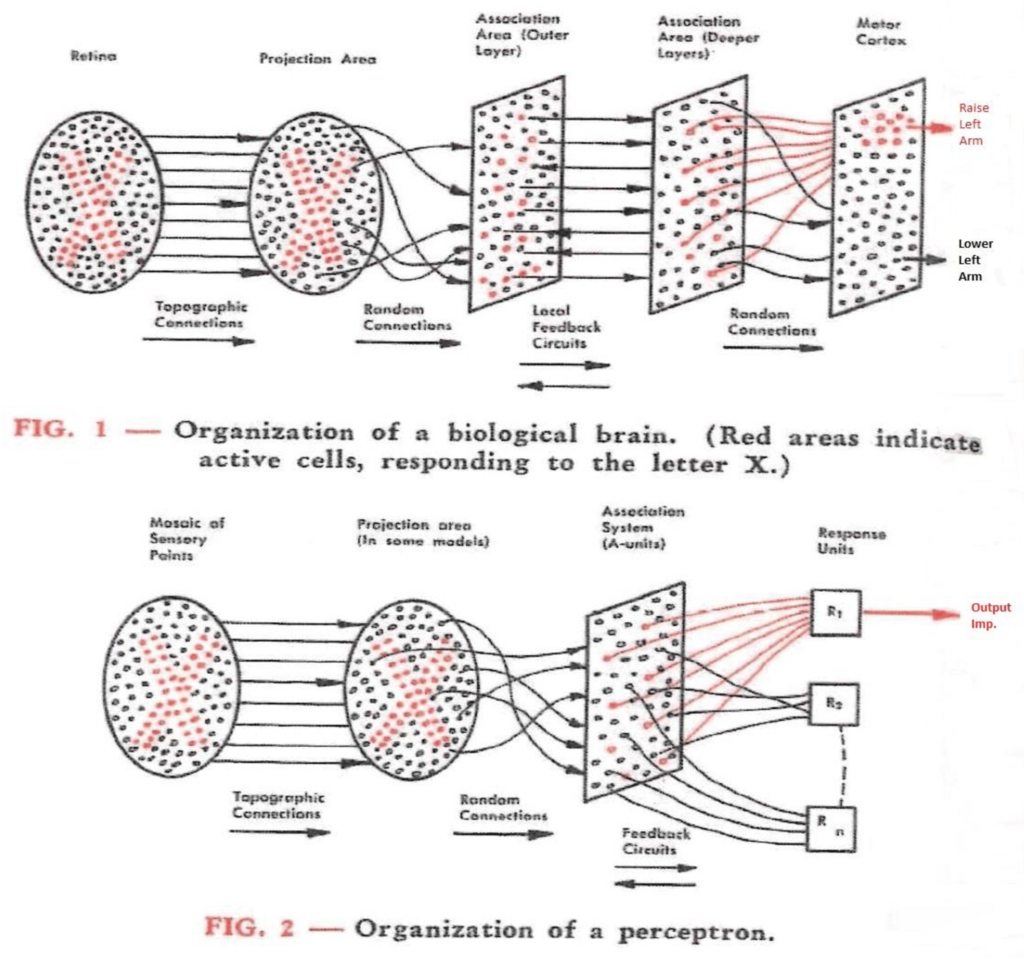
Today, deep learning is a driving force in technology, impacting everything from healthcare and finance to entertainment and scientific research.
Let's check your understanding of these foundational ideas.
What is the primary characteristic that distinguishes deep learning from traditional machine learning?
In an artificial neural network, what is the main function of the hidden layers?
Now you have a grasp of what deep learning is and the basic components that make it work. Next, we'll explore how these networks actually learn from data.