Deep Learning Fundamentals Explained
Introduction to Deep Learning
The Layers of Intelligence
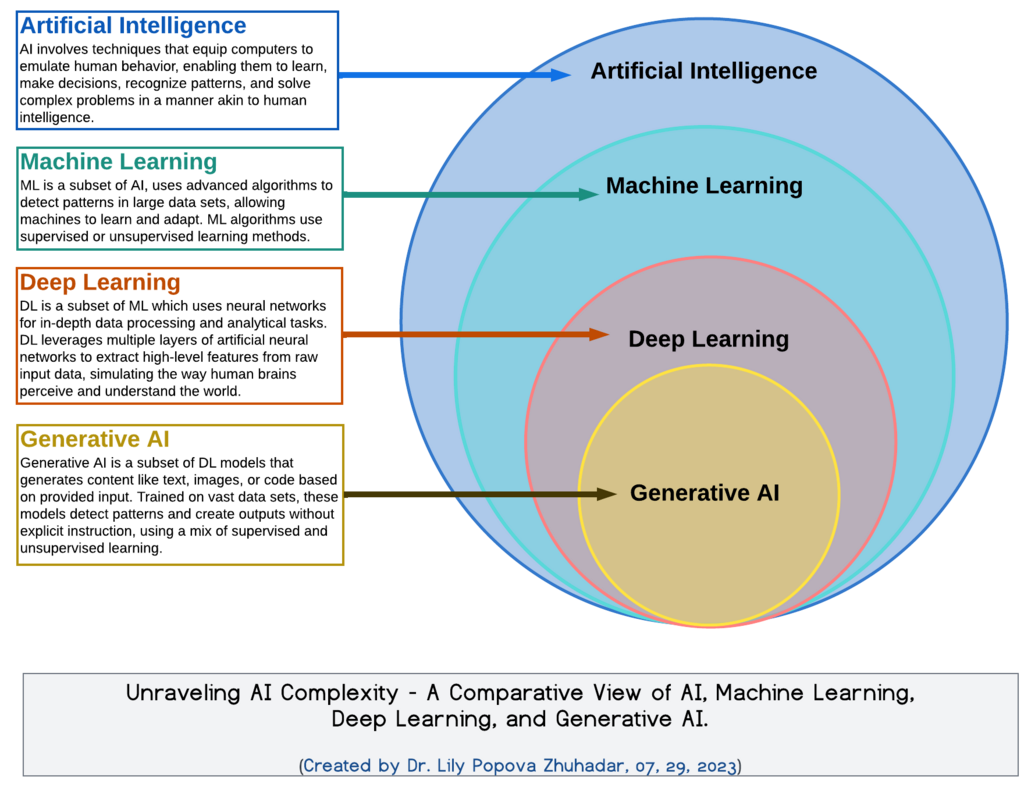
Deep learning is a powerful type of artificial intelligence that has revolutionized how computers interact with the world. But to understand it, we first need to place it in context. Artificial Intelligence (AI) is the broad idea of making machines smart. Within AI, there's a field called Machine Learning (ML), which focuses on teaching computers to learn from data without being explicitly programmed. Deep learning is a specialized subfield of machine learning.
Think of it like this: AI is the entire field of robotics. Machine learning is a specific type of robot that can learn new tasks. Deep learning is a very advanced learning robot that teaches itself by observing the world around it.
The “deep” in deep learning refers to the structure of its models, which are made of many layers. These layers work together to analyze data in increasing levels of complexity and abstraction. An initial layer might detect simple things like edges or colors in an image. The next layer might combine those edges to recognize shapes like eyes or noses. A later layer might combine those shapes to recognize a face. This layered approach allows deep learning to tackle incredibly complex patterns.
From Brains to Circuits
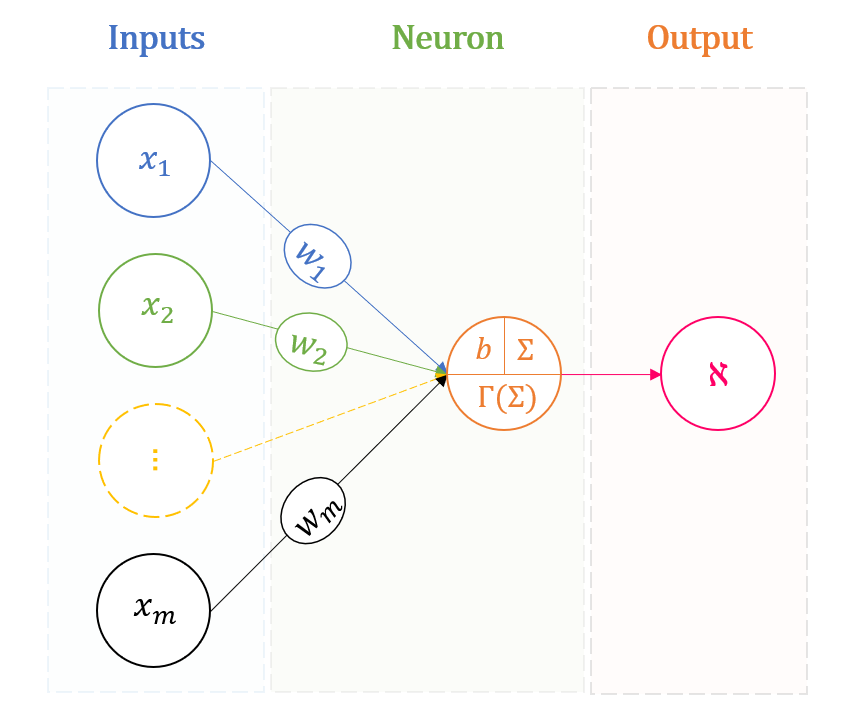
The core idea behind deep learning isn't new. It was inspired by the human brain. Our brains are made of billions of interconnected cells called neurons. When we learn, the connections between these neurons strengthen or weaken. Early AI researchers in the 1940s and 50s wondered if they could create a simplified, mathematical version of this process.
neuron
noun
A nerve cell that is the basic building block of the nervous system. In AI, an artificial neuron is a mathematical function that processes inputs and produces an output.
This led to the creation of artificial neural networks, which are networks of these simple artificial neurons. For decades, however, these networks were limited. They could only handle simple problems, and the computing power and data needed to train large, “deep” networks just didn't exist. This period of slow progress was known as an “AI winter.”
Everything changed in the 2010s. Two key ingredients became widely available: massive amounts of data from the internet, and powerful processors (like those used for video games) that were perfect for the kind of math neural networks require. A breakthrough came in 2012 when a deep neural network named AlexNet dramatically outperformed all other models in a major image recognition competition. The AI winter was over, and the deep learning revolution had begun.
Learning on Its Own
So what makes deep learning different from older machine learning techniques? The main difference is a process called feature extraction.
In traditional machine learning, a human expert has to carefully analyze the data and tell the computer what features to look for. To build a program to identify cats in photos, you might tell it to look for features like “has pointy ears,” “has whiskers,” and “has a tail.” This manual process, called feature engineering, is time-consuming and relies heavily on human expertise.
Deep learning automates this. You don't tell the model what a cat's features are. You simply show it thousands of labeled cat photos, and the deep neural network learns the important features on its own. Its layered structure allows it to build up a complex understanding of what makes a cat a cat, from the simplest pixels to the abstract concept of “cattiness.”
This ability to learn from raw data makes deep learning incredibly versatile. It's the technology behind self-driving cars recognizing pedestrians, voice assistants understanding your commands, and streaming services recommending your next favorite show. It excels at problems involving perception, like sight and sound, where the patterns are too complex for humans to define manually.
Which statement accurately describes the relationship between Artificial Intelligence (AI), Machine Learning (ML), and Deep Learning?
The main advantage of deep learning over traditional machine learning is its ability to perform automatic ______.
Deep learning has moved from a niche academic concept to a core driver of modern technology by building on a simple, brain-inspired idea and scaling it with data and computing power.