Deep Learning Fundamentals and Applications
Neural Network Basics
The Building Blocks
A neural network is built from simple units called neurons, which are organized into layers. Think of a single neuron as a small decision-maker. It receives several inputs, decides how important each one is, and then makes a choice about what signal to send forward.
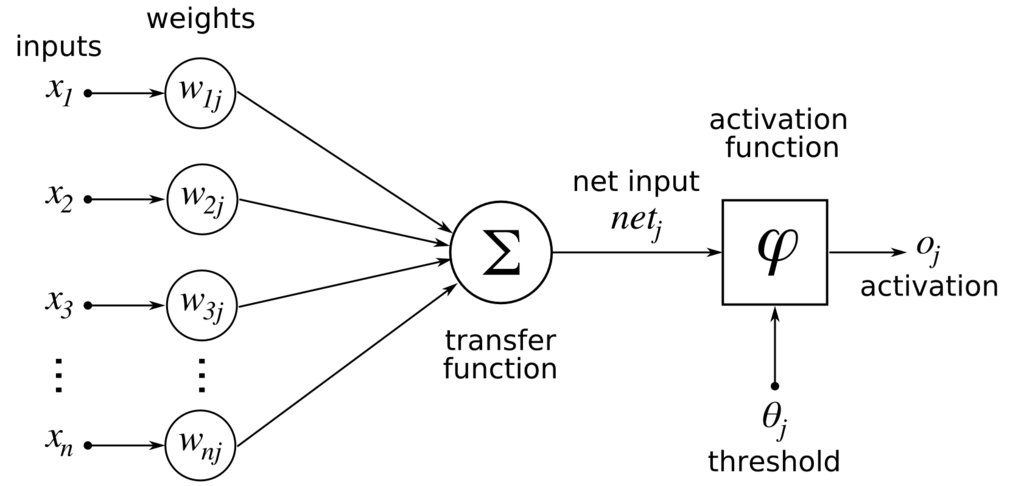
Each input connection has a weight, which is just a number that represents its importance. A higher weight means the neuron pays more attention to that input. The neuron adds up all the weighted inputs and also adds a special value called a bias. The bias acts like a baseline threshold, making it easier or harder for the neuron to activate.
Finally, this combined signal passes through an activation function. This function determines the neuron's final output. It could be a simple "yes" or "no" decision, or a more nuanced value.
So, a neuron's job is to take in information, weigh its importance, and pass a signal to the next part of the network.
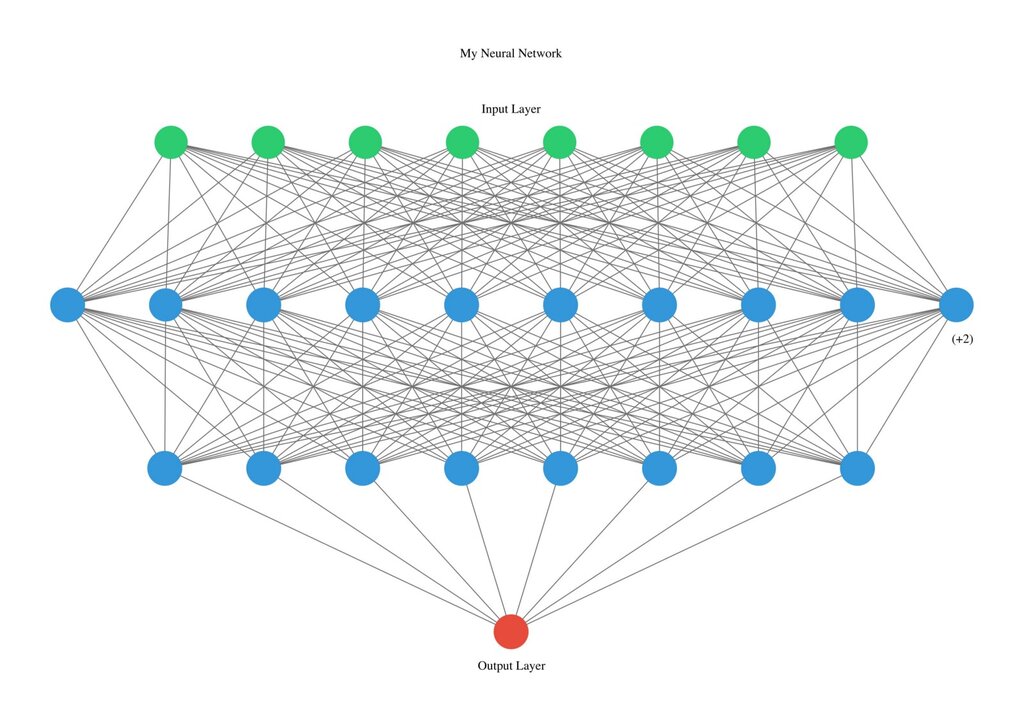
These neurons are stacked into layers. A typical network has three types of layers:
- Input Layer: This is the front door. It receives the initial data, like the pixels of an image or the words in a sentence.
- Hidden Layers: These are the middle layers where the real work happens. A network can have many hidden layers, and they are responsible for finding patterns and features in the data.
- Output Layer: This is the final layer. It produces the network's prediction, such as classifying an image as "cat" or "dog".
Making a Guess
When you give a neural network some data, it makes a prediction through a process called forward propagation. This is just a fancy term for the data flowing forward through the network, from the input layer to the output layer.
Let's trace the path. The input data is fed to the first layer. Each neuron in this layer takes the inputs, multiplies them by their weights, adds the bias, and applies its activation function. The outputs from this layer then become the inputs for the next layer. This continues, layer by layer, until the final output layer produces a result. That result is the network's guess.
Each neuron in a layer performs this calculation, and their collective outputs ripple forward, carrying information through the network until a final prediction is made.
Learning from Mistakes
A brand new neural network is clueless. Its initial weights and biases are random, so its first guesses will be completely wrong. The key is to teach it how to get better. This learning process is called backpropagation.
After the network makes a guess (forward propagation), we compare its output to the correct answer. The difference between the guess and the truth is the error. Backpropagation is the process of using this error to adjust the network's weights and biases.
Backpropagation is how the network learns — by tweaking each layer's weights based on the output error.
The process works backward, starting from the output layer. The network calculates how much each weight and bias contributed to the final error. The weights that were most responsible for the mistake are changed the most. This adjustment is guided by a mathematical technique that finds the direction to tweak the weights to reduce the error.
This cycle of forward propagation and backpropagation is repeated thousands or even millions of times with different data. With each cycle, the network's weights are fine-tuned, and its predictions become more and more accurate. It slowly learns the underlying patterns in the data, just like a person learns from practice and feedback.
With these core concepts, neurons, layers, forward propagation, and backpropagation, you now understand the essential mechanics of how neural networks operate and learn.