Deep Learning Fundamentals and Applications
Introduction to Deep Learning
What is Deep Learning?
Deep learning is a specific kind of machine learning that uses structures inspired by the human brain, called artificial neural networks. The key idea is in the name: "deep." These networks have many layers, allowing them to learn complex patterns from vast amounts of data.
Think of it like an assembly line. The first layer learns to spot very simple features, like edges or colors in an image. It passes its findings to the next layer, which combines these simple features into more complex ones, like eyes or a nose. This continues through many layers, until the final layer can recognize a complete face.
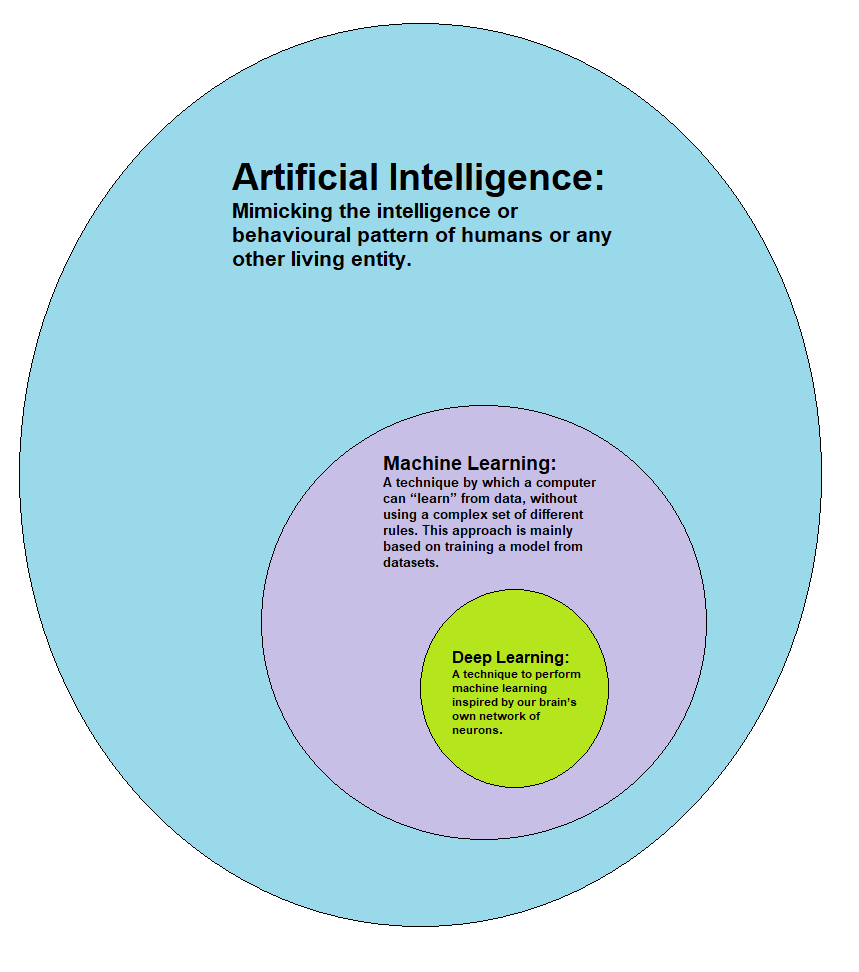
This layered approach makes deep learning incredibly powerful for tasks that are intuitive for humans but difficult for traditional computers, such as understanding speech, identifying objects in photos, or translating languages. It's a subfield of machine learning, which itself is a part of the broader field of artificial intelligence.
The Brain of the Machine
The core of deep learning is the artificial neural network (ANN). Just like the brain has neurons, an ANN has nodes. These nodes are organized into layers: an input layer, one or more hidden layers, and an output layer.
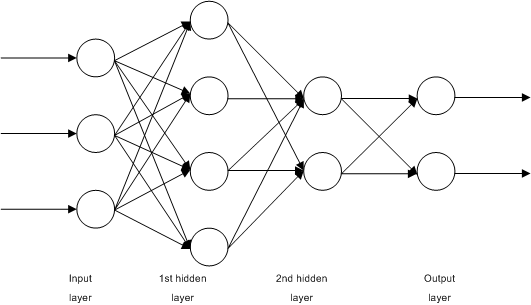
Each node, or artificial neuron, is a simple computational unit. It receives inputs from other nodes, performs a calculation, and then passes the result to nodes in the next layer. The inputs are numerical, and each connection between nodes has a weight, which represents the strength of the connection. The neuron sums up all the weighted inputs it receives.
But a neuron doesn't just pass this sum along. It first runs the sum through an activation function. This function acts like a gatekeeper, deciding how much of the signal gets passed on. It introduces non-linearity, which is just a fancy way of saying it allows the network to learn much more complex relationships than simple straight lines. Without activation functions, a deep neural network would just be a complicated linear equation.
The Power of Approximation
Why are neural networks so effective? A concept called the Universal Approximation Theorem gives us a clue. It states that a neural network with just one hidden layer can, in theory, approximate any continuous function.
This is a powerful idea. It means that, given enough neurons, a neural network can learn to model almost any relationship between inputs and outputs. Think of it like having a universal set of building blocks. With enough of them, you can build a sculpture that looks like anything you can imagine. The network adjusts the weights of its connections to "sculpt" the right function from the data.
Preparing for Learning
A deep learning model is only as good as the data it learns from. Before we can train a network, we need to prepare the data through a process called data preprocessing. This ensures the data is in a clean, consistent format that the network can understand easily.
One common step is normalization, where we scale all numerical data to a specific range, like 0 to 1. This prevents features with large values (like salary) from overpowering features with small values (like years of experience). Another step is handling missing values, which might involve filling them in or removing the incomplete data.
Once the data is ready, how does the model actually learn? It needs a way to measure how wrong its predictions are. This is the job of the loss function.
A loss function calculates the difference between the model's prediction and the actual, correct answer. The result is a single number, called the "loss" or "error." A high loss means the model is making big mistakes; a low loss means it's doing well.
The entire goal of training is to adjust the network's weights and biases to make the value from the loss function as small as possible. The model makes a guess, calculates its error, and then tweaks its internal connections to make a slightly better guess next time. It repeats this process millions of times, gradually getting better and better at its task.
What is the key characteristic that distinguishes deep learning from other types of machine learning?
The primary goal of training a deep learning model is to maximize the value of the loss function.