Deep Learning Fundamentals
Introduction to Deep Learning
What Is Deep Learning?
Deep learning is a specific type of machine learning that uses multi-layered artificial neural networks to find complex patterns in data. Think of it as a subfield of machine learning, which itself is a subfield of artificial intelligence.
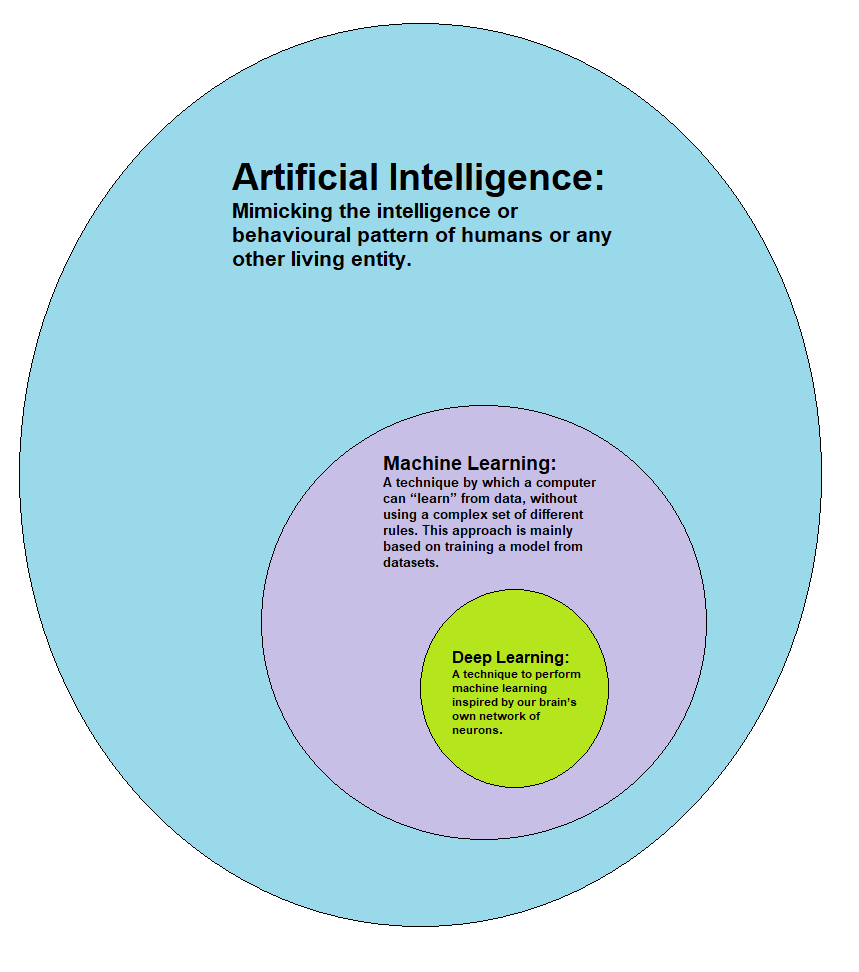
The “deep” in deep learning refers to the depth of these networks—the number of layers through which data is transformed. Imagine a team of analysts working on a complex problem. The first analyst does a rough initial assessment and passes their findings to the next. That analyst builds on the first's work, finding more subtle details, and passes it on again. Each layer in a deep learning model does something similar, refining and processing information to identify features and patterns at different levels of abstraction. This layered approach allows deep learning models to tackle incredibly complex tasks, like recognizing objects in images, understanding human speech, or even driving a car.
The key significance of deep learning lies in its ability to automatically learn features from massive amounts of data, like images, text, and sound, without being explicitly programmed to do so.
A Quick Trip Through Time
While deep learning feels like a recent revolution, its core ideas have been around for decades. The concept of an artificial neuron was first proposed in the 1940s, leading to the creation of the Perceptron in the 1950s—a very simple, single-layer neural network.
For a long time, progress was slow. Researchers knew that networks with more layers could theoretically solve more complex problems, but they lacked the two key ingredients: massive datasets and powerful computers. This led to a period known as an "AI winter," where funding and interest in the field dwindled.
Things changed dramatically in the 2000s. The internet created a firehose of data, and the video game industry drove the development of powerful graphics processing units (GPUs). Researchers realized that GPUs, designed for parallel processing, were perfect for the kind of calculations neural networks required.
A major breakthrough came in 2012 when a deep neural network called AlexNet won a major image recognition competition by a huge margin. This event kicked off the modern era of deep learning, demonstrating its practical power and inspiring a wave of new research and applications.
The Brains of the Operation
At the heart of deep learning is the artificial neural network, a system loosely inspired by the structure of the human brain. These networks are made up of interconnected nodes, or "neurons," organized into layers.
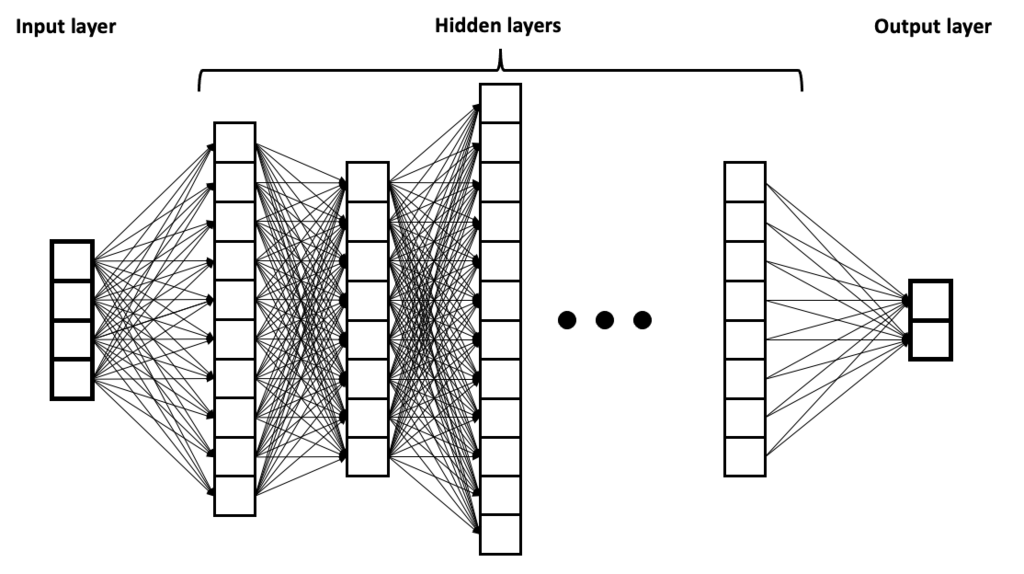
A typical neural network has three types of layers:
-
Input Layer: This is the network's front door. It receives the initial data, like the pixels of an image or the words in a sentence.
-
Hidden Layers: This is where the magic happens. A deep neural network has at least one hidden layer, but often many more. Each layer receives input from the previous one, performs calculations, and passes its results to the next. As data moves through, the network learns to identify increasingly complex features. For example, in image recognition, early layers might detect simple edges, while deeper layers recognize shapes, textures, and eventually whole objects.
-
Output Layer: This is the final layer that produces the result. It could be a classification (e.g., "cat" or "dog"), a number (e.g., the predicted price of a house), or generated text.
The network "learns" by adjusting the strength of the connections between neurons during a training process. By analyzing thousands or millions of examples, it gradually fine-tunes itself to make more accurate predictions.
Now that you have a high-level view of what deep learning is and where it came from, let's test your understanding.
Which statement accurately describes the relationship between Artificial Intelligence (AI), Machine Learning (ML), and Deep Learning (DL)?
What does the 'deep' in 'deep learning' refer to?
Understanding these core concepts provides the foundation for exploring the specific types of neural networks and how they power many of the AI applications we use every day.