Deep Learning Fundamentals
Introduction to Deep Learning
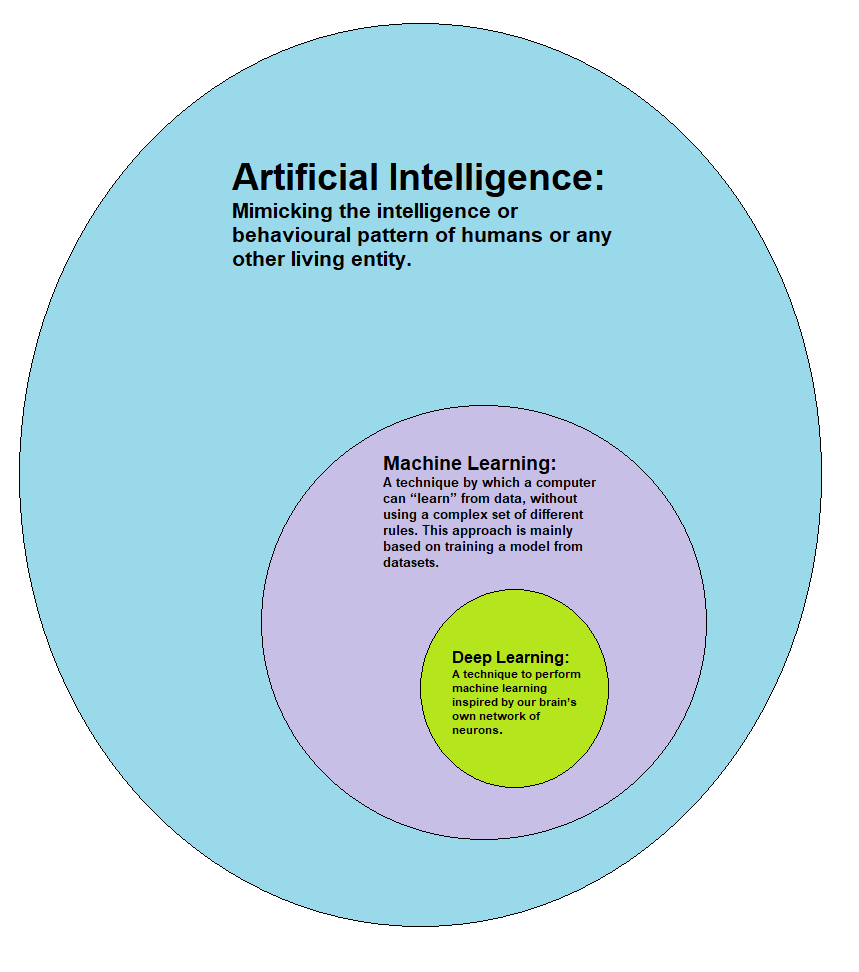
Going Deeper Than Machine Learning
Deep learning is a powerful type of machine learning that teaches computers to learn by example, much like we do. It's the technology behind self-driving cars recognizing pedestrians and voice assistants understanding your commands.
At its core, deep learning uses a structure called an artificial neural network, which is made up of many layers. The "deep" in deep learning refers to the depth of these layers. Think of it as a team of analysts. The first layer tackles the raw data and passes its findings to the next layer. This second layer analyzes the findings from the first, looks for more complex patterns, and passes its own conclusions to the third layer. This continues through many layers, with each one building on the work of the last to understand increasingly abstract concepts.
Learning Features Automatically
The biggest difference between deep learning and older, more traditional machine learning methods is how they handle features. A feature is a specific, measurable property of the data. For example, if you wanted to build a traditional model to identify spam emails, you might have to tell it what features to look for: the presence of certain words like "free" or "win," the use of all caps, or the sender's email address. This process, called feature engineering, requires a lot of human expertise and time.
Deep learning models, on the other hand, perform automatic feature extraction. You can feed a deep learning network the raw data, and it will figure out the important features on its own. For image recognition, the first layer of the network might learn to identify simple edges and colors. The next layer might combine those edges to recognize shapes like eyes and noses. Deeper layers would then combine those shapes to identify a face. The model learns the hierarchy of features all by itself, from the simplest components to the most complex ideas. This ability to learn from raw, unstructured data is what makes deep learning so effective for complex tasks involving images, text, and sound.
With traditional machine learning, an expert tells the computer what features matter. With deep learning, the computer figures out what features matter on its own.
Inspired by the Brain
The structure of these models is inspired by the human brain. Our brains are made of billions of neurons connected in a vast network. Each neuron receives signals, processes them, and passes a new signal along to other neurons. An artificial neural network is a simplified mathematical model of this biological process.
The basic unit is an artificial neuron, or node. It receives one or more inputs, performs a simple calculation, and produces an output. In a deep learning model, millions of these nodes are organized into layers, and the output of one layer becomes the input for the next. This layered structure allows the network to process information in a way that loosely mimics how the visual cortex in our brain processes images, starting with simple shapes and building up to complex objects.
This brain-inspired architecture is what allows deep learning to achieve remarkable results in a wide variety of fields. It's used for:
- Computer Vision: Identifying objects in photos and videos, powering facial recognition, and enabling medical image analysis.
- Natural Language Processing: Translating languages, powering chatbots and voice assistants, and analyzing sentiment in text.
- Recommendation Engines: Suggesting what you should watch, buy, or listen to next on platforms like Netflix, Amazon, and Spotify.
- Drug Discovery: Analyzing molecular structures to find promising new candidates for medicines.
These are just a few examples. As the models become more powerful and accessible, the applications of deep learning continue to grow.
What does the "deep" in "deep learning" primarily refer to?
What is the key advantage of deep learning over traditional machine learning regarding 'features'?
Deep learning represents a significant leap forward in artificial intelligence, allowing machines to learn from complex data in a way that was previously out of reach.