Deep Learning Fundamentals
Introduction to Deep Learning
What is Deep Learning?
Deep learning is a specific method within the broader field of machine learning. Think of it like this: Artificial Intelligence (AI) is the entire field of making machines smart. Machine Learning (ML) is one way to achieve AI, by training computers on data instead of programming them with explicit rules. Deep learning is a powerful technique within ML that uses structures inspired by the human brain.
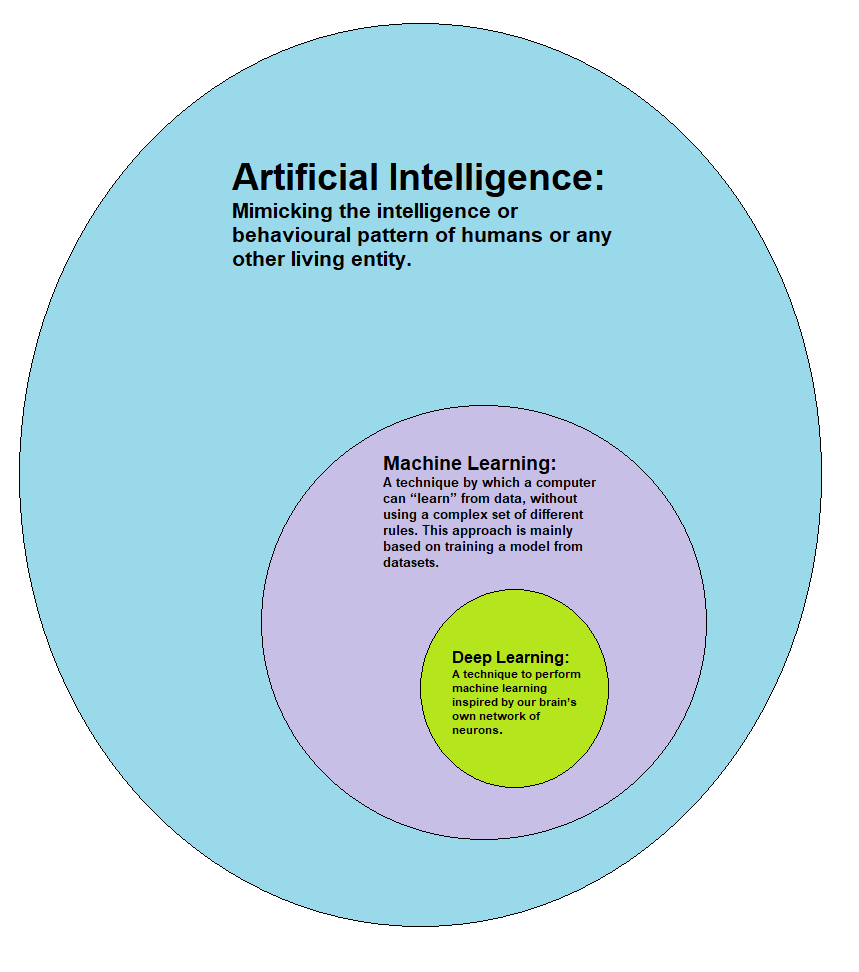
The key idea is depth. While traditional machine learning models might have a simple structure, deep learning models use complex, multi-layered networks called neural networks. Each layer learns to identify progressively more intricate features in the data. For an image of a cat, the first layer might spot simple edges, the next might recognize shapes like ears or eyes, and a deeper layer could combine those features to identify a complete cat.
Inspired by the Brain
The building blocks of deep learning are artificial neural networks. These are computational models loosely based on the networks of neurons in our own brains. A basic neural network consists of an input layer, one or more hidden layers, and an output layer.
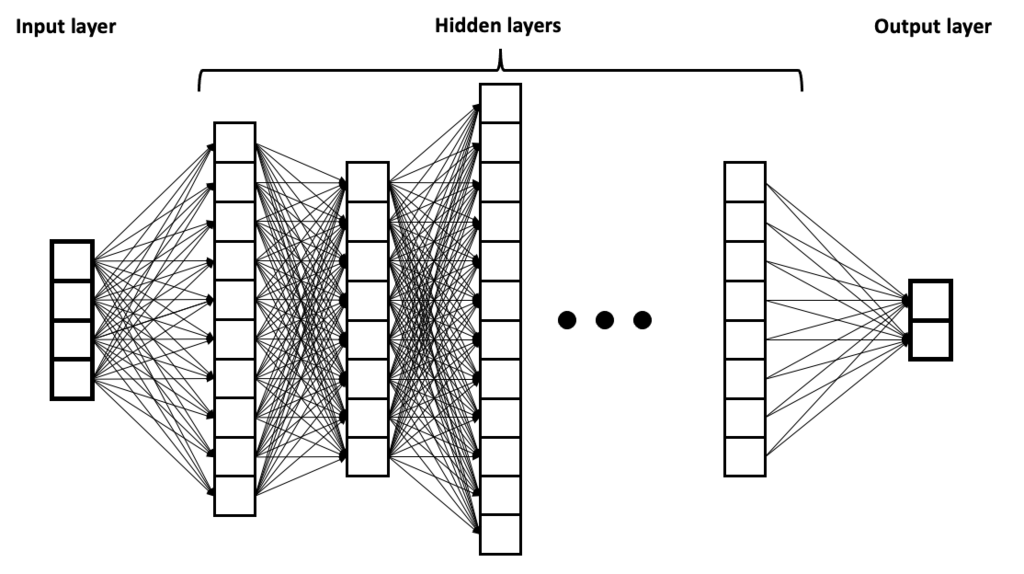
Data is fed into the input layer. Each “neuron” in the hidden layers processes the information from the previous layer and passes its result to the next. It's in these hidden layers where the magic happens. The "deep" in deep learning refers to having many of these hidden layers, allowing the network to learn very complex patterns and representations from the data on its own.
More layers allow the network to learn more complex features, moving from simple concepts like lines and colors to abstract ideas like 'face' or 'tree'.
A Brief History
The concepts behind neural networks have been around since the 1940s. However, for decades, they remained a niche area of research. Training deep networks was computationally very expensive, and there wasn't enough data to make them effective. This period was known as an "AI winter," where progress and funding slowed down.
Everything changed in the 2010s. Two key developments pushed deep learning into the spotlight: the availability of massive datasets (Big Data) and the rise of powerful, parallel processors (like GPUs used in gaming). Suddenly, it became possible to train very deep neural networks on huge amounts of data, leading to breakthroughs that surpassed human performance in certain tasks for the first time.
Deep Learning in the Wild
Deep learning is no longer a futuristic concept; it's a part of our daily lives. Here are just a few examples:
- Image Recognition: When you upload a photo to social media and it automatically suggests tags for your friends, that's deep learning at work.
- Natural Language Processing (NLP): Virtual assistants like Siri and Alexa use deep learning to understand and respond to your voice commands. Real-time translation apps also rely on it.
- Self-Driving Cars: Autonomous vehicles use deep learning to identify pedestrians, traffic lights, and other cars to navigate safely.
- Healthcare: It's used to analyze medical images like X-rays and MRIs to help doctors detect diseases like cancer earlier and more accurately.
Deep learning is pivotal for tasks such as computer vision, natural language processing, and more due to its capabilities in managing high volumes of high-dimensional data, automatic feature representation learning, and superior performance in comparison to traditional ML methods when aided by sufficient data and computational resources.
Ready to check your understanding of these core concepts?
What is the relationship between Artificial Intelligence (AI), Machine Learning (ML), and Deep Learning?
The "deep" in deep learning refers to:
Deep learning's ability to learn complex patterns directly from data has unlocked new possibilities across countless industries, marking a significant step forward in the field of artificial intelligence.