Deep Learning for Object Detection Explained
Introduction to Object Detection
What is Object Detection?
Object detection is a field of computer vision that teaches computers to see the world like humans do. It's not just about recognizing what's in an image, but also pinpointing where it is.
Think about the difference between saying "This is a picture of a dog" and "There is a dog in the top left corner of this picture." The first is called image classification. The second, which involves identifying the object and its location, is object detection. To specify the location, models draw a bounding box around each object they find.
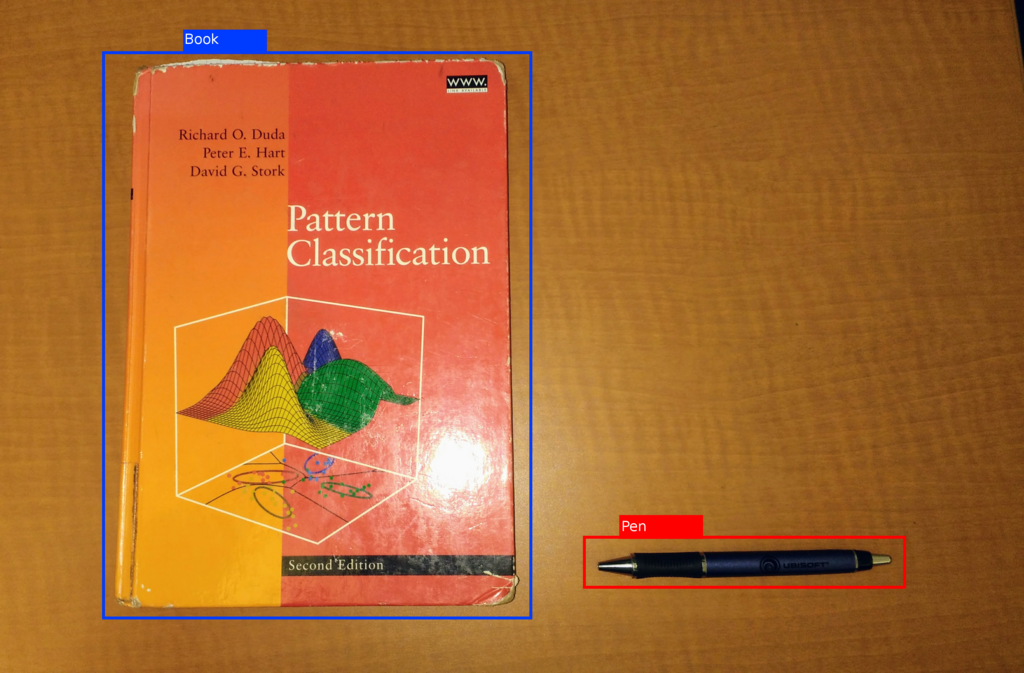
This ability to both classify and locate is incredibly powerful. It allows machines to interact with the physical world in a more meaningful way, from helping self-driving cars navigate streets to enabling automated checkout at grocery stores.
A Brief History
Early approaches to object detection were meticulous and manual. Programmers had to hand-craft features, which are specific patterns like edges, corners, or colors. They would design algorithms to look for these specific features to identify objects. For example, to find a stop sign, they might tell the program to look for a red octagon. This worked for simple cases but was brittle; it would fail if the lighting changed or the sign was viewed from an angle.
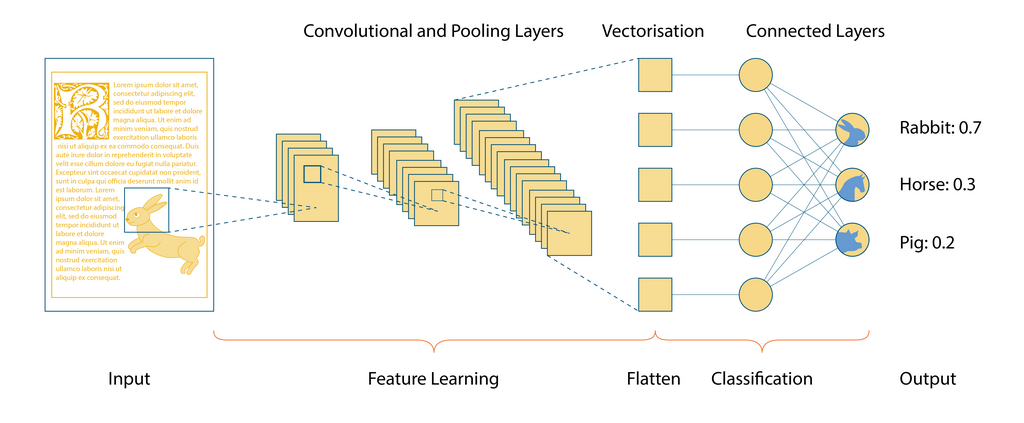
Everything changed with the rise of deep learning. Instead of being explicitly programmed, modern systems learn to recognize objects from vast amounts of example images. These systems, called neural networks, automatically figure out which features are important for identifying an object, making them far more robust and accurate than the older methods.
Real-World Applications
Object detection isn't just an academic exercise; it's already a part of our daily lives.
- Autonomous Vehicles: Self-driving cars use object detection to see pedestrians, other cars, traffic lights, and lane markings. This is crucial for navigating safely.
- Surveillance and Security: Security cameras can automatically detect intruders or identify suspicious activity, alerting human operators to potential threats.
- Medical Imaging: In healthcare, object detection helps doctors find and measure tumors in CT scans or identify anomalies in X-rays, leading to faster and more accurate diagnoses.
- Retail: Automated systems can track inventory on shelves or allow for cashier-less checkout by identifying products as you take them.
For example, in a retail store, a camera system can continuously monitor shelves and automatically detect when a product is running low, sending an alert to restock it.
Common Challenges
While powerful, object detection is a difficult task. Computers must overcome several challenges that humans handle effortlessly.
Variations in Appearance: An object can look very different depending on the camera angle, lighting, and its own scale. A car looks different from the side than from the top, and it can be near or far.
Occlusion: Often, objects are partially hidden by other things. A person might be standing behind a tree, or a piece of fruit might be partly covered in a bowl. The system must be able to recognize the object from the parts that are visible.
Real-Time Processing: For applications like self-driving cars, detection must happen in a fraction of a second. This requires highly efficient algorithms that can process video streams without delay.
Overcoming these hurdles is the central focus of ongoing research in the field of computer vision.
Object detection uses an algorithm that processes the image data captured by the camera and compares it to known objects in a database.
Let's review what we've covered.
What is the primary difference between object detection and image classification?
In the context of self-driving cars, what is the most critical requirement for an object detection system?
Now that you understand the what, why, and how of object detection, you're ready to explore the specific models that make it all possible.