Deep Dive into the Early Vedic Age for UPSC
Societal Structure
The Clan is Everything
In the Early Vedic Age, your identity was your tribe. Society was built around the jana, a term for a collection of clans. These were not people of a fixed nation, but semi-nomadic groups who moved with their herds of cattle across the plains of northern India. Cattle were wealth, and protecting them was a matter of survival.
Everything was organized around kinship. The smallest unit was the family, or kula. Multiple families formed a village, the grama, and a group of villages made up the clan, or vis. At the top was the tribe, the jana, led by a chieftain called a rajan.
This structure was like a set of nesting dolls: family inside the village, village inside the clan, and clan inside the tribe. Your loyalty and sense of belonging were tied to these layers of kinship.
Life within the Family
The family, or kula, was the bedrock of daily life. It was strongly patriarchal, with the oldest male serving as the head of the household, known as the grihapati. He held authority over the family's property and members.
Grihapati
noun
The head of a household in Vedic society, responsible for the family's well-being and possessions.
Men were typically warriors and herders, tasked with protecting the clan and its cattle. Women managed the home, took care of the children, and played a crucial role in the early stages of agriculture, like sowing and harvesting. While the society was patriarchal, women in the Early Vedic period held a respected position. They could participate in tribal assemblies and some even composed hymns for the sacred texts. Marriage was a sacred institution, but it was primarily about forming alliances and ensuring the family line continued.
A Society in Four Parts
As society grew more complex, a system of social classification called the varna system began to emerge. It's important to understand that in this early period, this was not the rigid, hereditary caste system it would later become. Instead, it was more a way of organizing society based on a person's occupation and skills.
The Rigveda, the primary text from this era, describes four main varnas:
| Varna | Role in Society |
|---|---|
| Brahmanas | Priests and scholars, responsible for rituals and preserving knowledge. |
| Kshatriyas | Warriors and rulers, tasked with protection and governance. |
| Vaishyas | Farmers, traders, and artisans—the productive backbone of society. |
| Shudras | Laborers and service providers who supported the other three groups. |
Crucially, social mobility was possible. A person’s varna was determined more by their aptitude and profession (karma) than by their birth (jati). Someone from a Vaishya family could become a warrior if they showed skill in battle, and a Shudra could, in theory, acquire wealth and status.
Think of the early varna system less like a fixed pyramid and more like a fluid organizational chart for a community. Your role was based on what you did, not just who your parents were.
Together at the Fire
Communal rituals were the glue that held Vedic society together. The most important of these were the yajnas, or fire sacrifices. These were elaborate ceremonies led by Brahmana priests, often sponsored by a chieftain or a wealthy family.
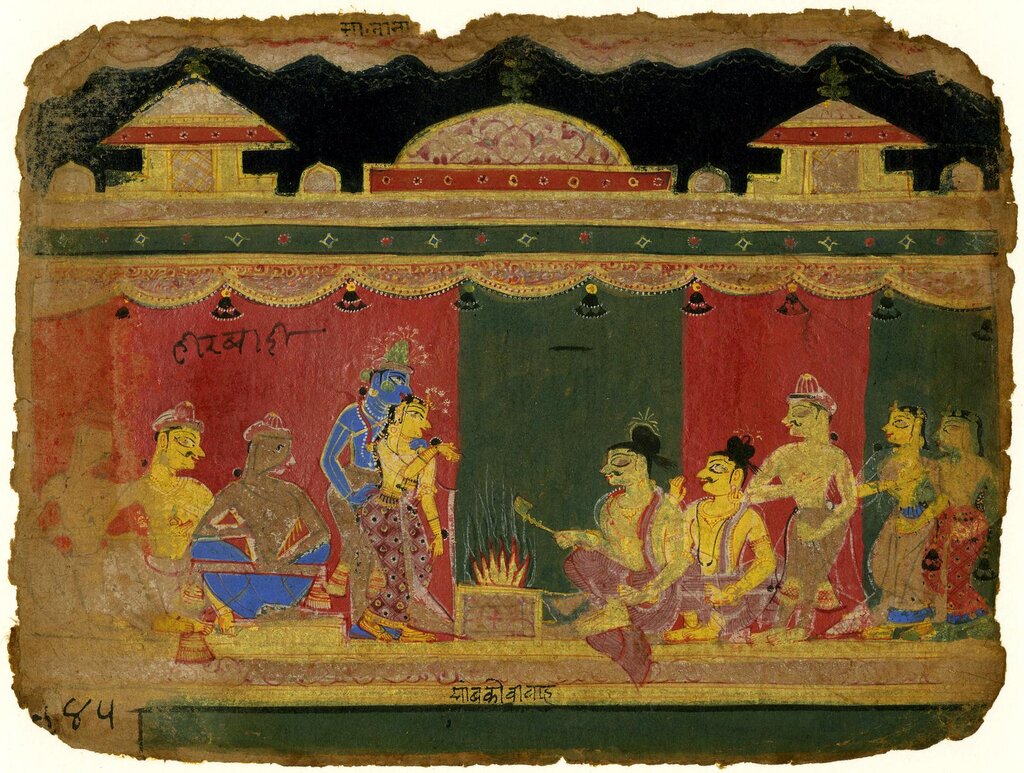
But these events were much more than just religious rites. They were major social gatherings where entire clans would come together. During a yajna, people would share food, distribute wealth (like cattle and grain), and reaffirm their social bonds. It was a chance for the chieftain to display his generosity and for the community to celebrate victories, pray for prosperity, or mark important occasions.
These rituals reinforced the social order and ensured everyone felt a part of the larger tribal identity, strengthening the community from the family unit all the way up to the jana.
Which of the following correctly shows the organizational structure of Early Vedic society, from the smallest unit to the largest?
In the Early Vedic period, the varna system was a rigid, hereditary social hierarchy determined strictly by birth.