Decorating Basics: Classic, Modern, and Contemporary Styles
Defining Interior Design
The Goal of Good Design
Interior design is the art and science of making an indoor space more functional and beautiful. It’s not just about picking pretty pillows or a comfortable sofa. It’s about making a series of deliberate choices that shape how a room feels and works for the people in it.
Think of a designer as a storyteller. Every object, color, and texture is a word in a sentence. When arranged thoughtfully, they create a cohesive story—a room that feels welcoming, organized, and intentional. The goal is to create a space that supports your daily life, whether that's a quiet corner for reading or a lively kitchen for family gatherings.
Good design makes a room feel right without you necessarily knowing why. It's the silent conductor of a room's orchestra.
Finding the Balance
Every object in a room has visual weight—a sense of how much it draws your eye. A large, dark-colored sofa has a lot of visual weight. A small, glass coffee table has very little. Designers think about this constantly to create a sense of balance, making sure no single part of the room feels too heavy or too empty.
Imagine a seesaw. To make it balance, you can place two children of equal weight on either end. Or, you could place a heavier adult on one side and have two smaller children sit closer together on the other. The seesaw is still balanced. The same principle applies to a room. The goal isn't to fill it with identical objects, but to distribute the visual weight so the space feels stable and harmonious.
Visual Weight
noun
The perceived heaviness or lightness of an object based on its size, color, texture, and complexity. It determines how much an element attracts the eye.
Balance can be achieved in two main ways: through symmetry or asymmetry.
Two Kinds of Balance
Symmetrical balance is easy to spot. If you draw an imaginary line down the center of a room or a wall, the two sides are mirror images of each other. Think of a formal dining room with a chandelier centered over the table, or a fireplace with identical armchairs and lamps on either side. This approach creates a feeling of order, stability, and tradition. It's calm and predictable, which can be very soothing.
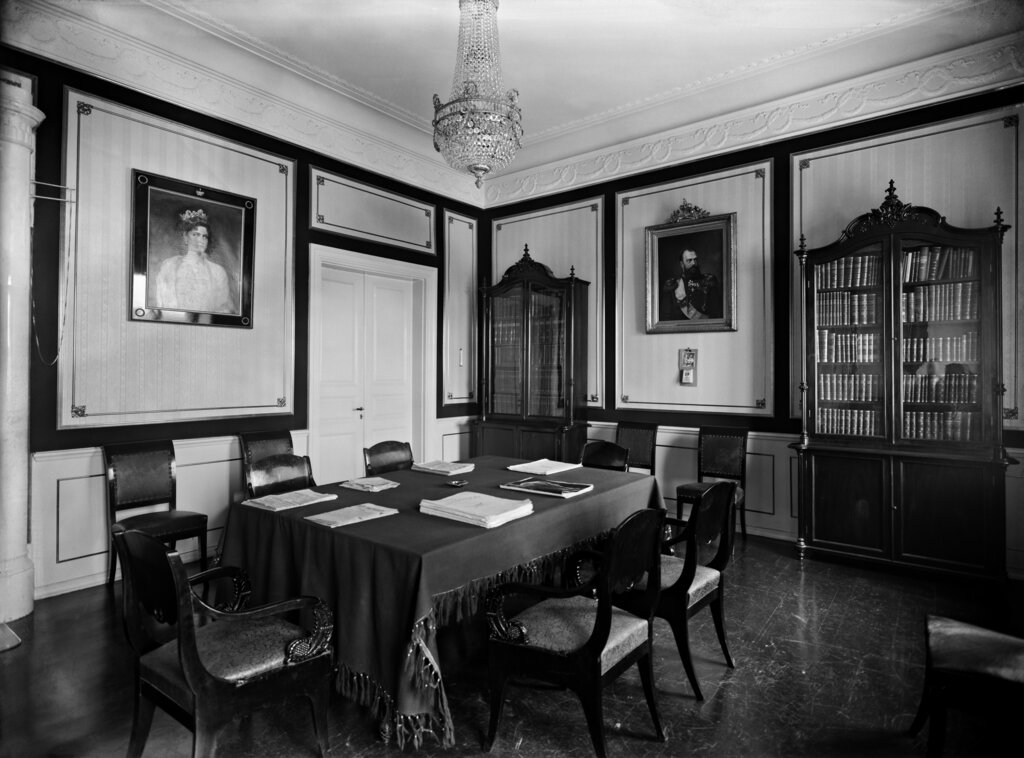
Asymmetrical balance, on the other hand, uses different objects with equal visual weight to create balance. One side of our imaginary line is not a mirror of the other, but the
overall feeling is still one of equilibrium. For example, a large sofa on one side of a room might be balanced by two smaller chairs and a floor lamp on the opposite side. feels more casual, dynamic, and modern. It’s often more interesting to the eye because it’s less predictable and invites you to look around.
Creating a Focal Point
When you first walk into a well-designed room, your eye is usually drawn to one specific thing. This is the focal point. It’s the star of the show, the element that anchors the design and gives the room a sense of purpose. A focal point can be an architectural feature, like a large window with a beautiful view or an ornate fireplace. It can also be something the designer adds, like a dramatic piece of art, a bold accent wall, or a unique piece of furniture.
Everything else in the room should support the focal point, not compete with it. The furniture arrangement often directs attention toward it, and the colors and accessories complement it. Without a clear focal point, a room can feel chaotic and unfocused, leaving your eyes wandering without a place to rest. The of design, for example, often used function itself as a focal point, emphasizing clean lines and practical forms over ornamentation.
Remember, interior design is a physical as well as a visual experience
By understanding these core ideas—visual weight, balance, and focal points—you can start to see rooms differently. You can look at a photo or stand in a space and understand the invisible structure that makes it work. These are the fundamental tools designers use to build rooms that aren't just furnished, but thoughtfully composed.
Ready to test your knowledge? Let's see what you've learned about the fundamentals of interior design.
What is the primary goal of interior design?
Which of the following items would likely have the MOST visual weight in a room?
With these basics in mind, you're ready to start exploring specific design styles.