Deconstructing Xenophanes of Colophon
Anthropomorphism and Meta-Critique
The God in the Mirror
Xenophanes' rejection of the Homeric and Hesiodic pantheon transcends a mere moral correction. It is a profound meta-critique of representation itself. His primary objection was not that the gods were depicted as fallible, but that they were depicted at all in a recognizable, anthropomorphic form. This move short-circuits theological debate and instead initiates an inquiry into the cognitive and cultural mechanisms of god-making.
Homer and Hesiod have attributed to the gods all sorts of things which are matters of reproach and censure among men: theft, adultery and mutual deceit. (frag. 11)
His famous fragments concerning the Thracians and Ethiopians are not simply ethnographic observations. They are a radical deconstruction of 'the human' as a stable, transcendental category for religious projection. By noting that Ethiopians imagine their gods as black and snub-nosed, while Thracians see them as blue-eyed and red-haired, Xenophanes exposes the contingency of divine representation. He concludes that if oxen, horses, or lions had hands and could paint, they would likewise depict gods in their own forms. This is an early, powerful articulation of the sociology of knowledge, where belief is shown to be a function of social location, not a perception of objective truth. The divine image is a mirror, reflecting the artist. This is the foundation of a of religious iconography.
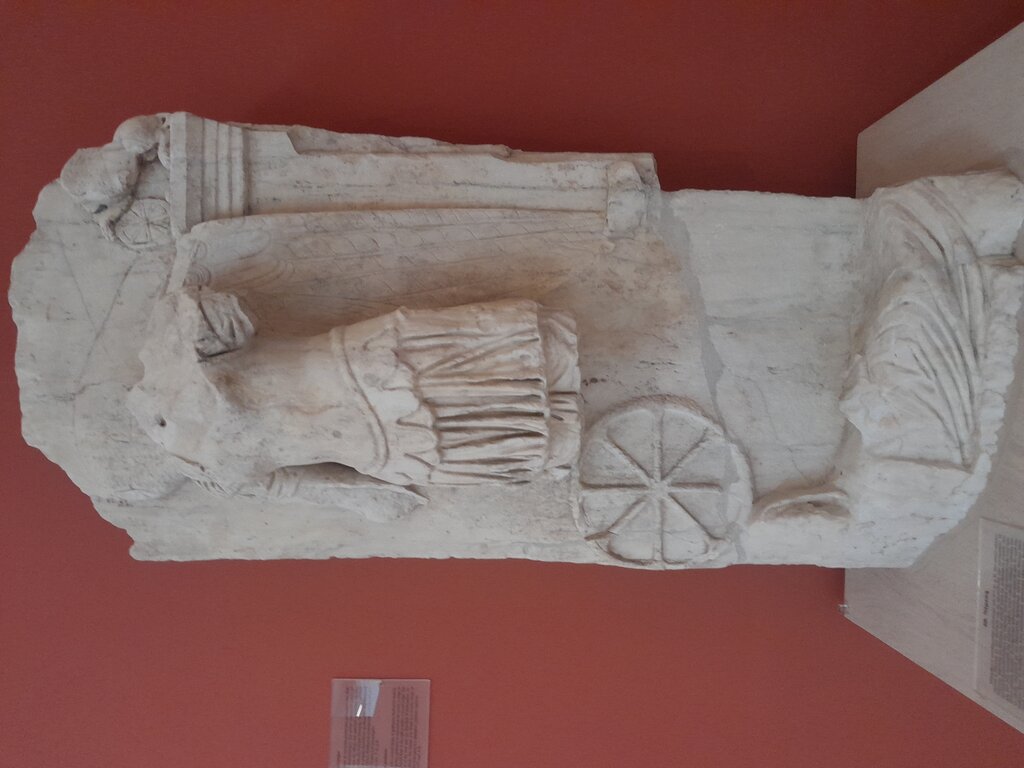
From this perspective, the Hellenic gods function as what Max Stirner would later call a 'Spook'—a fixed idea or abstraction that haunts the mind and commands obedience. By projecting human features, desires, and failings onto the divine, the Greeks created an elaborate system of externalized authority that was, in reality, a reified image of themselves. Xenophanes' critique is an attempt to exorcise this spook, to clear the ground by showing that the revered object of worship is a contingent cultural artifact, not an absolute. He dismantles the privileged epistemic position from which one might claim to 'know' the divine form.
The Limits of Knowing
This leads to the core of his philosophical project: an epistemic humility that borders on a non-identity problem. If every depiction of the divine is merely a projection of the self, then any positive statement about the nature of God is impossible. We are trapped within our own conceptual frameworks. Xenophanes argues for a single, non-anthropomorphic god, but his more lasting contribution is the critique that makes such a move necessary. He posits a god that is 'in no way similar to mortals in body or in thought,' fundamentally unknowable through the flawed lens of human experience. This is not agnosticism as a confession of ignorance, but as a logical conclusion derived from the very nature of representation.
A better reading of Xenophanes’ skeptical statements is to see them not as an attack on the possibility of knowledge per se, but rather as a charge against arrogance and dogmatism, particularly with regard to matters that we cannot directly experience.
By shifting the focus from the content of myths to the cognitive act of their creation, Xenophanes lays the groundwork for a critique of ideology itself. He demonstrates that our highest ideals and most sacred truths are often just the familiar contours of our own faces, writ large upon the cosmos. The search for God becomes a confrontation with the self.