Deconstructing the Epictetus Narrative
Arrian's Transcription Skepticism
The Scribe's Shadow
The 'Discourses' and 'Enchiridion' of Epictetus exist only through the hand of his student, Arrian of Nicomedia. In a dedicatory letter to Lucius Gellius, Arrian claims he wrote down Epictetus’s words verbatim, 'just as they were spoken,' to preserve them for himself. This assertion of perfect fidelity, however, warrants critical scrutiny. Was Arrian a flawless stenographer or a masterful editor shaping his teacher's legacy?
The preface presents a classic historiographical problem: distinguishing a rhetorical device from a statement of fact.
A primary source of skepticism is the stark stylistic dissonance between the Greek of the 'Discourses' and Arrian’s own polished historical works, like the 'Anabasis of Alexander'. The 'Discourses' are rendered in a relatively unadorned , the common dialect of the Hellenistic period. This lends them an air of raw, conversational authenticity. In contrast, Arrian's histories are written in a self-conscious, classicizing Attic dialect, imitating Xenophon and Thucydides. It's the prose of a professional historian, not a student taking notes.
| Text | Author | Language Style | Implied Purpose |
|---|---|---|---|
| Discourses | Attributed to Epictetus | Koine Greek | Live, spontaneous lecture |
| Anabasis of Alexander | Arrian | Attic Greek | Formal, literary history |
| Enchiridion | Arrian (as compiler) | Koine Greek (condensed) | Pedagogical summary |
This linguistic split forces a question: Did Arrian consciously adopt a different, simpler style for the 'Discourses' to reflect Epictetus's actual speech pattern? Or is the Koine a deliberate literary choice to create a persona of the rustic, straight-talking philosopher, a common trope in Cynic-Stoic literature? The technology of the time adds another layer of doubt. First-century stenography, likely using a system of shorthand like Tironian Notes, was not foolproof. It was prone to error and would have struggled to capture the full nuance and flow of a dynamic philosophical dialogue. Arrian's claim to have captured the words 'just as they were spoken' seems more like a rhetorical flourish to grant the text authority than a literal description of his method.
From Lecture to Handbook
The relationship between the 'Discourses' and the 'Enchiridion' (or 'Handbook') further complicates the picture. We possess only four of the original eight books of the 'Discourses' that Arrian claimed to have compiled. The 'Enchiridion' is not a ninth book but a highly condensed distillation of all eight. It's a 'greatest hits' album, a pedagogical cheat sheet designed for practical application.
Since almost no writing by the sophists has survived, the great mass of evidence about them comes from Plato’s dialogues.
This act of curation is an act of interpretation. By selecting and rearranging key passages, Arrian inevitably imposes his own understanding of what was most important in Epictetus's philosophy. The dialectical give-and-take, the specific context of a student's question, and the spontaneous energy of the live lecture are largely lost. What remains is a set of authoritative, almost prescriptive, maxims. The 'Handbook' transforms the Socratic method of Epictetus into a catechism of Stoic doctrine.
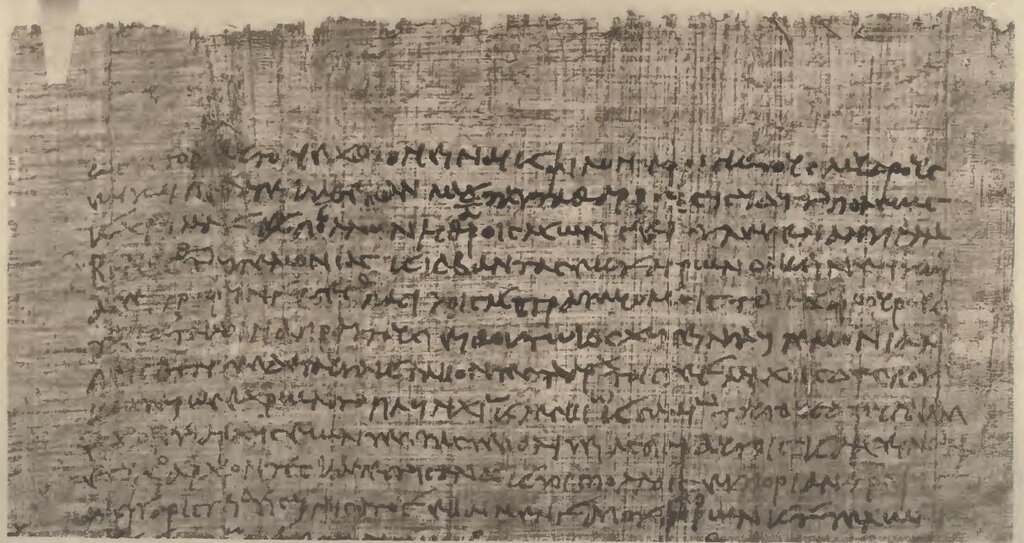
The loss of four books of the 'Discourses' is also significant. We are missing half the original source material from which Arrian drew. We cannot know what themes or arguments were present in the lost books, or how their inclusion might alter our understanding of Epictetus’s thought. Our view is filtered twice: once by Arrian's initial transcription and selection, and again by the historical accident of which books survived.
Ultimately, we read Epictetus through Arrian. The voice we hear is likely a composite: the core ideas and perhaps the direct, unpretentious speaking style belong to Epictetus, but the structure, selection, and ultimate presentation are Arrian's. The 'verbatim' claim is best understood as a validation of the spirit, not a literal guarantee of the letter. The 'Discourses' are not a transcript but a reconstruction, and the 'Enchiridion' is a distillation of that reconstruction. They are invaluable records, but they are records of a performance, edited and produced by a master historian.
Let's test your understanding of the nuances of this textual transmission.
Who is the student of Epictetus responsible for writing down and preserving the 'Discourses' and 'Enchiridion'?
What is the primary stylistic difference between the Greek used in the 'Discourses' and the Greek Arrian used in his own historical works, like the 'Anabasis of Alexander'?
While perfect textual fidelity may be an illusion, the works Arrian preserved offer a profound and influential interpretation of Stoic philosophy, one that has shaped Western thought for centuries.