Deconstructing the Alexandrian Intellectual Mythos
Historiographical Inflation
Deconstructing the Alexandria Myth
The popular narrative of the Library of Alexandria is one of a universal repository of knowledge tragically lost. This story, however, obscures a more complex reality. A revisionist historiographical approach reveals the Library and its parent institution, the , not as a neutral archive but as a strategic tool of Ptolemaic statecraft. Rather than a spontaneous hub of intellectual syncretism, it was a deliberate project to centralize and institutionalize intellectual capital, effectively creating a state-sanctioned brand of knowledge.
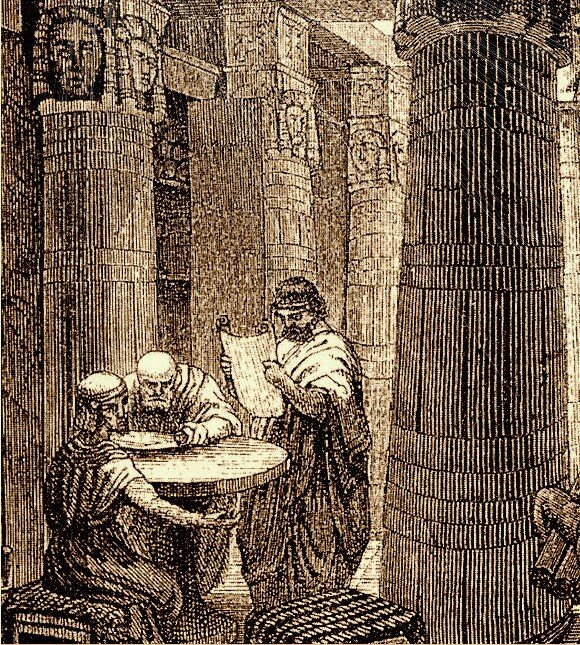
The collection of scrolls was less about universal access and more about accumulation as a display of power. It functioned as a precursor to what Guy Debord would later term the "spectacle." Knowledge was commodified and concentrated, transforming it from a living, dispersed practice into a monumentalized asset of the state. The used the institution to project an image of cultural supremacy, co-opting the intellectual heritage of the Hellenistic world to legitimize their rule. The library was an instrument of soft power, a symbol of Alexandria's status as the intellectual successor to Athens.
The Function of 'Lost Knowledge'
The trope of "lost knowledge" resulting from the Library's destruction is one of the most persistent myths in Western intellectual history. Its historiographical function is more significant than the disputed facts of its decline. The narrative of a single, catastrophic fire (a historically dubious claim) creates a dramatic rupture in history. This allows for the construction of a subsequent "Dark Age" from which Europe is "reborn" during the Renaissance by recovering supposedly lost classical wisdom. It's a foundational myth that justifies a specific, linear, and Eurocentric cultural genealogy.
C. has mined the ancient sources for good stories (like the one from Diodorus about the poor Roman who foolishly killed a cat in the streets of Alexandria), and he makes intriguing and provocative suggestions (e.g., that royal libraries in the Hellenistic period were “instruments of Greek rule” and that “the sacred books of the subject peoples had a special place in this systematic project of collection and translation, because religion was, for those who wished to rule them, a kind of gateway to their souls.” p. 25).
This narrative conveniently positions the West as the sole heir to classical antiquity, marginalizing the continuous traditions of scholarship in the Byzantine and Islamic worlds, which preserved and expanded upon many of the texts. The focus on a singular loss inflates Alexandria's role, creating a mythical "Golden Age" and a point of origin that serves a clear ideological purpose. The myth of the library's destruction is, in essence, a story the West tells itself about its own origins.
According to the revisionist historical perspective, what was the primary purpose of the Library of Alexandria?
The text suggests the Library's collection functioned as a 'spectacle' in a way that prefigured Guy Debord's theory. What does this mean in this context?
By re-evaluating the Library of Alexandria not as a fallen utopia but as a complex institution of state power, we gain a more critical understanding of how history is written and how intellectual legacies are constructed.