Deconstructing Scientific Papers
Understanding Scientific Papers
The Blueprint of a Research Paper
Scientific papers can look intimidating, but they follow a surprisingly consistent structure. Think of it like a blueprint for a house. Once you know where to find the kitchen and the bedrooms, navigating any house becomes much easier. The most common blueprint for research articles is called IMRAD.
Most research papers follow a similar format (IMRAD).
IMRAD stands for Introduction, Methods, Results, and Discussion. Each section answers a specific question, guiding you through the research story in a logical order.
| Section | Question it Answers |
|---|---|
| Introduction | What was the problem or question? |
| Methods | How did the researchers study it? |
| Results | What did they find? |
| Discussion | What do the findings mean? |
The Introduction sets the stage. It explains the background of the research, outlines what is already known about the topic, and identifies a gap in that knowledge. It ends by stating the specific research question or hypothesis the authors set out to investigate.
The Methods section is the recipe. It provides a detailed account of how the study was conducted. This includes who or what was studied, what tools were used, and the step-by-step procedures. The goal is transparency, allowing other scientists to evaluate the work and even replicate the study themselves.
The Results section presents the findings, plain and simple. It’s a direct report of the data collected, often using tables, graphs, and figures. This section avoids interpretation or speculation; it just states what happened.
Finally, the Discussion explains what the results mean. Here, the authors interpret their findings, explain how they answer the initial research question, and connect them back to the broader field. They'll also acknowledge any limitations of their study and suggest directions for future research.
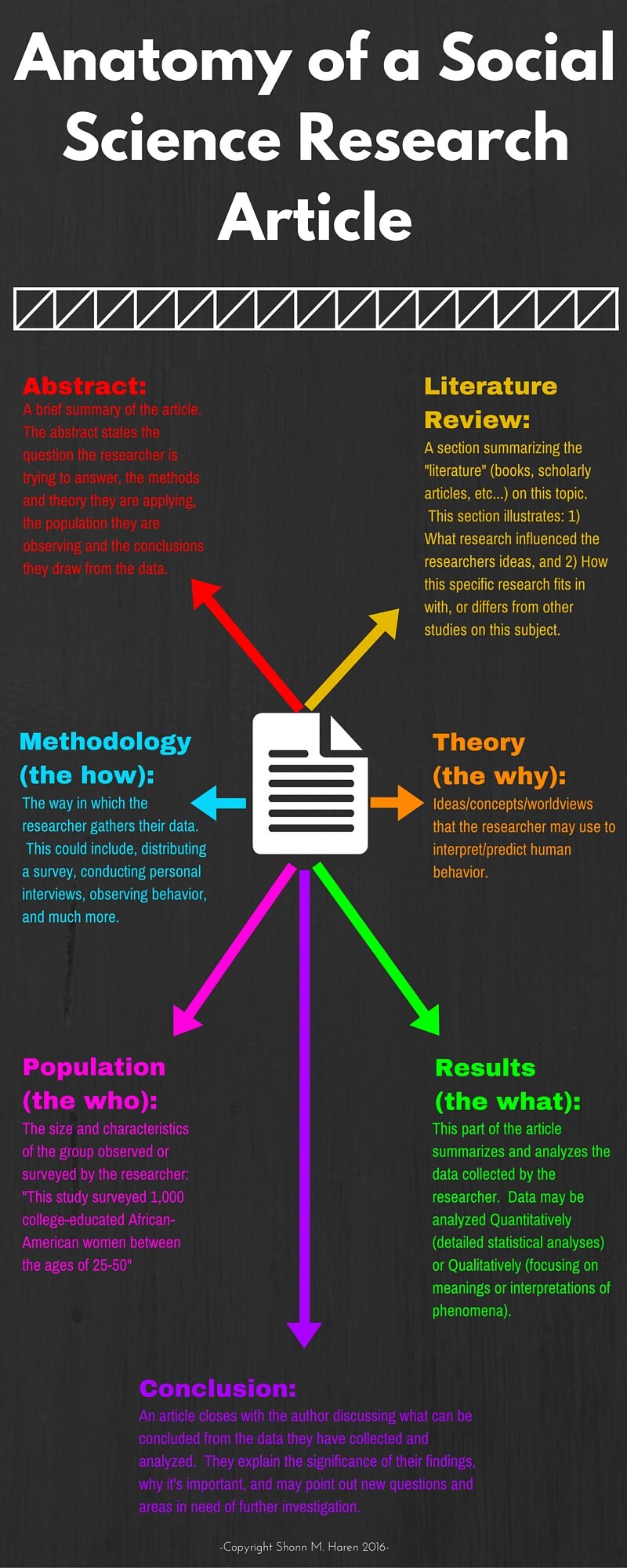
Other Key Sections
Besides the IMRAD core, you'll see a few other important parts. Nearly every paper begins with an Abstract, which is a short summary of the entire article. It’s incredibly useful for quickly understanding the paper's main points and deciding if you want to read the whole thing.
At the end, you'll find the Conclusion, which briefly summarizes the main takeaways of the research. You'll also see a list of References or Citations, which are all the other scientific papers and sources the authors mentioned in their work. This is crucial for tracing the origin of ideas and finding related research.
hypothesis
noun
A specific, testable prediction about the relationship between two or more variables.
The Gatekeepers of Science
How does a paper get published in a scientific journal? It goes through a rigorous quality-control process called peer review.
When a scientist submits their paper to a journal, the editor sends it to a handful of other experts in the same field. These experts, or “peers,” review the paper anonymously. They check the methodology, scrutinize the results, and evaluate whether the conclusions are justified by the data. They provide feedback to the authors, suggesting revisions or, in some cases, recommending that the paper be rejected.
This process isn’t perfect, but it's a crucial step. Peer review helps ensure that scientific research is valid, original, and significant before it becomes part of the scientific record.
Understanding this structure and process demystifies the scientific paper. It's not just a collection of facts, but a carefully constructed argument designed to persuade other experts that the research is sound and the findings are meaningful.
Time to check your understanding of how scientific papers work.
What does the acronym IMRAD stand for in the context of a scientific paper?
In which section would you find a detailed, step-by-step description of how the study was conducted, allowing others to potentially replicate it?
Now that you know the basic layout of a scientific paper, you have a map to navigate the world of research.