Deconstructing Questions and Answers
Introduction to Problem Solving
A Framework for Problem Solving
Solving a problem, whether it's a tricky math equation or a real-world challenge, isn't about a flash of genius. It's a skill you can build. The key is to have a reliable process that guides you from confusion to clarity. With a structured approach, you can tackle challenges methodically instead of getting stuck.
Let's walk through these four fundamental steps. Think of them as a universal toolkit for any problem you face.
Understand the Problem
Before you can solve a problem, you must understand what's being asked. This sounds obvious, but it's the most common point of failure. Rushing this stage is like a doctor prescribing medicine without a diagnosis.
Start by reading the problem carefully. Then, rephrase it in your own words. Identify what you know (the given information) and what you need to find (the goal). It's also crucial to spot any constraints or conditions. What rules do you have to follow? Clarifying these details sets you up for success.
Jumping to a solution without fully grasping the problem is like trying to build a house with no blueprint. You might get something done, but it's unlikely to be what you wanted.
Devise a Plan
Once you understand the destination, you need a map to get there. Devising a plan means outlining the steps you'll take to get from the problem to the solution. This is where you strategize.
Have you seen a similar problem before? Can you break the problem down into smaller, simpler pieces? Sometimes it helps to work backward from the goal. The best plan is one that is clear and easy to follow. You don't need a perfect plan right away, just a starting point that you can adjust as you go.
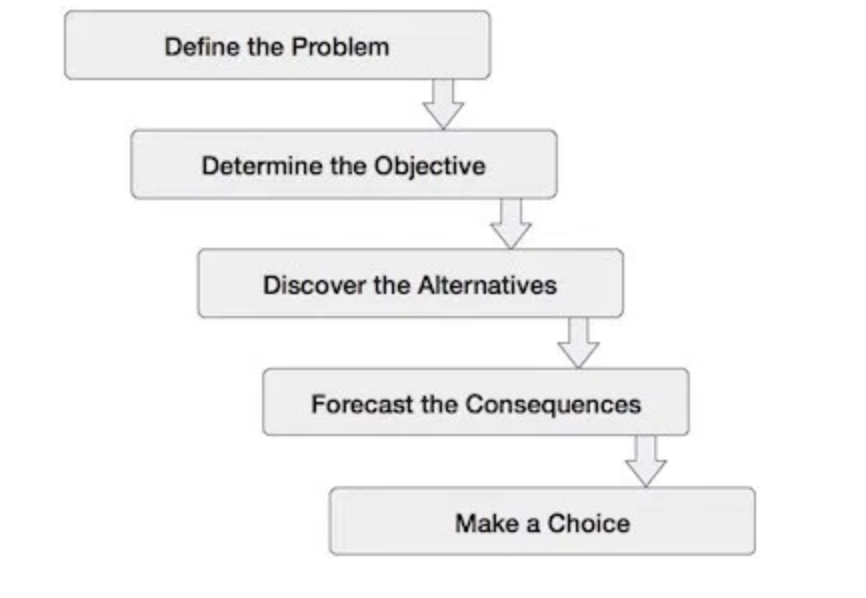
Writing down your steps can make your plan concrete and prevent you from getting lost.
Execute the Plan
Now it's time to act. Follow the steps you outlined in your plan, one by one. This stage requires patience and precision. As you work through each step, check your progress. Is it bringing you closer to the solution? It’s common to hit a snag or realize a step in your plan doesn't work. That’s okay.
If you get stuck, don't be afraid to revisit your plan and revise it. Problem-solving is often an iterative process, not a straight line. The key is to stay engaged and persistent.
Familiarize yourself with various problem-solving strategies such as breaking a problem into smaller steps, drawing diagrams, using logical reasoning, and looking for patterns.
Review and Reflect
You've reached a solution. But you're not done yet. The final step is to look back and review your work. Does your answer make sense? Check your calculations and reasoning to ensure there are no errors.
This is also a moment for learning. Reflect on the process. What worked well? What didn't? Could you have solved the problem more efficiently? This reflection helps you refine your problem-solving skills, making you better prepared for the next challenge.
Now, let's test your understanding of this foundational process.
According to the described process, what is the most common point of failure when trying to solve a problem?
During which step would you rephrase the problem in your own words and identify what you need to find?
Mastering this four-step cycle transforms how you approach challenges, turning them into opportunities for growth.