Deconstructing Plutarch's Middle Platonism
Dualism Gaps
The Cracks in Plutarch's Cosmos
Plutarch's philosophy is often cast as a neat bridge from classical Platonism to the systematized hierarchies of Neoplatonism. This view, however, papers over significant ontological fissures. A critical look at his work, particularly '', reveals a metaphysical framework struggling with a fundamental, perhaps irreconcilable, tension. He posits a transcendent, monistic God who is purely good, yet simultaneously argues for an independent, pre-cosmic source of disorder. This isn't a simple absence of good, but an active, malevolent principle that exists outside and prior to the Demiurge's ordering of the cosmos.
This leads to a stark dualism. On one side, we have the ultimate good, the monad. On the other, we have what Plutarch identifies as the source of all evil: an 'irrational soul' (alogos psyche) and the 'Indefinite Dyad' (aoristos duas). The problem is that these two concepts are not clearly unified in his system. Are they two names for the same principle, or two distinct entities? Plutarch uses the terms almost interchangeably, creating an ambiguity that undermines the coherence of his entire cosmology. Is the Dyad the material substrate upon which the irrational soul acts, or is the irrational soul the very motion of the Dyad itself? He never fully clarifies.
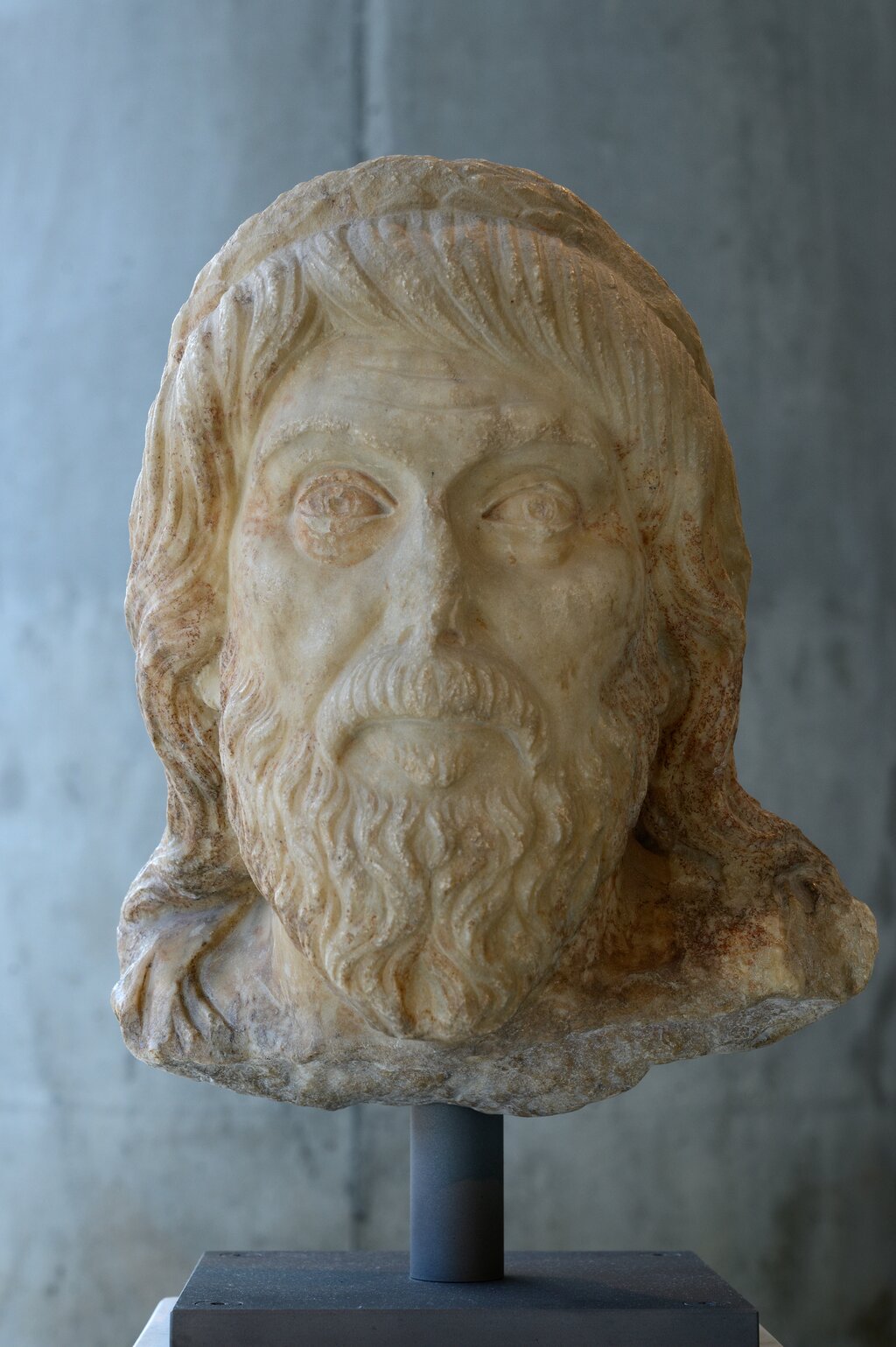
The Unreconciled Dyad
This inconsistency becomes a critical failure when trying to construct a stable metaphysics. Plutarch’s literalist reading of the Timaeus forces him to treat the creation narrative not as an allegory for the eternal relationship between Form and matter, but as a temporal event. The cosmos, for him, had a beginning. Therefore, the 'bad soul' must have existed before the Demiurge imposed order. It is an ungenerated, eternal principle of evil, co-eternal with the good God.
This creates a major departure from a strictly monistic view. Instead of evil being a privation or a falling-away from the good, it becomes an independent, foundational power in the universe. This is a profound challenge to divine omnipotence and goodness.
This framework stands in sharp contrast to the later Neoplatonic drive for absolute unity. For Plotinus, everything emanates from 'The One' (To Hen). Evil is not a separate principle but the final, most distant, and least real stage of this emanation—a mere absence of being and goodness. Plutarch’s system, with its two opposing primordial forces, lacks this elegant, top-down explanatory power. His 'Indefinite Dyad' is not a lower emanation but a competing power. There is no clear mechanism for how the transcendent God and the evil soul interact, other than the Demiurge's one-time act of cosmic organization.
The Neoplatonists drew a distinction between “Soul” and “Nature” (phusis) that amounts to a hierarchical separation of higher and lower psychical functions.
Instead of a smooth synthesis, Plutarch leaves us with a metaphysical patch. His system is a valiant but ultimately flawed attempt to reconcile the disparate elements within Plato's own writings. The 'pre-cosmic irrational soul' serves as a necessary evil to explain the existence of disorder in the world, but it does so at the cost of cosmological coherence. This unresolved dualism is precisely the problem that later Neoplatonists like Plotinus sought to solve with their rigorous systems of emanation and their ultimate principle of henology.
Let's test your understanding of the gaps in Plutarch's system.
What is the primary metaphysical tension in Plutarch's philosophy, as described in the provided text?
How did Plutarch's interpretation of Plato's Timaeus contribute to his metaphysical problems?