Deconstructing Platonic Political Metaphysics
Arborescence and State-Form
The Republic's Arborescent Model
Plato's Republic is often read as a treatise on justice, but it can also be seen as the foundational blueprint for a particular mode of Western thought: the arborescent model. This structure, like a tree, originates from a single, transcendent point—the Form of the Good—and branches downward in a rigid hierarchy. Each part of the city-state, or Kallipolis, is assigned a fixed position relative to this central root, creating a system of vertical stratification.
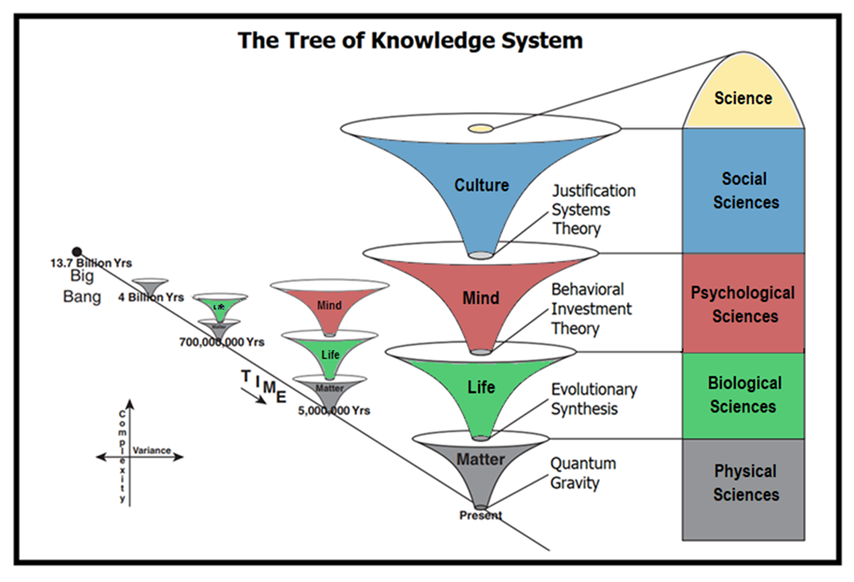
This top-down logic organizes everything from the cosmos to the soul. The state's classes (Guardians, Auxiliaries, Producers) are direct analogues of the soul's parts (Reason, Spirit, Appetite), all neatly partitioned and ranked. This model prioritizes unity, order, and identity, where every element has a designated place and function derived from the singular truth of the Good. In stark contrast stands the , a conceptual model proposed by Gilles Deleuze and Félix Guattari. A rhizome, like ginger root or a network of fungi, has no center and no pre-ordained structure. It expands horizontally, creating connections between heterogeneous points in a non-hierarchical fashion. Where the arborescent model is about being and static order, the rhizome is about becoming and dynamic connection. Plato's project is fundamentally anti-rhizomatic; it seeks to uproot any such horizontal connections and replant them within a vertical, striated space.
An Apparatus of Capture
The Republic is not merely a philosophical exercise; it is the diagram for an apparatus of capture—a social machine designed to intercept, channel, and codify the flows of human desire. The State-form, as articulated by Plato, functions by overcoding all social relations, translating the nomadic, polyvocal energies of the populace into a sedentary, univocal system.
The primary mechanism for this is the sedentary distribution of souls. Instead of allowing individuals to form fluid assemblages based on desire and affinity (a nomadic distribution), the Kallipolis sorts them into permanent classes. One is born with a 'metal' in one's soul—gold, silver, or bronze—that determines one's function for life. This 'noble lie' is the axiomatic foundation that locks the social strata in place.
This stratification prevents what Deleuze and Guattari call 'deterritorialization'—the escape from established codes. The Guardian cannot become a merchant, and the merchant cannot become a ruler. Desire is captured and reterritorialized onto the striated grid of the state. Justice, in this reading, becomes the name for the successful operation of this capture, where every individual has been harmonized with their predetermined social function and the flows of desire have been successfully dammed.
The State as Transcendental Signifier
The entire edifice of the Kallipolis rests upon a single, unassailable point of reference: the Form of the Good. This is the transcendental signifier of the Platonic State-form. It is the ultimate justification for the hierarchy, the source of all truth, and the point from which all value emanates. Like the sun in the Allegory of the Cave, the Good is a despotic signifier that stands outside and above the system it organizes, illuminating everything while remaining itself unseen and unquestioned.
Plato ultimately proposes a nuanced understanding of justice, defining it as the principle of specialization and the proper ordering of the parts of the soul and the state.
By establishing this transcendent point, Plato's State-form prefigures a mode of power that operates through abstraction. The State is no longer just a collection of people or territories but an ideal, an abstract machine that imprints its logic onto the material world. Its function is to produce subjects who recognize themselves within its stratified order. The philosopher-king is not just a wise ruler but the conduit for this transcendent logic, the one who has seen the Good and whose task is to model the state in its image. This model creates a system where change is decay and deviation is error, effectively stifling the immanent, creative potential of a rhizomatic social field.
According to the text, what is the fundamental difference between the "arborescent model" of Plato's Republic and the "rhizome" model of Deleuze and Guattari?
Within the framework presented, Plato's state functions as an "apparatus of capture" by...