Deconstructing Heracleon's Exegetical Precedence
Historical Priority Claims
Deconstructing a Historical 'First'
The traditional narrative identifies the Valentinian Gnostic Heracleon as the first systematic commentator on the Gospel of John, a milestone in early Christian exegesis. However, this claim is less a statement of historical fact and more a polemical construction. The very idea of Heracleon's 'inauguration' stems from how his work was selectively preserved and framed by later proto-orthodox figures, chiefly Origen of Alexandria in his own Commentary on John.
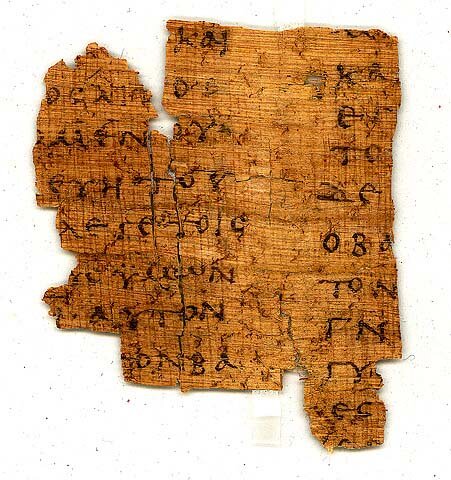
Origen’s agenda was clear: to engage with and refute Gnostic interpretation, thereby casting it as a derivative corruption of an established, 'correct' tradition. By extensively quoting Heracleon for the purpose of refutation, Origen inadvertently became the primary vehicle for his survival. This act of preservation was also an act of framing. Heracleon is presented as a significant, but ultimately misguided, 'other' against which orthodoxy defines itself. The label of 'first' commentator thus serves a rhetorical purpose, establishing a clear lineage where Gnosticism is a later, secondary deviation.
The value of the Gnostic texts lies not in their providing independent source material for the ministry of the historical Jesus but instead for how second, third, and fourth century CE religious groups and sects viewed Christ.
This construction of a historical 'first' begins to unravel when we consider the broader landscape of Valentinian exegesis. The timeline is complicated by figures like . His Letter to Flora, a concise exegetical work explaining the Valentinian view of the Mosaic Law, predates Heracleon’s major commentary. While not a verse-by-verse commentary on John, it demonstrates sophisticated theological interpretation of scripture from a Valentinian perspective and engages with concepts central to Johannine thought. Its survival, independent of a polemical refutation, challenges the neat timeline that places Heracleon at the origin point.
Empiricism and Fragmented Histories
Applying constructive empiricism to patristic historiography forces us to confront the manufactured nature of such 'milestones'. The theory holds that we should accept scientific theories as 'empirically adequate' but remain agnostic about their claims regarding unobservable reality. In history, the 'unobservable reality' is the complete, unmediated past. The surviving fragments—like Heracleon's quotes in Origen or Ptolemaeus's letter—are our observable data.
The claim that Heracleon was the 'first' is not an empirically adequate description of the data. It is a theoretical model constructed by a later party (Origen) to make sense of the data in a way that favored his own theological position.
Our observable evidence consists of fragments preserved through a polemical filter. The 'firstness' of Heracleon is an unobservable claim, a theoretical posit designed to create a tidy historical narrative. A more empirically adequate model would simply state that Heracleon produced a significant, early commentary on John, which was used by Origen, while other Valentinians like Ptolemaeus were engaged in similar exegetical work concurrently or even earlier. This perspective moves us from accepting constructed 'firsts' to analyzing the observable processes of preservation, polemics, and narrative creation in the formation of church history.
Why do fragments of the Gnostic Heracleon's commentary on the Gospel of John survive today?
The claim that Heracleon was the 'first' commentator on John is best understood as a historical fact established by neutral chronological data.