Deconstructing Gender Social Constructs
Defining Gender
Sex vs. Gender
Most people use the words "sex" and "gender" interchangeably, but they mean different things. It's a common mix-up, but the distinction is a key idea in understanding society.
Sex refers to the biological and physiological characteristics that define humans as female, male, or intersex. These are things like chromosomes, hormones, and reproductive organs. It's about biology.
Gender, on the other hand, is about society. It's the set of roles, behaviors, activities, and attributes that a given society considers appropriate for men and women. It’s not about what you are, but about how you're expected to act, look, and live based on your sex.
Social Construct
noun
A concept or idea that exists because society as a whole agrees that it exists. Its meaning is shaped by cultural and historical context rather than being based on objective reality.
Because gender is a social construct, its meaning can change dramatically depending on where and when you are. Think of it like a script. Society writes scripts for how different genders should behave, and we learn those scripts as we grow up. But different cultures have written very different scripts.
Gender Across Cultures
The idea that there are only two genders, man and woman, is a common belief in many Western cultures. But it’s not universal. Many societies around the world recognize more than two genders.
For example, in many Indigenous North American cultures, there are "two-spirit" people who embody both masculine and feminine spirits. They hold respected roles within their communities that are distinct from those of men or women. Similarly, the Hijras of South Asia are a third gender category that has been a part of their culture for centuries. They are typically born male or intersex but identify as female, Hijra, or a third gender.
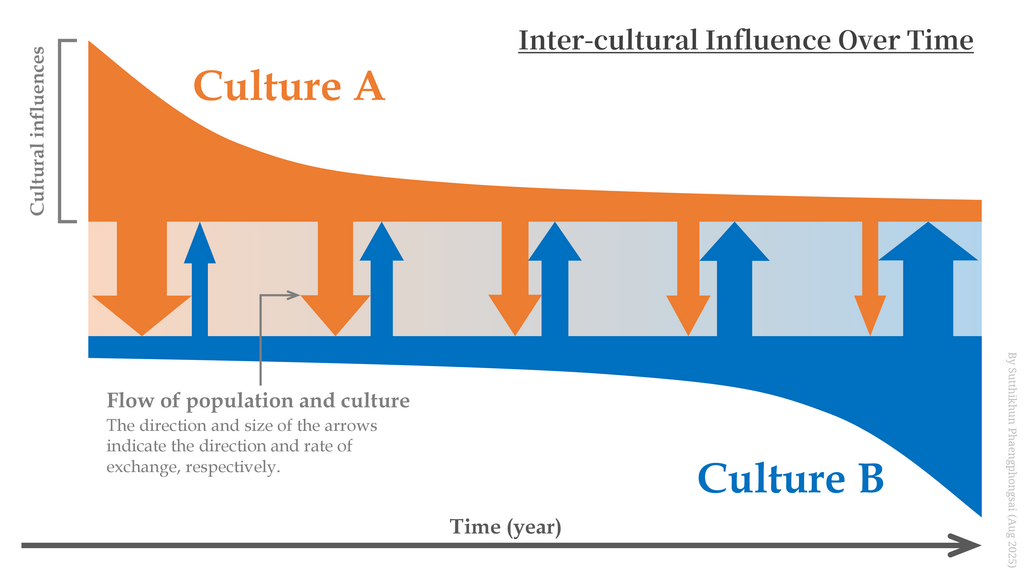
These examples show that gender identity and gender roles are not fixed. What one culture considers strictly "masculine," another might see as neutral or even "feminine." The expectations tied to gender are learned, not innate.
Gender Through Time
Just as gender varies by place, it also varies by time. The rules and expectations we have today are different from those of the past. Think about the color pink. In the early 20th century in the United States, pink was often considered a strong color suitable for boys, while blue was seen as delicate and pretty for girls. Today, those associations have completely flipped.
Historical events can also shift gender roles. During World War II, women in many countries entered the workforce in unprecedented numbers to fill jobs left by men who went to war. This challenged the prevailing idea that a woman's place was exclusively in the home. While many of these roles reverted after the war, the experience permanently altered societal perceptions of what women were capable of.
One overarching theme that emerges from this examination is the dynamic nature of gender constructs.
These shifts show that gender is not a static fact but a fluid concept. What society expects from different genders is constantly being negotiated and redefined.
Let's test your understanding of these core concepts.
Which of the following best distinguishes between sex and gender?
The fact that in the early 20th century, pink was often recommended for boys and blue for girls illustrates which key idea?
Understanding the difference between sex and gender is the first step. It helps us see how much of what we consider "natural" is actually shaped by the world around us.