Deconstructing Chrysippean Stoicism
Historical Hegemony Critique
The 'Second Founder' Problem
The traditional narrative, largely inherited from Diogenes Laertius, positions Chrysippus of Soli as the indispensable "second founder" of Stoicism. This hagiographic account credits his systematization of logic and physics with saving the school from dissolution. However, a critical reassessment demands we look beyond individual genius to the broader socio-political and intellectual landscape of the Hellenistic period. Stoicism's eventual hegemony was not solely a product of superior doctrine, but also a consequence of its resonance with the practical, civic-minded ethos of an ascendant Rome.
The concept of 'intellectual consolidation' offers a more nuanced framework. Was the Stoa's success driven specifically by Chrysippean logic, or was it a result of a broader cultural alignment? Stoicism provided a philosophical justification for duty, resilience, and participation in public life—virtues that were highly prized in Roman statecraft. This contrasts with the more esoteric focus of the Academy under the Skeptics and the withdrawal from public life advocated by Epicureanism. The Stoa's rise was as much about its utility to power as it was about its internal coherence.
A Wall of Books
Chrysippus's legendary output—reportedly over 705 books—was not mere intellectual vanity. It constituted a formidable defensive 'wall' against the Stoa's primary intellectual adversaries. The school faced relentless pressure from two fronts: the intricate logical puzzles of the Dialectical school and, more significantly, the corrosive skepticism of the New Academy under Arcesilaus.
Chrysippus’s meticulous work on propositional logic was a direct response to these threats. He developed a system capable of refuting the paradoxes posed by the Dialecticians and providing a firm epistemological foundation against the Academic assault on the possibility of certain knowledge. His codification of the Stoic system was an act of institutional preservation, creating a robust, defensible curriculum that could be taught and transmitted.
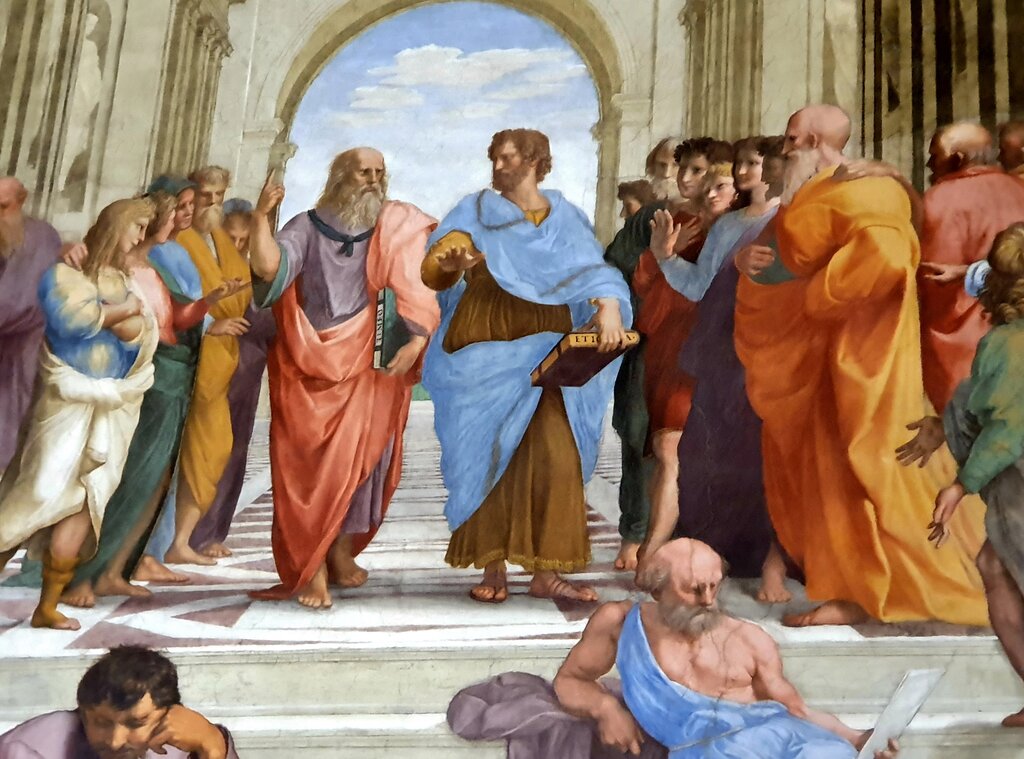
This defensive systematization also created a 'Chrysippus-centric' bias in the historical record. The sheer volume and systematic nature of his work ensured it became the standard text, eclipsing the contributions of his predecessors. The intellectual shift from his teacher, , is particularly telling. While Cleanthes was respected for his piety and moral character, his focus was more theological and less logically rigorous. Chrysippus’s victory in shaping the direction of the Stoa represented a move toward a more analytical and argumentative philosophical style, better suited for the competitive intellectual environment of Athens.
Systematization as Survival
Ultimately, the 'Systematization as Survival' hypothesis seems most compelling. Chrysippus's work was less about radical innovation and more about providing the intellectual infrastructure necessary for the Stoa's long-term viability. By forging Stoic doctrines into a cohesive and logically defensible system, he created a philosophy that was not only resilient to skeptical attacks but also easily digestible and applicable for the Roman elite who would later adopt and champion it.
His logic provided the bones, while the ethics provided the heart. This combination proved irresistible, ensuring Stoicism's survival and dominance long after its rivals had faded into academic history.
Chrysippus, without question, is the philosopher most responsible for the logic associated with the Stoics.
Time to test your understanding of the historical forces that shaped Stoicism.
According to the traditional narrative, what was Chrysippus's primary contribution to Stoicism?
The text argues that Stoicism's rise to prominence was not just due to its internal logic, but also its resonance with the practical, civic-minded ethos of which ascendant power?
The story of Stoicism is not just one of ideas, but of intellectual battles and strategic positioning. Chrysippus secured the school's legacy by making it not just profound, but defensible.