Deconstructing Beiser's Weltschmerz
Beiser’s Teleological Narrative
The Historian's Will to Order
Historian Frederick Beiser tells a compelling story about German pessimism. In his view, the bleak, world-denying philosophy of Arthur Schopenhauer wasn't an endpoint. Instead, it was the starting point for a dynamic intellectual journey. Beiser argues this journey moved logically from abstract, transcendental despair toward concrete social and political action. He frames it as a coherent development, a teleological narrative where pessimism evolves to solve the very problems it identifies.
This narrative presents a clean, satisfying arc. It begins with Schopenhauer's metaphysical conclusion that life is suffering, rooted in a relentless, blind Will. Then, it progresses to a new generation of thinkers who accepted the diagnosis but rejected the cure. Instead of ascetic resignation, they sought practical solutions in the material world. Beiser calls this new phase 'Scientific Pessimism', a movement that supposedly harnessed rational analysis to advocate for political and social progress as the antidote to suffering. It's a story of pessimism becoming pragmatic.
Beiser's history isn't just a chronicle of events; it's an argument. He shapes a scattered collection of thinkers into a unified movement with a clear purpose and direction.
But this neat narrative might be too neat. By looking for a logical progression, Beiser risks smoothing over the radical, often contradictory ideas of the philosophers he profiles. His framework prioritizes systemic coherence, sometimes at the expense of the very ruptures that made these thinkers so disruptive. This approach reflects a kind of historical 'will to order', an attempt to find a rational pattern in the messy, chaotic evolution of ideas. Our task is to examine this framework and see what might be lost in the act of synthesis.
Synthesizing Opposites
At the core of Beiser's narrative is a surprising synthesis: the fusion of Schopenhauer and his arch-rival, Hegel. On the surface, these two philosophers are polar opposites. Schopenhauer saw history as a meaningless, repetitive cycle of suffering driven by the irrational Will. In contrast, Hegel saw history as the rational unfolding of Spirit or 'Geist', a purposeful progression toward freedom and self-realization.
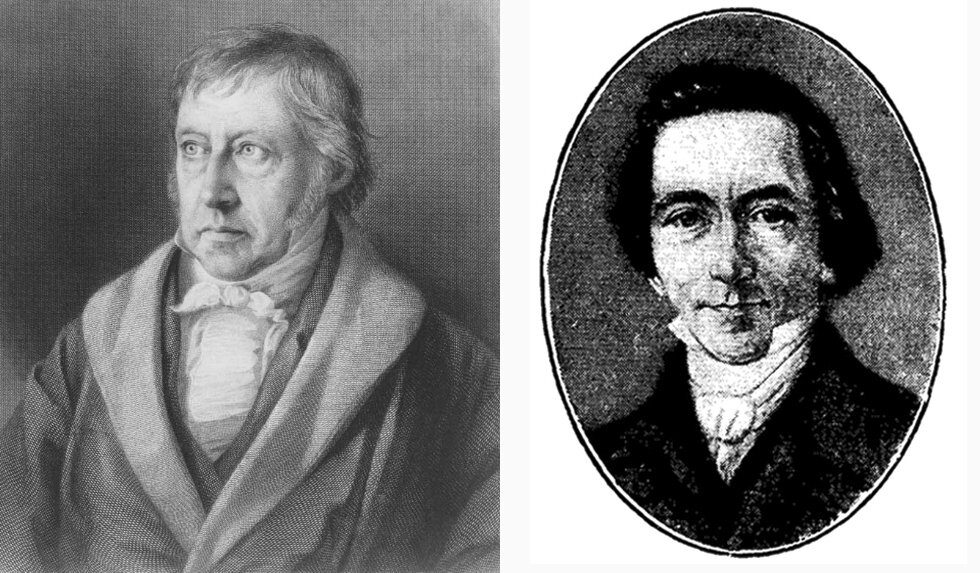
Beiser argues that the so-called 'scientific pessimists' merged these conflicting worldviews. They supposedly adopted Schopenhauer’s premise (the world is fundamentally flawed) but embraced Hegel’s method (history is a process that can be understood and directed rationally). In this view, pessimism becomes a political project. If history has a direction, then humanity can steer it away from suffering and toward a better state, or even a peaceful end. The 'problem of suffering' is transformed from a metaphysical constant into an engineering problem to be solved through collective action and social progress.
This framing is clever, but it raises questions. Does it accurately reflect the intentions of thinkers like Philipp Mainländer, who advocated for a collective cessation of existence? Or does it impose a structure onto philosophies that were fundamentally anti-Hegelian? Mainländer's goal wasn't to 'fix' the world through progressive steps but to end it. Reading his work as a form of social progressivism requires a very particular, and perhaps biased, interpretation. It prioritizes a rationalist, solution-oriented mindset that may not have been shared by the pessimists themselves.
The Limits of Reconstruction
Beiser's attempt to reconstruct a coherent 'pessimism movement' reveals a common bias in intellectual history: the preference for rational development over radical breaks. Historians often seek to explain how one idea led logically to another. This can be a powerful tool, but it can also obscure the revolutionary nature of certain philosophies. The German pessimists were not simply scholars building on previous work; they were often iconoclasts tearing down the foundations of Western thought.
By labeling thinkers like Hartmann and Mainländer as 'Scientific Pessimists', Beiser groups them into a school of thought they themselves might not have recognized. While they engaged with science, their conclusions were often wildly speculative and metaphysical. Their work was less a sober, scientific analysis and more a form of modern gnosticism, viewing the material world as an inherent mistake. To frame their philosophies as a precursor to 20th-century social democracy or progressivism is to downplay their deeply radical and often world-rejecting character.
The narrative of a logical progression from Schopenhauer to social engagement is appealing. It domesticates a set of dangerous and unsettling ideas, fitting them into a familiar story of intellectual progress. However, it risks missing the point. The power of these pessimistic philosophies may not lie in their contribution to a coherent historical movement, but in their fierce, uncompromising challenge to the very idea of coherence and progress.
Time to check your understanding of the critique of Beiser's historical method.
What is the central argument of Frederick Beiser's narrative on German pessimism?
The critique of Beiser suggests his approach demonstrates a 'will to order'. What does this mean in the context of intellectual history?