Decoding Your Job Offer
Understanding Total Compensation
More Than a Paycheck
When you get a job offer, the first thing most people look at is the salary. It's the big number, the one that determines your take-home pay. But focusing only on salary is like judging a book by its cover. It tells part of the story, but it often misses the most important details.
Imagine two job offers. Offer A has a salary of $75,000. Offer B has a salary of $70,000. At first glance, Offer A seems better. But what if Offer B includes fantastic health insurance that saves you thousands a year, a generous retirement match, and a yearly bonus? Suddenly, Offer B might be the smarter financial choice. This is where understanding the full picture becomes crucial.
Total Compensation
noun
The complete pay package a company gives an employee. This includes not just their base salary but also all other financial and non-financial rewards.
Thinking in terms of total compensation means looking at every single thing of value the employer provides. It's the sum of your salary, benefits, bonuses, and any other perks that come with the job. This holistic view helps you accurately assess the true worth of a job offer.
A “total compensation” approach to benefits and compensation promotes the idea that your employees’ compensation is more than their paycheck – it’s the total of what’s available to them.
Breaking Down the Package
A total compensation package is made up of several key ingredients. While the exact mix varies from company to company, they usually fall into a few main categories. Let's look at the most common components you'll encounter.
Base Salary: This is the foundational piece of your compensation. It's the fixed, predictable amount of money you receive in your paycheck before any deductions. It's what you can count on year-round.
Bonuses: This is variable pay given on top of your salary. A signing bonus might be offered to entice you to accept a job. An annual bonus is often tied to your performance or the company's success. It’s not guaranteed, but it can significantly boost your yearly earnings.
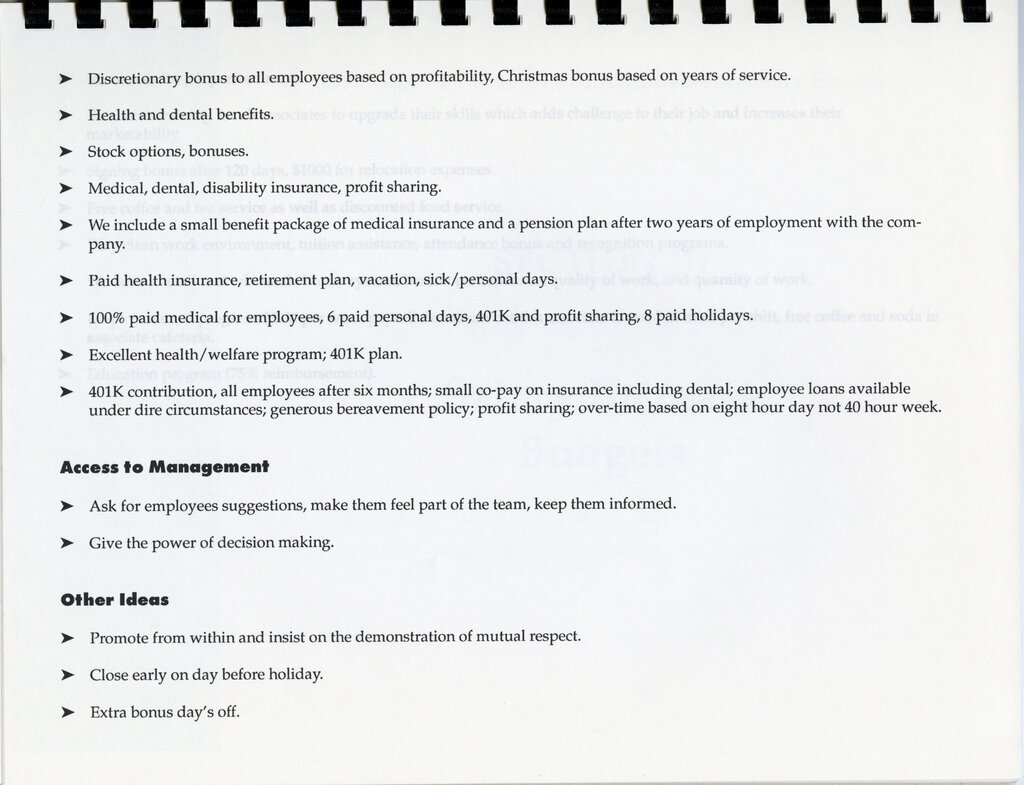
Benefits: Benefits are non-cash compensation that can have a huge financial value. This category includes health, dental, and vision insurance, which can save you from massive out-of-pocket medical costs. It also covers retirement savings plans like a 401(k), where employers often match your contributions—that's essentially free money. Paid time off (PTO), sick days, and parental leave also fall under this umbrella.
Equity: Especially common in startups and tech companies, equity gives you a small slice of ownership in the business. This could be in the form of stock options or restricted stock units (RSUs). While riskier than cash, equity has the potential for a large payout if the company does well.
Perks: These are the extras that make a job more enjoyable and convenient. Perks can include anything from free lunches and a well-stocked kitchen to a gym membership, a professional development budget for classes and conferences, or flexible work-from-home policies. While they might seem small, they add up in value and improve your quality of life.
Why It All Matters
Evaluating the total compensation package is essential for making smart career decisions. A job with a slightly lower salary but incredible benefits could leave you with more money in your pocket at the end of the year. For example, great health insurance might save you $5,000 annually, and a generous 401(k) match could add another $5,000 to your retirement savings. Suddenly, that lower-paying job looks much more attractive.
Your priorities also play a big role. A recent graduate might value a higher base salary to pay off student loans. A parent might prioritize top-tier health insurance and flexible hours. Someone nearing retirement might focus on the 401(k) match and pension plan. There's no single "best" package; there's only the best package for you.
Looking at the whole picture empowers you to compare offers apples-to-apples and choose the opportunity that truly aligns with your financial goals and lifestyle.
Ready to test your knowledge?
What is the best definition of "total compensation"?
Job A offers a salary of 75,000 but includes comprehensive health insurance that saves you 4,500. Which statement is most accurate?
By understanding all the components of your compensation, you can make informed choices that benefit your career and financial future.