Decoding Your Financial Aid Package
Understanding Financial Aid
What Is Financial Aid?
Think of financial aid as a bridge. On one side, you have the cost of college—tuition, fees, books, and living expenses. On the other side is what you and your family can reasonably afford to pay. Financial aid is all the money available to help you cross that bridge.
Its main purpose is to make higher education accessible, ensuring that qualified students can attend college regardless of their financial circumstances.
This support comes from various sources, including the U.S. federal government, state governments, the colleges themselves, and private organizations. The amount and type of aid you receive depend on factors like your family's income, your academic achievements, and the schools you apply to.
The Four Main Types
Financial aid isn't a single thing; it's a package that can include several different types of assistance. Understanding each one helps you see which offers are the most valuable.
| Type | Key Feature | Repayment Required? |
|---|---|---|
| Grants | Typically need-based | No, it's a gift |
| Scholarships | Typically merit-based | No, it's a gift |
| Loans | Borrowed funds | Yes, with interest |
| Work-Study | Earned through a job | No, it's a paycheck |
Grants are a form of gift aid, meaning they don't have to be repaid. They are usually awarded based on financial need, which is determined by the information you provide on your financial aid application.
Scholarships are also gift aid. The key difference is that they are typically awarded for merit. This could be for academic excellence, athletic talent, artistic ability, community service, or other special skills. Many organizations, from corporations to local clubs, offer scholarships.
Loans are borrowed money that you must pay back, usually with interest. Student loans often have lower interest rates and more flexible repayment options than other types of loans. While they are a helpful tool, it's wise to borrow only what you absolutely need.
Federal Work-Study provides funding for part-time jobs for students with financial need. The program encourages work related to your course of study or community service. You'll earn a paycheck to help cover day-to-day expenses, just like with any other job.
When a school sends you a financial aid offer, you'll want to look for free money first (scholarships and grants), earned money second (work-study programs), and borrowed money last (federal student loans).
How the Process Works
The journey to receiving financial aid generally follows a set path, starting with one key application.
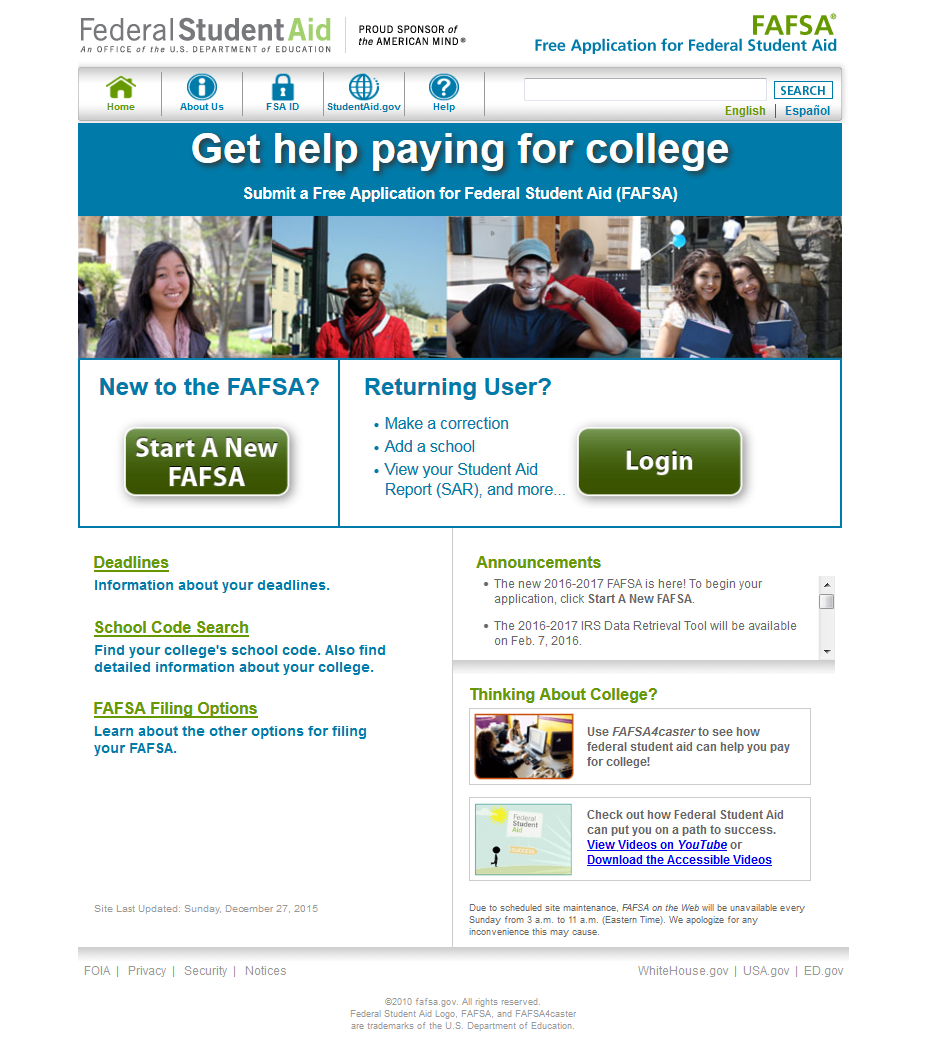
The first step for most students is completing the Free Application for Federal Student Aid (FAFSA®). This single form is used by the federal government, states, and most colleges to determine your eligibility for grants, loans, and work-study.
Here's a simplified overview of the steps:
- Submit the FAFSA: You'll provide information about your family's finances. The FAFSA opens on October 1st each year for the following academic year. It's best to file as early as possible, as some aid is first-come, first-served.
- Schools Receive Your Info: The colleges you list on your FAFSA will get a report summarizing your information.
- Receive Aid Offers: After you've been accepted to a college, its financial aid office will send you an official offer letter. This letter details the specific mix of grants, scholarships, loans, and work-study you're eligible for at that particular school.
- Compare and Accept: You'll review the offers from different schools, decide which one makes the most sense for you, and formally accept the aid package from the school you plan to attend. You don't have to accept everything offered; for example, you can decline loans if you don't need them.
Some colleges, particularly private ones, may also require an additional form called the CSS Profile to determine eligibility for their own institutional aid.
Now, let's test what you've learned about the basics of financial aid.
What is the primary purpose of financial aid?
Which two types of financial aid are considered "gift aid," meaning they typically do not need to be repaid?
Understanding these core concepts is the first step toward making smart financial decisions for your education. It empowers you to navigate the process and find the resources to help you achieve your goals.