Decoding Your College Financial Aid
Understanding Financial Aid
What Is Financial Aid?
The price tag on a college education can seem intimidating. Financial aid is money provided to students to help cover these costs, which include tuition, fees, housing, books, and other living expenses. Its main purpose is to bridge the gap between the cost of attendance and what your family can afford to pay.
Think of it as a collection of tools designed to make higher education more accessible. By combining different types of aid, many students can significantly reduce their out-of-pocket expenses.
The Four Types of Aid
Financial aid isn't just one thing; it comes in several forms. Some aid is a gift that you don't have to pay back, some is earned through work, and some is borrowed and must be repaid. Understanding the difference is key.
| Aid Type | Repayment Required? | How It's Awarded |
|---|---|---|
| Grants | No | Based on financial need |
| Scholarships | No | Based on merit (academics, athletics, etc.) |
| Work-Study | No | Earned by working a part-time job |
| Loans | Yes (with interest) | Borrowed and must be paid back |
The best kinds of aid are grants and scholarships, often called "gift aid," because they are essentially free money. Work-study programs allow you to earn money to help pay for school, giving you valuable work experience at the same time. Loans should be considered last, as they represent debt you'll have to manage after you leave school.
When a school sends you a financial aid offer, you'll want to look for free money first (scholarships and grants), earned money second (work-study programs), and borrowed money last (federal student loans).
The Key to Unlocking Aid
So how do you access this aid? The single most important step is filling out the Free Application for Federal Student Aid, or FAFSA. This form collects your family's financial information and uses it to determine your eligibility for most types of financial support.
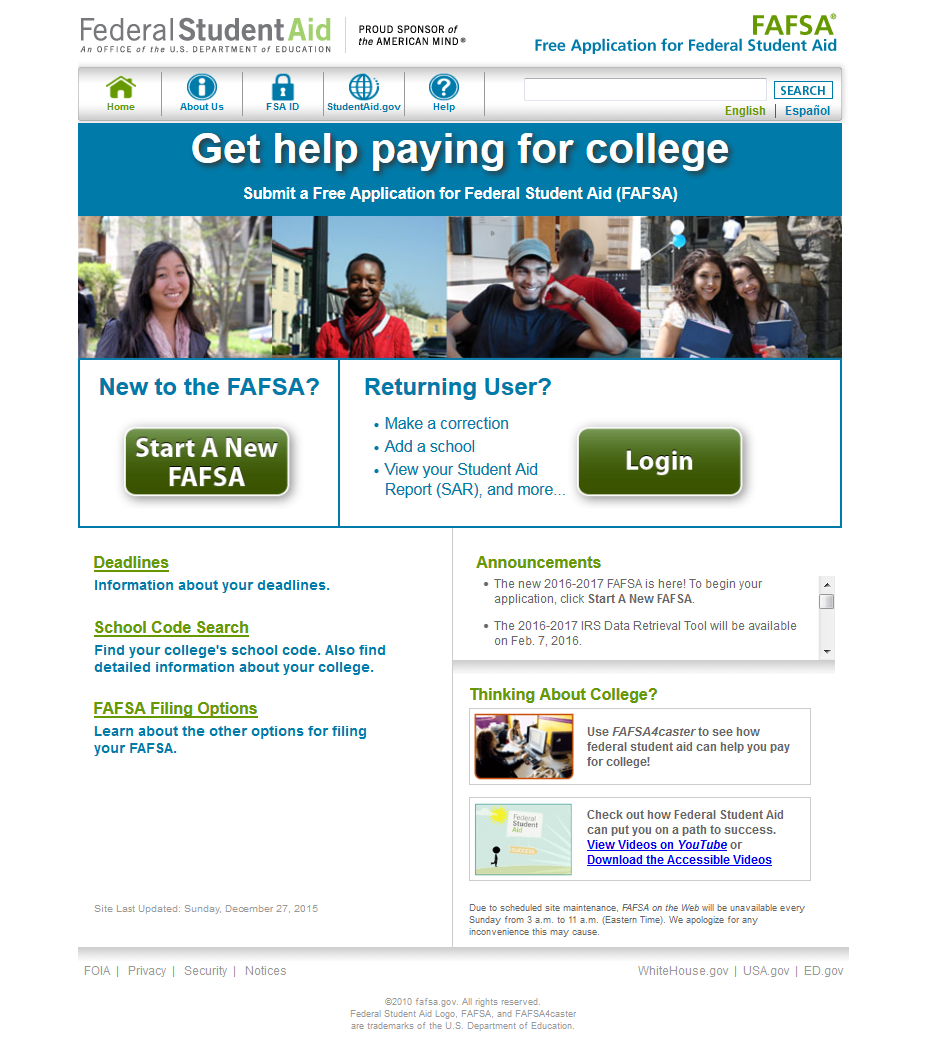
Nearly every student should complete the FAFSA, regardless of their family's income. It's the gateway to federal grants, work-study, and loans. Many states and colleges also use FAFSA information to award their own aid. Without it, you could be leaving a lot of money on the table.
The FAFSA becomes available on October 1st each year. Filing it as early as possible is crucial, as some aid is awarded on a first-come, first-served basis.
Look Beyond Federal Aid
While federal aid is a massive source of support, it's not the only one. Many other organizations offer financial assistance.
State Aid: Most states have their own grant and scholarship programs for residents attending in-state colleges. Your FAFSA information is often used to determine your eligibility for these as well, but some states may require a separate application.
Institutional Aid: Colleges and universities offer their own aid from their funds. This can include scholarships based on academic achievement, artistic talent, or other criteria, as well as need-based grants to make attendance more affordable. Some institutions may require an additional form, like the CSS Profile, to be considered for this aid.
Now, let's test your understanding of these core concepts.
What is the primary purpose of financial aid?
Which type of financial aid is considered "gift aid," meaning it does not need to be repaid?
By exploring federal, state, and institutional options, you cast the widest possible net to find the support you need for your education.