Decoding Your Birth Chart
Introduction to Birth Charts
A Map of the Sky
At the very moment you were born, the planets were arranged in a specific pattern across the sky. Imagine taking a snapshot of that celestial alignment. In astrology, this snapshot is called a birth chart.
Natal Chart
noun
A map of the sky showing the exact position of the Sun, Moon, and planets at the moment and location of a person's birth. It's also commonly known as a birth chart.
This chart is the foundational tool in astrology. It’s not just a random picture of stars; it's a personalized map that can offer deep insights into your personality, your strengths, your challenges, and the potential paths your life might take. Think of it like a cosmic blueprint, unique to you.
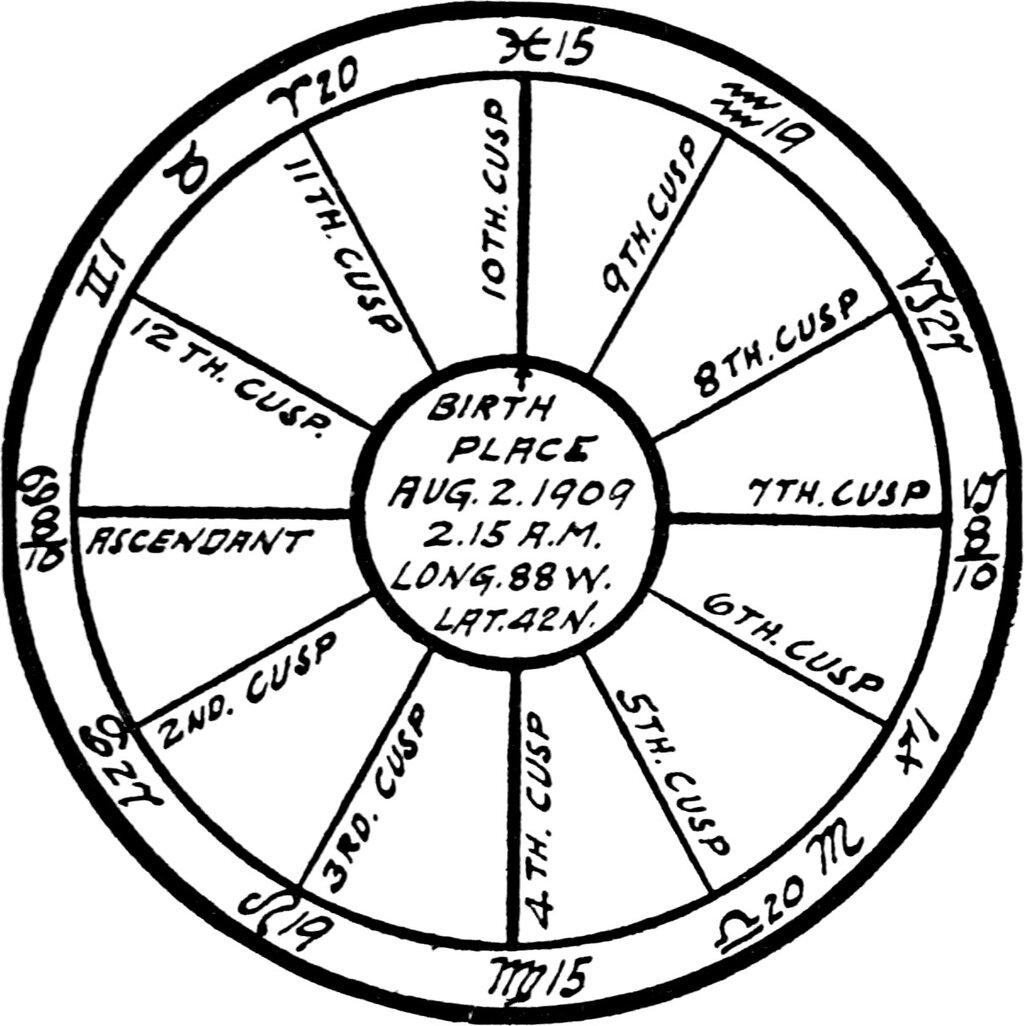
A birth chart is a detailed map of an individual’s personality, strengths, weaknesses, and life path.
The Three Keys to Your Chart
To create an accurate birth chart, an astrologer needs three specific pieces of information. Without them, the map will be incomplete or incorrect.
| Required Data | Why It Matters |
|---|---|
| Date of Birth | Determines the position of the Sun and other long-orbit planets, which defines your primary zodiac sign. |
| Time of Birth | Crucial for calculating the placement of the houses and your Ascendant (or Rising) sign, which changes about every two hours. |
| Place of Birth | Specifies the exact location on Earth from which the sky was viewed, affecting the angles of the houses and planet placements. |
Even a small difference in birth time can shift the entire structure of the chart. That's why astrologers emphasize getting the most precise data possible. It's the difference between a generic map and a detailed GPS coordinate for your life's starting point.
The Core Components
A birth chart looks complex at first glance, but it's built from four fundamental elements working together. We'll explore each of these in detail later, but for now, let's get a quick overview.
-
The Planets: These are the actors in the play. They represent different facets of your personality and basic psychological drives. The Sun, Moon, Mercury, Venus, and Mars are often called the “personal planets” because they move quickly and relate to our day-to-day lives.
-
The Zodiac Signs: These are the roles the actors play. Each of the 12 signs—from Aries to Pisces—lends its unique style and energy to the planet that occupies it. For example, an assertive Mars will express itself very differently in sensitive Cancer than it would in ambitious Capricorn.
-
The Houses: These are the stages or areas of life where the action takes place. The chart is divided into 12 houses, each governing a different domain, such as career, relationships, family, or self-identity.
-
The Aspects: These are the relationships between the actors. Aspects are the geometric angles planets form with each other. They describe how different parts of your personality work together—whether they are in harmony, in conflict, or somewhere in between.
Understanding how these four elements combine is the key to unlocking the wisdom of your birth chart.
Ready to check your understanding of these core concepts?
What is an astrological birth chart best described as?
In the analogy of a birth chart as a play, what role do the Houses play?
Now that you know what a birth chart is and what it’s made of, you have the foundation to explore each of its components in greater depth.