Decoding T.S. Eliot's The Waste Land
Introduction to Modernist Literature
A Break from the Past
At the turn of the 20th century, the world was changing faster than ever before. Cities swelled with new arrivals, factories churned out new products, and technologies like the automobile and the airplane reshaped the very concepts of time and distance. Thinkers like Sigmund Freud and Albert Einstein were introducing radical new ideas about the human mind and the universe. It was an exciting, but also deeply unsettling, time.
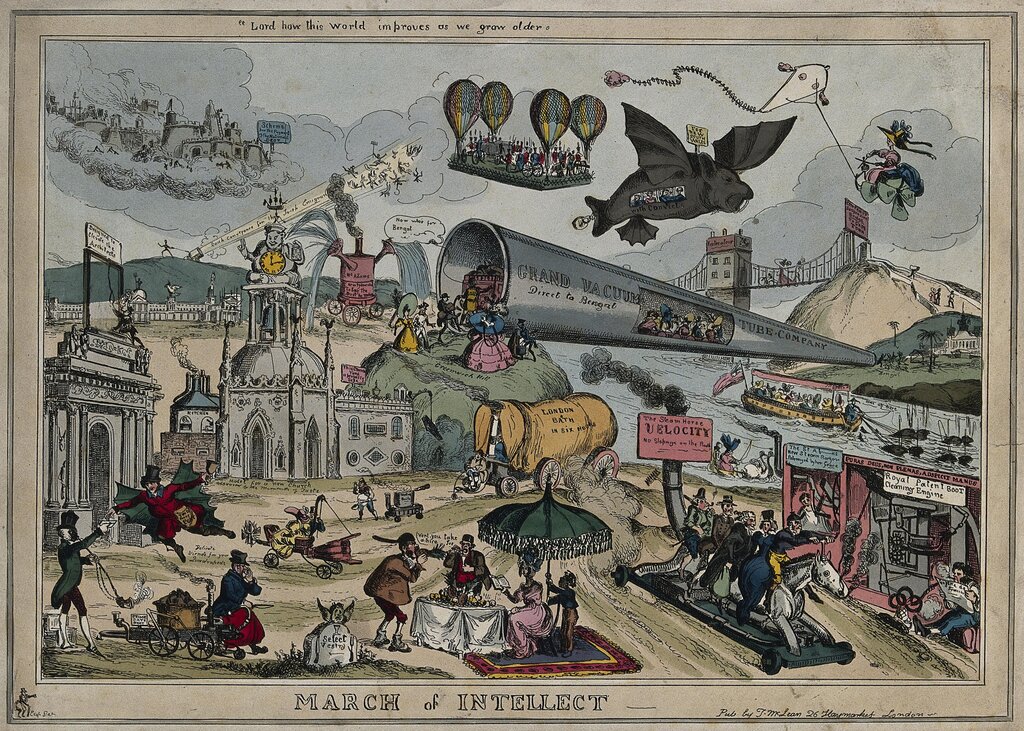
Artists and writers felt this shift intensely. The old, orderly ways of telling stories—with clear beginnings, middles, and ends, and characters who followed predictable paths—seemed inadequate to capture the chaotic, fragmented experience of modern life. They felt a growing need to create something new, something that reflected the world as they actually saw and felt it. This impulse gave rise to Modernism, a sweeping artistic movement that sought to “make it new,” as poet Ezra Pound famously urged.
The Impact of War
Then came World War I. The “Great War” was a cataclysm unlike any before it, bringing industrial-scale slaughter and shaking the foundations of Western civilization. A generation of young people marched off to war believing in honor, duty, and national glory, only to face the brutal realities of trench warfare.
This experience created a profound sense of disillusionment. The old certainties—in God, in progress, in authority—were shattered. Many writers who lived through this era, often called the “Lost Generation,” saw the world as a broken, meaningless place. Their work reflected this spiritual emptiness and deep skepticism toward the traditional values that had led to such devastation.
After the war, the world seemed broken. Modernist writers weren't just telling stories; they were trying to piece together the fragments of a shattered culture.
New Ways of Writing
To capture this new reality, Modernists threw out the old rulebook. They experimented with form and language in ways that were often challenging for readers. Some of their key techniques included:
Fragmentation
noun
Breaking narratives into disjointed pieces, mirroring a sense of a fractured world. A story might jump between different times, places, or character perspectives without clear transitions.
Another common technique was the stream of consciousness. Instead of a narrator neatly describing events, the story unfolds directly through a character's thoughts. This gives the reader an unfiltered look inside a character’s mind, complete with all its messy jumps, memories, and sensory impressions.
Imagine listening to someone's complete, uncensored inner monologue. That's the essence of stream of consciousness.
Modernist writers also made heavy use of allusion, referencing myths, religious texts, historical events, and other works of literature. They layered these references to create deeper levels of meaning, but it also placed a new demand on the reader to decipher these complex connections.
Key figures of this movement include Virginia Woolf, James Joyce, William Faulkner, and Ezra Pound. Another central figure was T.S. Eliot, an American-born poet whose work would come to define the anxieties and innovations of the entire Modernist era.
| Feature | Traditional Narrative | Modernist Literature |
|---|---|---|
| Plot | Linear, chronological | Fragmented, non-linear |
| Narration | Omniscient, reliable narrator | Multiple perspectives, stream of consciousness |
| Meaning | Clear, often with a moral | Ambiguous, open to interpretation |
| Worldview | Orderly and coherent | Chaotic and uncertain |
These writers weren't just telling stories. They were using language to explore the psychological and spiritual landscape of the 20th century.
What major historical event is most closely associated with the profound sense of disillusionment and spiritual emptiness that characterized the 'Lost Generation' of Modernist writers?
The Modernist literary technique that attempts to capture the messy, unfiltered, and non-linear flow of a character's thoughts and sensory experiences is called: