Decoding Science How to Read Research Papers
Understanding Scientific Papers
The Anatomy of a Research Paper
Scientific papers can look intimidating. They're dense with information, charts, and specialized language. But once you understand their structure, they become much easier to navigate. Most research articles, especially in the sciences and social sciences, follow a consistent format. Think of it as a universal blueprint for sharing new knowledge.
Most academic research papers follow a standard framework, often summarized as IMRaD: Introduction, Methods, Results, and Discussion.
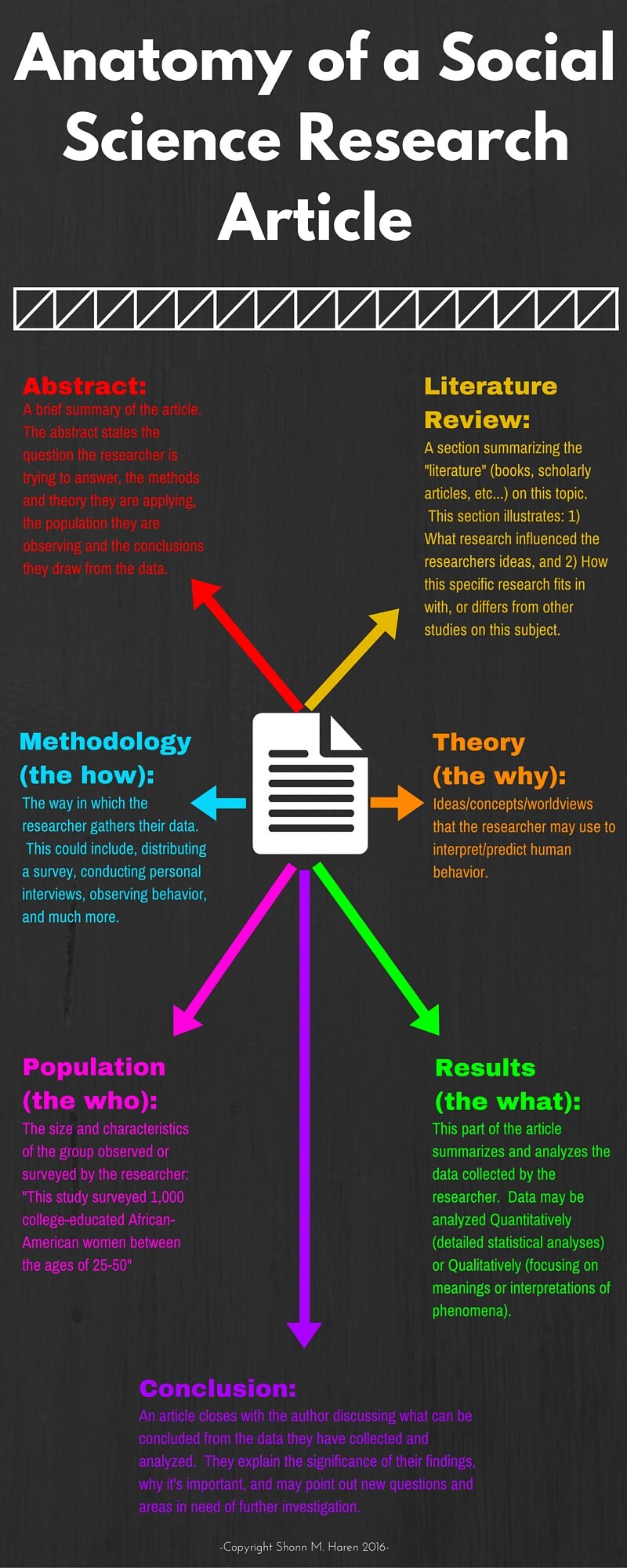
This IMRaD structure (Introduction, Methods, Results, and Discussion) creates a logical flow. It tells a story, starting with a question, explaining how it was investigated, revealing what was found, and finally, discussing what it all means. Let's break down each part.
Deconstructing the Sections
While most papers follow the IMRaD format, they usually begin with an abstract.
Abstract The abstract is a short, powerful summary of the entire article. It typically covers the research question, the key methods, the main findings, and the major conclusions, all in about 250 words. It's the movie trailer for the paper.
Reading the abstract first is the most efficient way to decide if the paper is relevant to you. If the summary doesn't align with what you're looking for, you can move on without reading the full text.
Introduction The introduction sets the stage. It starts broad by providing background information on the topic, explaining what is already known and what gaps exist in the current understanding. This section funnels down to the specific purpose of the study, ending with a clear statement of the research question or the hypothesis being tested.
Hypothesis
noun
A testable statement or a proposed explanation for a phenomenon. It's not just a guess; it's an informed prediction based on existing knowledge that the research aims to support or refute.
Methods This section is the recipe of the research. It describes exactly how the study was conducted: who or what was studied, what materials were used, and the step-by-step procedures that were followed. The goal is to provide enough detail so that another researcher could replicate the study. This is the heart of the scientific process, ensuring that results can be verified.
Methodology
noun
The overall strategy and rationale of the research. While the 'methods' section describes the specific tools and procedures, 'methodology' refers to the broader theoretical framework that justifies the choice of those methods.
Results Here, the authors present their findings without any interpretation. It is a straightforward, factual account of what the data showed. This section often includes tables, graphs, and figures to visualize the data, along with text that points out the key results. The results section presents the 'what,' not the 'why' or 'so what.'
It's in this section that you'll often encounter the term 'statistical significance.' This is a measure of confidence. If a result is statistically significant, it means it's unlikely to have occurred by random chance.
A common threshold for statistical significance is a 'p-value' of less than 0.05 (). This suggests there is less than a 5% probability that the observed results happened by chance.
Discussion If the results section is the 'what,' the discussion is the 'so what.' Here, the authors interpret their findings, explaining what they mean in the context of their original research question. They will discuss whether the results support their hypothesis, compare their findings to previous studies, and acknowledge any limitations of their own research. This section often concludes by suggesting implications or directions for future research.
The Gatekeepers of Science
Before a paper is published in a reputable journal, it goes through a crucial quality control process. This ensures the research is sound, original, and contributes to the field.
Peer review
noun
The evaluation of scientific work by other experts in the same field. Before an article is published, the journal's editors send it to several independent, often anonymous, researchers (peers) who assess its validity, significance, and originality. This process helps maintain the quality and integrity of scientific literature.
Understanding this structure and terminology demystifies the process of reading scientific literature. With this framework in mind, you can approach any paper with a clear strategy for extracting the information you need.
Ready to test your knowledge? Let's see what you've learned about the anatomy of a research paper.
What is the primary purpose of the abstract in a scientific paper?
Which section of a scientific paper is written like a 'recipe,' providing enough detail so that another researcher could replicate the study?
Now that you have a map to navigate scientific papers, you're better equipped to engage with research in any field.