Decoding Profit and Loss Statements
Introduction to Profit and Loss Statements
What is a P&L Statement?
A Profit and Loss (P&L) statement is a financial report that shows how a business performed over a specific period, like a quarter or a year. It's often called an income statement. Think of it as a report card for a company's financial health during that time. It answers a simple but vital question: did the company make money or lose money?
The Income Statement, often referred to as the Profit and Loss Statement (P&L), serves as a dynamic report card for a company's performance over a specific period.
Unlike some other financial documents that show a single snapshot in time, the P&L tells a story over a duration. It tallies up all the money the company brought in and subtracts all the money it spent. The final number reveals whether the business ended up with a profit or a loss.
The Basic Formula
At its heart, every P&L statement, no matter how detailed, follows one straightforward formula. This equation is the foundation for understanding a company's profitability.
Let's break down these three key parts. They are the building blocks of any P&L statement.
Revenue
noun
The total amount of money a business generates from its sales of goods or services, before any costs are deducted. It's the 'top line' of the P&L.
Revenue is all the cash coming in from customers. If a bakery sells 100 loaves of bread for $5 each, its revenue from that product is $500. It's the starting point for calculating profit.
Expenses
noun
The costs a business incurs to generate revenue. This includes everything from salaries and rent to the cost of raw materials.
Expenses are all the costs of running the business. For our bakery, this would be the cost of flour and sugar, the baker's salary, the electricity for the ovens, and the rent for the shop. These costs are subtracted from revenue.
Net income, often called the 'bottom line,' is what's left over after all expenses have been paid. It can be a profit (a positive number) or a loss (a negative number).
Putting It All Together
Imagine a simple P&L for our bakery for one month. It might look something like this:
| Category | Amount |
|---|---|
| Revenue | $10,000 |
| Less: Expenses | |
| Cost of Ingredients | $3,000 |
| Salaries & Wages | $4,000 |
| Rent & Utilities | $1,500 |
| Total Expenses | $8,500 |
| Net Income | $1,500 |
In this example, the bakery's revenue was $10,000. After subtracting total expenses of $8,500, the net income is $1,500. This positive result means the bakery was profitable for the month. If expenses had been $11,000, the net income would have been -$1,000, indicating a loss.
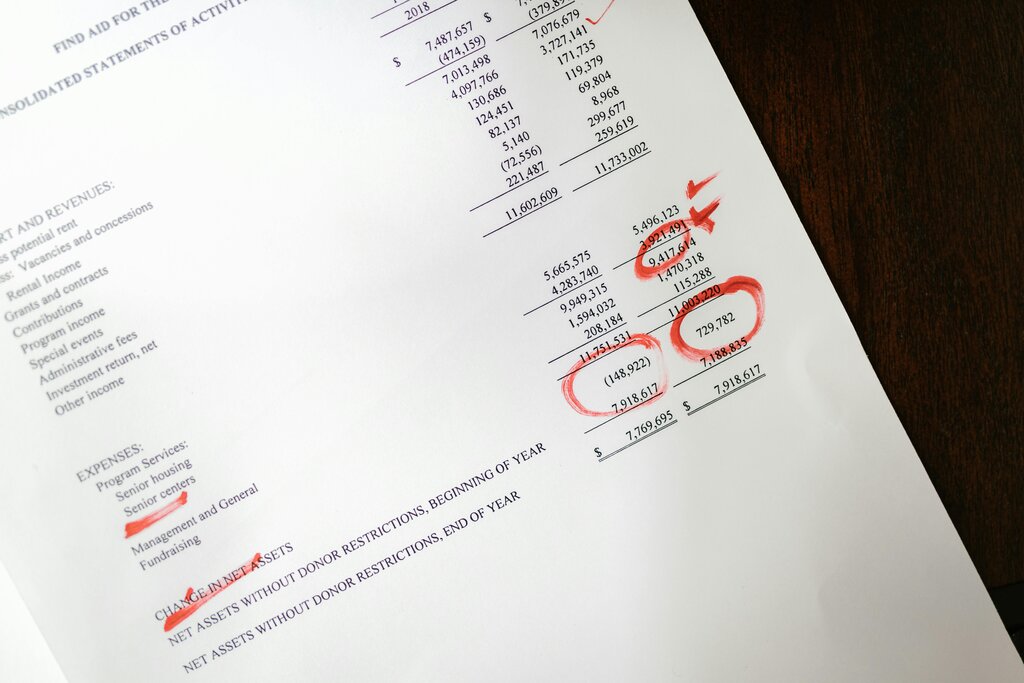
This simple structure is why the P&L statement is so powerful. It provides a clear, high-level view of a company's financial performance. Business leaders, managers, and investors all use it to assess how well a company is doing at generating a profit from its operations.
What is the primary question a Profit and Loss (P&L) statement is designed to answer for a specific period?
A P&L statement is often called an income statement.