Decoding Lacanian Psychoanalysis
Introduction to Lacanian Psychoanalysis
Rethinking the Mind
Jacques Lacan was a French psychoanalyst who took Sigmund Freud's ideas and turned them on their head. Active from the 1930s until his death in 1981, Lacan became one of the most influential and controversial thinkers in psychoanalysis since Freud himself. His work is famously difficult, but his core ideas offer a powerful new way to think about who we are.
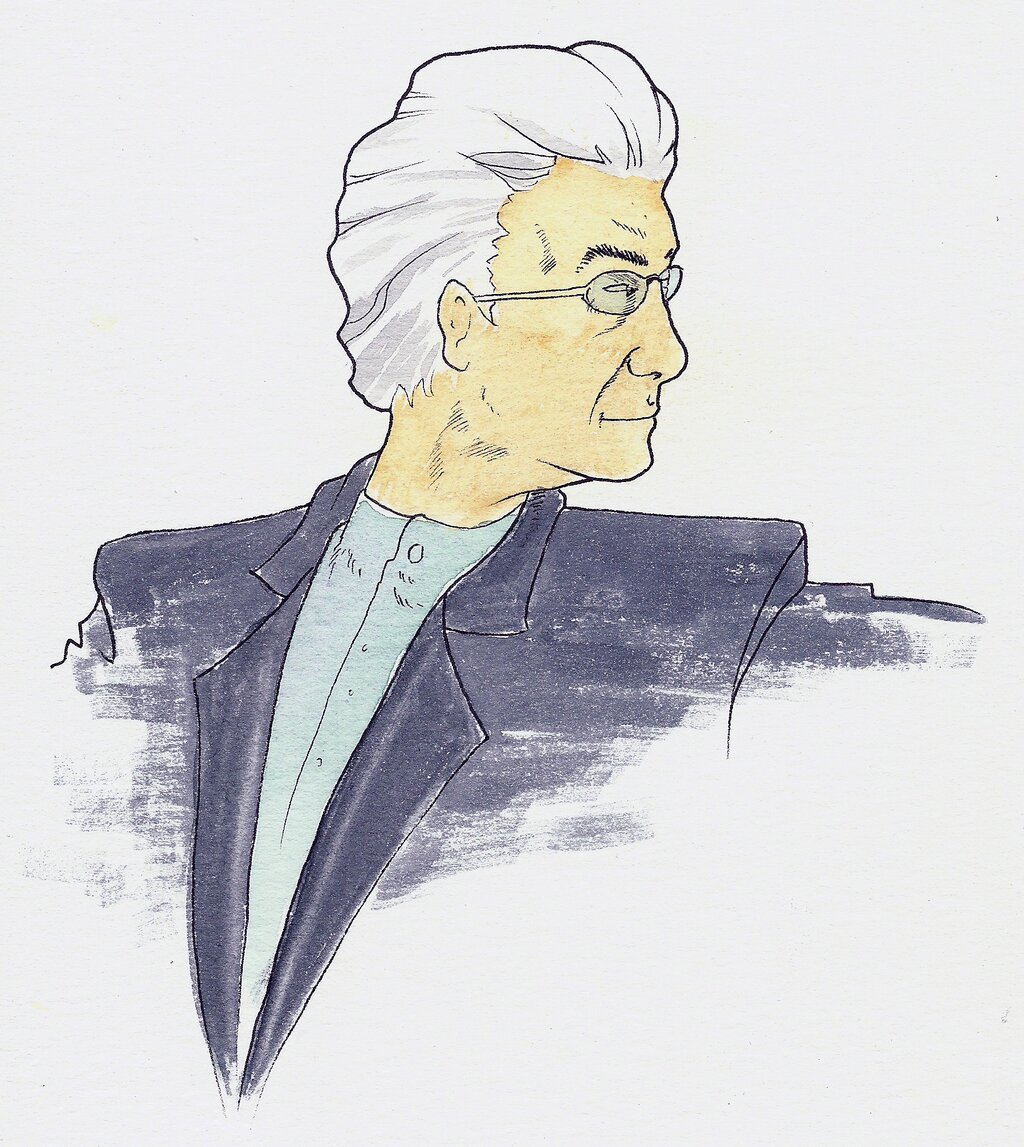
Lacan wasn't trying to replace Freud. Instead, he called for a “return to Freud.” He believed that the psychoanalysts who came after Freud, especially in the United States, had misinterpreted the core of his message. This movement, known as ego psychology, focused on strengthening a patient's ego to help them adapt to social reality. Lacan thought this missed the point entirely.
For Lacan, the ego wasn't a source of strength to be bolstered. It was the source of our deepest illusions and self-deceptions.
He argued that the true revolution in Freud's work was the discovery of the unconscious. But what was the unconscious? For Lacan, the answer lay in language. He drew heavily on structural linguistics, a field that studies the underlying systems that govern language. This led to his most famous declaration: the unconscious is structured like a language. It operates through its own grammar and rules, much like French or English. Our slips of the tongue, our jokes, and our dreams are not random noise; they are meaningful expressions from this hidden realm.
The Three Orders
To map out this inner world, Lacan proposed three fundamental registers, or orders, that shape our existence: the Imaginary, the Symbolic, and the Real. These aren't stages we pass through, but three interconnected dimensions of our reality that are always at play.
The Imaginary Order is the realm of images and identification. It's our sense of having a unified self, a coherent “me.” This is the world of appearances and reflections, where we build an idea of who we are by identifying with images, most importantly the image of our own body.
The Symbolic Order is the world of language, law, social rules, and culture. When we learn to speak, we enter the Symbolic. This order is imposed on us from the outside; it existed long before we were born. It structures our desires and dictates the terms of our social reality. The Symbolic is what makes us social beings.
The Real is the most difficult order to grasp. It is what lies outside of both the Imaginary and the Symbolic. It's the raw, unstructured reality that cannot be captured in images or words. Think of it as the traumatic, the meaningless, the unsymbolizable kernel that our reality is constructed to cover over. It's the limit of what we can know and say.
The three orders posited by Lacan—the Imaginary, the Symbolic, and the Real—are always present in the psychoanalytic subject, and there is no sense in Lacan’s thought that one order could or should become psychologically dominant through treatment.
These three orders are not separate domains but are knotted together. Understanding their interplay is the first step into Lacan's complex but rewarding vision of the human mind.
What was the primary motivation behind Jacques Lacan's call for a 'return to Freud'?
Which of Lacan's three orders is primarily concerned with language, law, and social structures?