Decoding IREN Stock Performance
Introduction to Stock Market Basics
What Is a Stock?
At its core, a stock is simply a share of ownership in a public company. Think of a company as a whole pizza. When you buy a stock, you're buying a small slice of that pizza. This makes you a shareholder, which means you own a piece of the company's assets and have a claim on a portion of its profits.
Stock
noun
A type of security that signifies ownership in a corporation and represents a claim on part of the corporation's assets and earnings.
Why do companies sell these slices? The main reason is to raise money, also known as capital. Companies use this capital to fund new projects, expand their operations, or pay off debt. For investors, buying stock is a way to potentially grow their money as the company succeeds.
Where Stocks Are Traded
Stocks are bought and sold in a marketplace, just like produce at a farmer's market. The primary marketplace for stocks is a stock exchange. These are organized platforms where buyers and sellers come together to trade shares in a secure, regulated environment. The most well-known exchanges are the New York Stock Exchange (NYSE) and the Nasdaq.
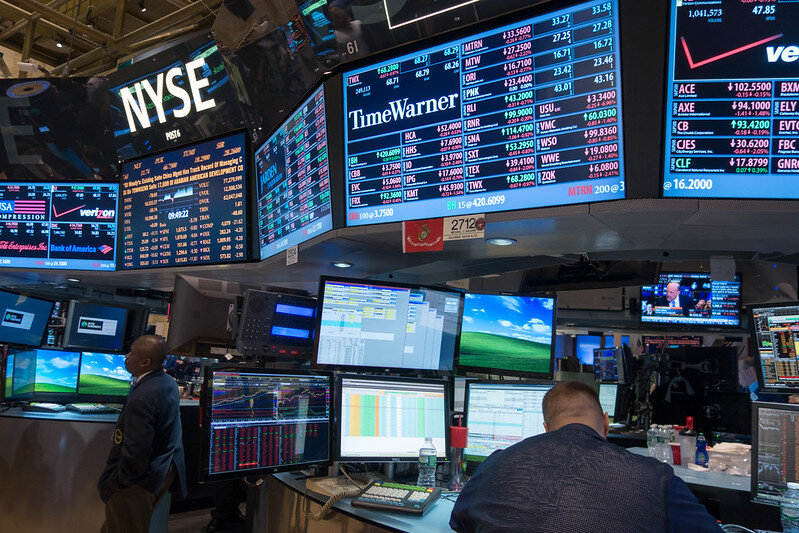
When an investor wants to buy or sell a stock, they place an order through a broker. The exchange's system then works to match buy orders with sell orders at an agreed-upon price. This entire process, once done by traders shouting on a crowded floor, is now mostly electronic.
Why Prices Change
A stock's price is not static; it fluctuates constantly throughout the day. These changes are driven by the fundamental principles of supply and demand. If more people want to buy a stock (high demand) than sell it (low supply), the price goes up. If more people want to sell a stock (high supply) than buy it (low demand), the price goes down.
But what influences supply and demand? Several factors are at play:
- Company Performance: Strong earnings reports, new product launches, or positive news can increase demand for a stock.
- Industry Trends: Growth or decline in a company's sector can affect its stock price. For example, a breakthrough in renewable energy could boost the stocks of solar power companies.
- Economic Conditions: Broader economic factors like interest rates, inflation, and unemployment can impact the entire market.
- Investor Sentiment: Sometimes, a stock's price is influenced by public perception and market psychology, not just financial data.
The Players in the Market
The stock market is a complex ecosystem with many different participants, each playing a distinct role.
| Participant | Role in the Market |
|---|---|
| Retail Investors | Individuals who buy and sell stocks for their personal accounts. |
| Institutional Investors | Large organizations like mutual funds, pension funds, and insurance companies that invest on behalf of others. They trade in much larger volumes. |
| Brokers | Firms or individuals who act as intermediaries, executing buy and sell orders for investors. |
| Market Makers | Firms that provide liquidity by being ready to buy or sell a particular stock at any time, profiting from the spread between the buy and sell price. |
| Regulators | Government agencies, like the Securities and Exchange Commission (SEC) in the U.S., that create and enforce rules to protect investors and ensure the market is fair. |
Understanding these core components, from what a stock is to who participates in the market, provides a solid foundation for navigating the world of investing.
Now, let's test your understanding of these fundamental concepts.
What does owning a stock of a company primarily represent?
What is the main reason companies issue stock?