Decoding Financial Aid Packages
Understanding Financial Aid
What is Financial Aid?
Think of financial aid as any money that helps a student pay for higher education. College is expensive, and very few people pay the full sticker price out of pocket. Financial aid is designed to bridge the gap between the total cost of attendance and what your family can reasonably contribute.
This aid can come from several sources, including the federal government, your state government, the college itself, or private organizations. The goal is to make education accessible, regardless of a student's financial situation.
The Four Main Types
Financial aid isn't just one thing. It's a mix of different types of funding, each with its own rules. Generally, it falls into four categories. Some of it is free money, some is earned, and some has to be paid back.
Grant
noun
A form of financial aid that does not have to be repaid. Grants are typically awarded based on financial need.
Grants are the best kind of aid because they're a gift. You don't have to repay them. The most common source is the federal government, which offers the Pell Grant to undergraduate students with significant financial need. States and colleges also offer their own grants.
Grants and scholarships are often called “gift aid” because they are free money that doesn't need to be repaid.
Scholarships are another form of gift aid. The main difference is that they are often merit-based. This means they're awarded for academic achievement, athletic talent, artistic ability, or involvement in a particular field of study. Scholarships can come from colleges, companies, and nonprofit organizations.
Next is work-study. The Federal Work-Study program provides part-time jobs for students with financial need, allowing them to earn money to help pay for education expenses. The jobs are often on campus and related to your field of study, which is a great bonus. This is considered “earned money.”
Finally, there are loans. This is borrowed money that you must repay with interest. Student loans can come from the federal government or from private sources like banks. Federal student loans are often preferred because they typically have lower interest rates and more flexible repayment options than private loans. While they are a helpful tool, it's crucial to borrow only what you absolutely need.
When a school sends you a financial aid offer, you'll want to look for free money first (scholarships and grants), earned money second (work-study programs), and borrowed money last (federal student loans).
How to Apply
For most students, the financial aid process starts with one key form: the FAFSA. This stands for the Free Application for Federal Student Aid.
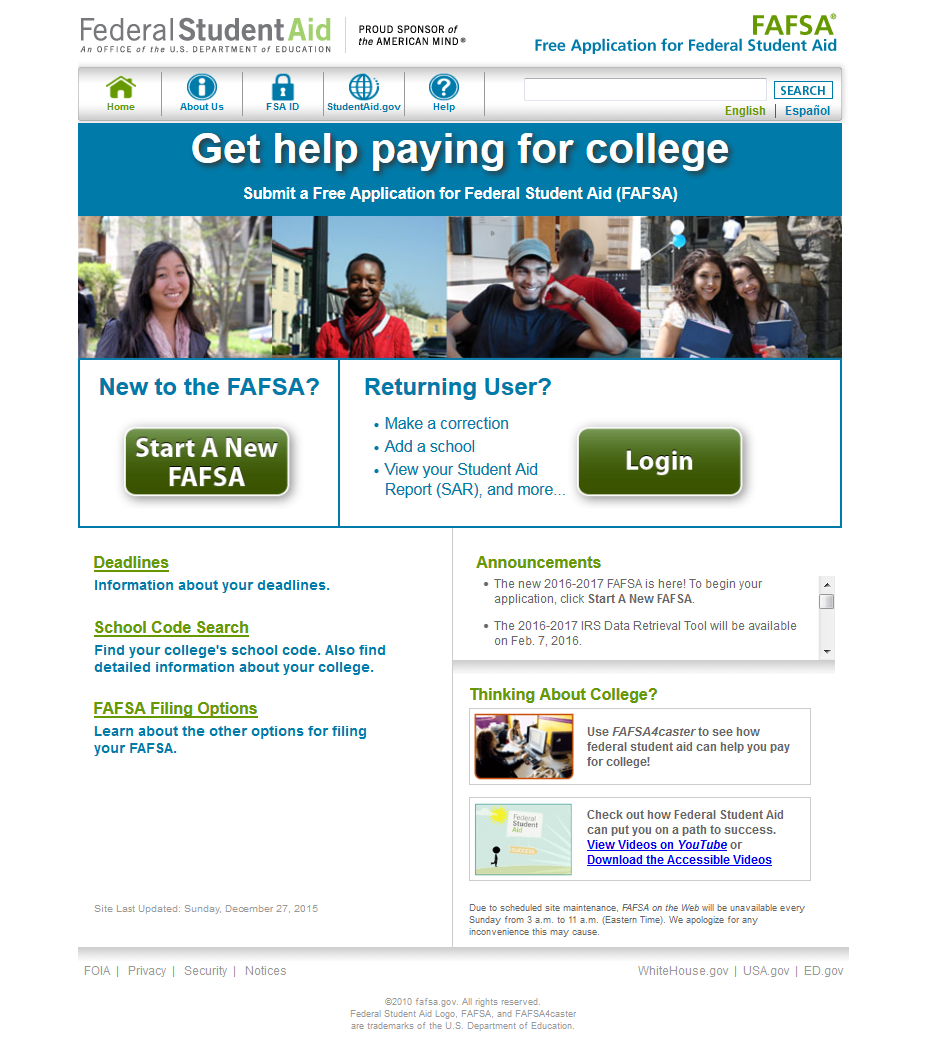
This single application is used by the federal government, states, and most colleges to determine your eligibility for grants, work-study, and federal loans. You'll provide information about your family's income and assets, and the government uses a formula to calculate your expected family contribution, or EFC. Colleges then use this number to figure out how much aid you qualify for.
Some private colleges may also ask you to fill out the CSS Profile, which is a more detailed application that helps them award their own institutional aid. Regardless of the forms required, it’s always best to apply as early as possible, as some aid is awarded on a first-come, first-served basis.
Reading the Fine Print
Once you receive a financial aid offer from a college, it's tempting to just look at the total dollar amount. But it's critical to understand exactly what you're being offered. Not all aid is created equal.
Look closely at the breakdown. How much is gift aid, like grants and scholarships? How much is in loans that you'll have to pay back? Also, check the terms and conditions. Is a scholarship renewable for all four years? If so, what are the requirements to keep it, such as maintaining a certain GPA?
For loans, understand the interest rate and when you'll have to start making payments. Being an informed consumer now can save you a lot of stress and money down the road. If anything is unclear, don't hesitate to contact the college's financial aid office.
Ready to check your understanding? Take this short quiz.
What is the primary purpose of financial aid?
Which type of financial aid is considered 'earned money' that a student receives for performing a part-time job, often on campus?
Understanding financial aid is the first step toward making a smart, affordable choice for your education. By knowing the types of aid available and how to apply, you empower yourself to find the best path forward.