Decoding Election Polls
Understanding Polling Fundamentals
What Are Polls For?
Election polls are snapshots, not crystal balls. They measure public opinion at a specific moment in time, providing a glimpse into what a group of people thinks about candidates or issues. Think of them like taking a photo of a running race; it shows who's ahead right now, but it doesn't guarantee who will cross the finish line first.
Polls are a critical tool for democracy,
For campaigns, polls help shape strategy. They reveal which messages are resonating with voters and which demographics might need more attention. For the public and the media, polls offer a way to understand the political landscape and the key concerns of the electorate. But to make sense of them, you need to know what kind of poll you're looking at.
Types of Polls
Not all polls are created equal. They have different goals and are conducted in different ways. The most common ones you'll encounter are opinion polls, exit polls, and a sneaky variation called push polls.
Opinion Poll
noun
A survey designed to measure public opinion on a particular issue or candidate before an election.
When you hear a news report say "a new poll shows...," they're usually talking about an opinion poll. These are the standard surveys that aim to capture a representative slice of public sentiment.
Exit polls are different. They happen on Election Day itself.
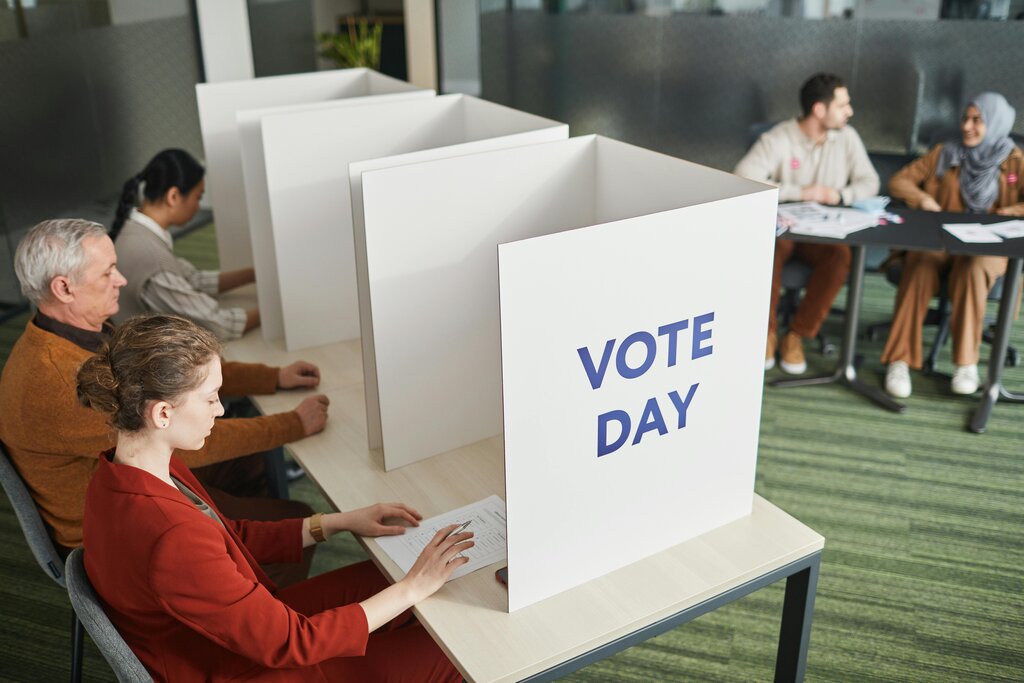
Interviewers station themselves outside polling places and ask voters how they voted right after they've cast their ballots. This provides an early indication of the election's outcome and helps analysts understand why people voted the way they did by asking about key issues and demographics.
Then there are push polls. These aren't really polls at all.
A push poll is a marketing tactic disguised as a survey. Its goal is to spread negative, and often false, information about a candidate to influence voters.
For example, a call might start with, "Would you be more or less likely to vote for Candidate X if you knew they secretly opposed funding for local schools?" The question isn't designed to gather your opinion; it's designed to plant a negative idea in your head.
How Polls Work
It's impossible to ask every single voter for their opinion. Instead, pollsters survey a smaller group, called a sample, and use their responses to estimate the views of the entire population. The key is making sure that sample accurately reflects the larger group.
The most common method is random sampling, where every person in the population has an equal chance of being selected. This helps avoid bias and makes the sample more likely to be representative.
Once a sample is chosen, pollsters collect data through various methods. Traditionally, this was done via landline phone calls. Today, it's more complex. Methods include live calls to cell phones and landlines, automated calls, online surveys, and even mail-in questionnaires. Each method has its own strengths and weaknesses in reaching different segments of the population.
The Art of Asking Questions
How a question is asked can completely change the answer. The wording and even the order of questions can nudge respondents in a certain direction, sometimes unintentionally.
Leading language, loaded terms, and confusing phrasing can all skew a poll's results, making them an unreliable measure of true public opinion.
Consider two ways to ask about a new environmental policy.
| Question Wording | Potential Impact |
|---|---|
| "Do you support a new initiative to protect our local rivers and wildlife?" | This uses positive, appealing language ('protect,' 'wildlife') and likely gets more 'yes' answers. |
| "Would you support a 1% increase in sales tax to fund environmental programs?" | This focuses on the cost to the individual ('tax increase') and may result in more 'no' answers. |
Both questions are about the same policy, but they frame it differently, leading to different results. The order of questions also matters. Asking about a popular politician right before asking about their signature policy can make people view that policy more favorably. A well-designed poll tries to ask neutral, clear questions in an order that minimizes bias.
Now, let's test your knowledge on these foundational concepts.
What is the primary purpose of an election poll?
An interviewer approaches you as you leave a voting booth on Election Day and asks about your vote. What type of poll is this?
Understanding what polls are, the different types you'll see, and how they're constructed is the first step to becoming a savvy consumer of political news. It gives you the tools to look past the headlines and think critically about what the numbers really mean.