Decoding Election Polls
Introduction to Election Polling
Taking the Public's Pulse
Election polls are snapshots of public opinion at a specific moment in time. Think of them like a weather forecast for a political race. They don't predict the future with certainty, but they give us a strong indication of which way the wind is blowing. For candidates, polls help shape campaign strategies. For the media, they provide a narrative for the election. And for the public, they offer a glimpse into the minds of fellow voters.
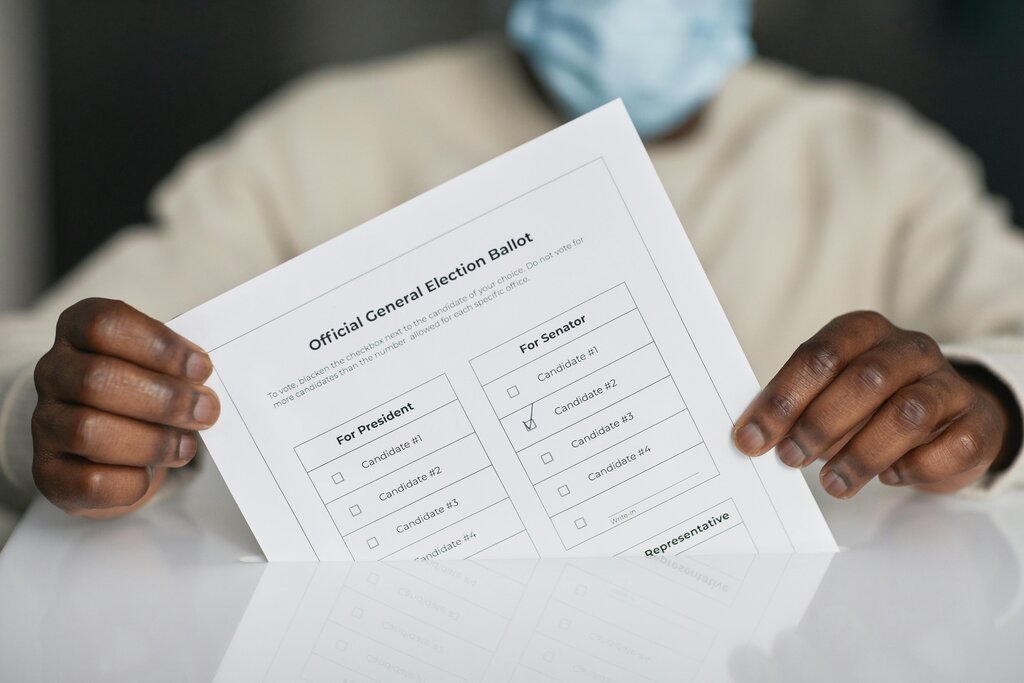
The goal is to understand the preferences of an entire population, like all eligible voters in a country, without having to ask every single person. It’s a powerful idea and a fundamental part of modern politics.
Polls are a critical tool for democracy,
A Quick Trip Through Time
Polling wasn't always so scientific. Early attempts, known as straw polls, began in the 19th century. Newspapers would informally survey people on the street or at public gatherings to get a sense of a candidate's popularity. They were fun but often wildly inaccurate.
The most famous polling failure was the Literary Digest poll of 1936. The magazine surveyed millions of its readers and confidently predicted a landslide victory for Republican Alf Landon. Instead, Franklin D. Roosevelt won in a historic rout. The magazine's mistake? It surveyed people from its own subscription lists and from telephone directories, which in the midst of the Great Depression, meant they mostly reached wealthier voters who leaned Republican. They missed a huge portion of the electorate.
This disaster paved the way for more scientific methods. Pioneers like George Gallup used smaller, more carefully selected groups of people to create a representative sample of the entire population. Early on, this meant conducting interviews face-to-face. As technology changed, pollsters shifted to telephone calls, and today, many polls are conducted online.
Speaking the Language
To understand polls, you need to know a few key terms. The first is the difference between a population and a sample. The population is the entire group you want to know about, like every adult in Texas. A sample is the small slice of that group you actually survey. The key is to make the sample representative of the whole population.
It's like tasting a spoonful of soup to check the seasoning in the whole pot. If you stir the soup well, one spoonful tells you a lot.
sample
noun
A subset of a larger population, selected to be representative of that population.
But a sample is never a perfect mirror of the population. There’s always a bit of uncertainty, which is where the margin of error comes in. If a poll says a candidate has 45% support with a margin of error of 3%, it means their actual support is likely somewhere between 42% and 48%.
A small margin of error suggests the poll's result is closer to the truth. A large margin of error means you should be more skeptical.
Finally, you’ll often see a confidence interval, usually 95%. This is a statistical concept tied to the margin of error. A 95% confidence interval means that if you were to conduct the exact same poll 100 times, you could expect the results to fall within the margin of error in 95 of those polls. It's a measure of how reliable the poll's method is.
Ready to test your knowledge? Let's see what you've learned.
What is the primary purpose of a scientific election poll?
The Literary Digest poll of 1936 failed because its sample was not representative of the entire voting population.
Understanding these basic concepts is the first step to becoming a smart consumer of polling data. It helps you look past the headlines and see what the numbers are really telling you.