Decoding Election Polls
Introduction to Election Polling
What Is Election Polling?
At its heart, an election poll is a survey designed to take a snapshot of public opinion at a specific moment. Think of it as a way to understand what a large group of people—like all the voters in a country—thinks about candidates or issues without having to ask every single person.
Instead of talking to millions of people, pollsters survey a smaller, carefully chosen group, called a sample. The goal is for this small group to be a miniature version of the larger population. If the sample accurately reflects the whole group, their answers can give us a good idea of how an election might turn out.
Poll
noun
A survey of public opinion conducted by questioning a representative sample of the population.
Political campaigns use polls to test their message and see which issues matter most to voters. News organizations use them to report on the state of a race. For the public, polls offer a glimpse into the political landscape, showing who's ahead, who's behind, and how different groups of people feel about the candidates.
Election polls play a critical role in political discussions by probing public opinion and enabling political parties to assess their performance before elections.
A Quick Trip Through Time
The idea of polling isn't new. As far back as the 1824 U.S. presidential election, newspapers conducted informal “straw polls.” They would ask people at public gatherings or on the street who they planned to vote for. These early polls were unscientific and often unreliable, but they were the first attempt to measure the public’s mood before an election.
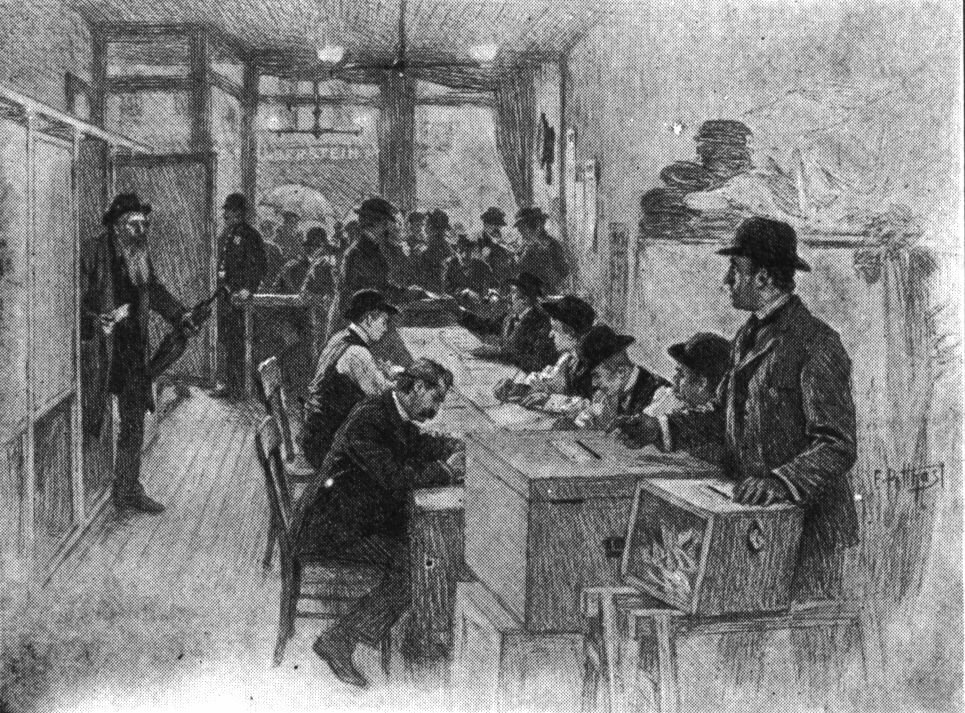
For decades, one of the most famous straw polls was run by a magazine called the Literary Digest. It had correctly predicted several presidential elections. But in 1936, it made a colossal mistake.
The magazine sent out millions of mock ballots and predicted that Republican Alf Landon would overwhelmingly defeat the incumbent, Franklin D. Roosevelt. The final result was the exact opposite: Roosevelt won in a historic landslide. The magazine’s error was so huge it went out of business soon after.
So what went wrong? The Literary Digest polled its own readers and people who had cars or telephones. During the Great Depression, this group was much wealthier than the average American and tended to vote Republican. The sample wasn't representative of the entire voting population, so the poll's results were skewed.
A poll is only as good as its sample. If the sample doesn't look like the broader population, the results will be wrong.
That same year, a young pollster named George Gallup used a more scientific method. He interviewed a much smaller but more demographically representative sample of voters and correctly predicted Roosevelt’s victory. Gallup's success marked a turning point, ushering in the era of scientific polling. Over time, methods evolved from face-to-face interviews to random-digit telephone dialing and, more recently, sophisticated online surveys.
Why Polls Matter
In a democracy, polls are more than just a way to predict winners and losers. They provide a vital channel for communication between the public and elected officials. They can highlight which issues people care about most, guiding politicians' focus and policy decisions.
For voters, polls offer information about the political landscape. They show which candidates are gaining or losing support and how public sentiment is shifting. This can sometimes create a “bandwagon effect,” where voters rally behind the candidate who appears to be winning. Other times, it can motivate supporters of a candidate who is trailing to turn out and vote.
For candidates, polls are an essential tool. They use polling data to shape their campaign strategy, decide where to spend advertising money, and tailor their speeches to address voter concerns. Polls help them understand their own strengths and weaknesses, as well as those of their opponents.
While individual polls can be wrong, the overall trend from multiple polls often provides a reliable picture of a campaign's trajectory. That's why you'll often see news reports from organizations that conduct their own polling or aggregate results from many different pollsters.
Major polling organizations you might see mentioned in the news include Gallup, Pew Research Center, Quinnipiac University Poll, and Marist Poll.
Now, let's test what you've learned about the basics of election polling.
What is the primary goal of using a sample in an election poll?
Why did the famous Literary Digest poll of 1936 incorrectly predict that Alf Landon would defeat Franklin D. Roosevelt?
Understanding these foundational concepts is the first step. By knowing what polls are, where they came from, and why they're important, you're better equipped to interpret the numbers you see during an election season.