Decoding Election Polls
Introduction to Election Polls
What Are Election Polls?
An election poll is a survey designed to measure public opinion on candidates or issues. Think of it as a snapshot. It captures what a specific group of people thinks at a particular moment in time. The main goal is to get a sense of the entire population's views by asking a much smaller, representative sample.
Election polls play a critical role in political discussions by probing public opinion and enabling political parties to assess their performance before elections.
These surveys are a cornerstone of modern politics. For candidates, they offer vital feedback on campaign strategies and messaging. For the media, they provide data for news coverage and analysis. And for the public, they can offer a glimpse into the collective mood of the electorate, showing which candidates are leading and which issues are resonating most.
poll
noun
The process of voting in an election or a survey of public opinion from a particular sample.
A Brief History of Polling
The idea of gauging public opinion isn't new. In the 19th century, American newspapers conducted informal "straw polls" by asking people on the street or at public events who they planned to vote for. These were unscientific but popular.
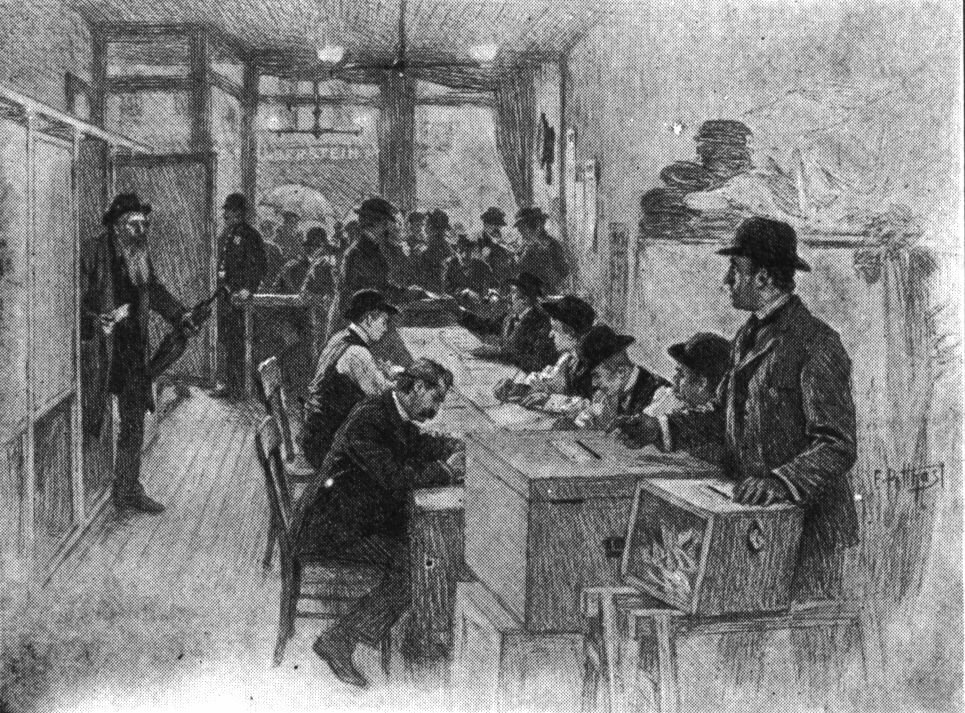
The turning point came in 1936. A popular magazine, The Literary Digest, predicted a landslide victory for Republican Alf Landon over the incumbent Franklin D. Roosevelt. The magazine had mailed out 10 million ballots, and over 2 million were returned. Their prediction was decisive—and spectacularly wrong. Roosevelt won in a landslide.
The magazine's mistake was its sample. They polled their own subscribers and people from car registration lists and telephone directories. In the midst of the Great Depression, this group was wealthier than the average American and not representative of the whole country.
At the same time, a young pollster named George Gallup used a much smaller, scientifically chosen sample of just 50,000 people to correctly predict Roosevelt's victory. This event established the importance of scientific sampling and marked the beginning of modern polling as we know it.
Types of Polls
Not all polls are created equal. Campaigns and news organizations use different types of polls for different purposes throughout an election cycle.
| Type | Purpose | When It's Used |
|---|---|---|
| Benchmark Poll | To get a baseline understanding of a candidate's support and name recognition. | At the very beginning of a campaign. |
| Tracking Poll | To monitor shifts in public opinion over time. | Throughout the campaign, often daily or weekly. |
| Opinion Poll | To measure public opinion on a specific issue or candidate at one point in time. | Anytime during an election cycle. |
| Exit Poll | To understand who voted and why, and to project winners quickly. | On Election Day, as voters leave polling places. |
Benchmark polls help shape the initial strategy of a campaign. Tracking polls are like taking a campaign's temperature, allowing for quick adjustments. Opinion polls provide those familiar horse-race numbers. Exit polls are unique because they survey actual voters, giving us the first insights into the election's outcome and the motivations behind it.
The Role of Polls in a Democracy
Polls are more than just numbers; they're a tool for communication between the public and political leaders. They provide a way for people's voices to be heard between elections.
Ideally, polls help create a more responsive government. When politicians see that a majority of the public supports a certain policy, they might be more inclined to act on it. They can also reveal areas where the public is uninformed or divided, highlighting a need for more public discourse.
However, it's crucial to remember that polls are a snapshot, not a prediction. They reflect public opinion at the time they are taken, and that opinion can change quickly in response to events.
They also influence elections themselves. Good poll numbers can generate positive media coverage and boost fundraising for a candidate. Poor numbers can have the opposite effect. This is sometimes called the "bandwagon effect," where voters might be more likely to support a candidate they see as popular or likely to win.
Because of this influence, it's important to approach poll results with a critical eye. As you'll see later, understanding the methods behind a poll is key to judging its credibility.
Time to check what you've learned about the fundamentals of polling.
Why did the Literary Digest's 1936 presidential poll famously fail to predict the election outcome?
What is the primary goal of a modern, scientific election poll?
That covers the basics of what polls are, where they came from, and why they matter. Next, we'll look at what makes a poll reliable.