Decoding Earnings Reports for Stock Investment
Financial Statements
The Big Three Financial Statements
A company's earnings report tells a story about its financial health. That story is written across three main documents: the income statement, the balance sheet, and the cash flow statement. Each one offers a different angle on the business's performance and stability. Together, they provide a complete picture.
The three primary financial statements are the income statement, cash flow statement, and balance sheet.
Think of them as a doctor's checkup for a company. One report might show you the company's blood pressure, another its temperature, and a third its heart rate. You need all three to understand the patient's overall health. Let's look at each one.
The Income Statement
The income statement shows how profitable a company was over a specific period, like a quarter (three months) or a full year. It's often called the Profit and Loss, or P&L, statement for a reason. It tallies up all the money the company made and subtracts all the money it spent.
Revenue
noun
The total amount of money a company generates from its sales of goods or services.
From revenue, we subtract all the costs of doing business. These are called expenses and include everything from salaries and marketing costs to the electricity bill. What's left over at the end is the famous "bottom line."
Revenue - Expenses = Net Income
If the number is positive, the company made a profit. If it's negative, it had a loss. It’s a straightforward report card on performance over time.
| Category | Amount |
|---|---|
| Revenue | $100,000 |
| Cost of Goods Sold | -$40,000 |
| Gross Profit | $60,000 |
| Operating Expenses | -$25,000 |
| Net Income (Profit) | $35,000 |
The Balance Sheet
While the income statement shows performance over time, the balance sheet is a snapshot. It shows what a company owns and what it owes at a single moment, like the last day of the year. It gets its name because it must always balance, based on a fundamental equation.
Assets are everything the company owns that has value, like cash, inventory, and equipment.
Liabilities are everything the company owes to others, such as loans from a bank or bills to suppliers.
Equity is what’s left over for the owners. It's the value of the assets after all the debts are paid off. You can think of it as the company's net worth.
This equation must always hold true. Every dollar of assets has to be funded by either debt (a liability) or owner investment (equity).
The Cash Flow Statement
The cash flow statement tracks the movement of cash. It tells you where a company's cash came from and where it went over a period of time. This is crucial because profit doesn't always equal cash. A company can look profitable on its income statement but still run out of money if its customers don't pay their bills on time.
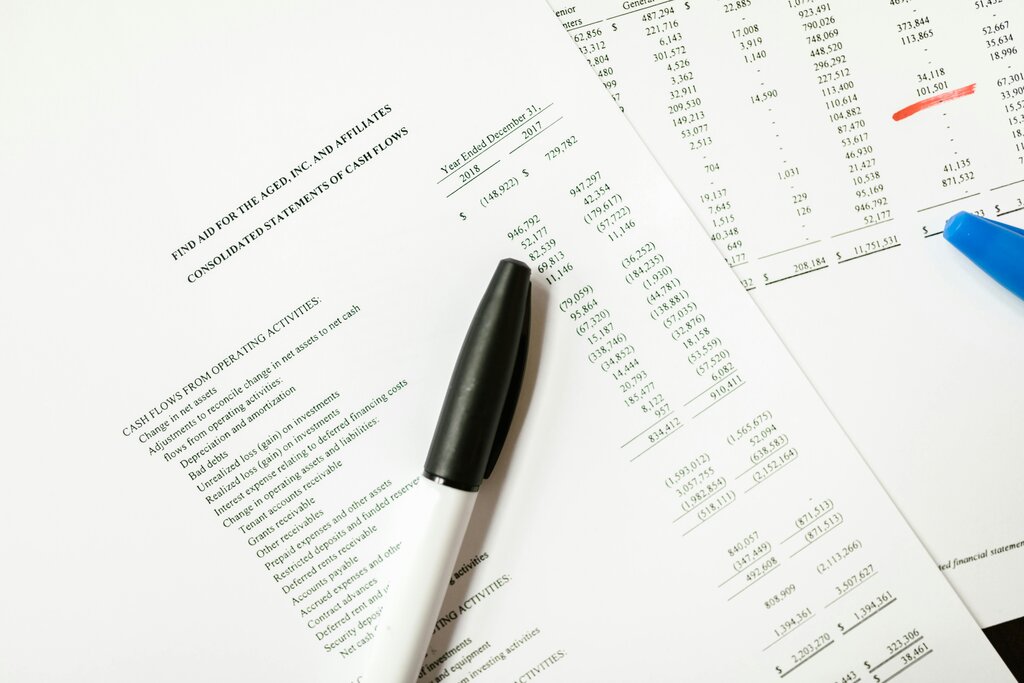
This statement is broken into three parts:
-
Cash Flow from Operations: Cash generated from the company's core business activities. This is a key indicator of financial health.
-
Cash Flow from Investing: Cash spent on or received from investments, like buying new machinery or selling old buildings.
-
Cash Flow from Financing: Cash from investors or banks, such as taking out loans or issuing stock, and cash paid back to them, like repaying debt or paying dividends.
By adding the cash flows from these three activities, you can see whether the company's cash pile grew or shrank during the period.
Understanding all three statements is key. The income statement shows profitability, the balance sheet shows financial stability, and the cash flow statement shows liquidity. Together, they paint a full picture.
Now that you've got a handle on the three core statements, you're ready to test your knowledge.
Which financial statement provides a snapshot of a company's assets, liabilities, and equity at a single point in time?
A company can be profitable but still run out of cash. Which statement is most crucial for understanding why this might happen?