Decoding Course Numbers
Introduction to Course Numbering
What’s in a Number?
Think of a university's course catalog like a massive library. With thousands of classes, how do you find the right one? You use the course numbering system, a kind of academic Dewey Decimal System that organizes knowledge and guides you on your path.
At its core, a course number is a shorthand code. It tells you the subject area (like History or Biology), the academic level (is this a beginner or advanced class?), and how it connects to other courses. This system prevents a first-year student from accidentally stumbling into a senior-level quantum physics seminar. It creates a clear, logical progression from introductory concepts to specialized knowledge.
Course numbers are like a code, telling you a class's subject, its difficulty, and where it fits in your educational journey.
A Brief History
In the early days of higher education, when colleges were small, course lists were simple. A student might just study a set curriculum of classics, rhetoric, and mathematics. There was no need for a complex organizational system.
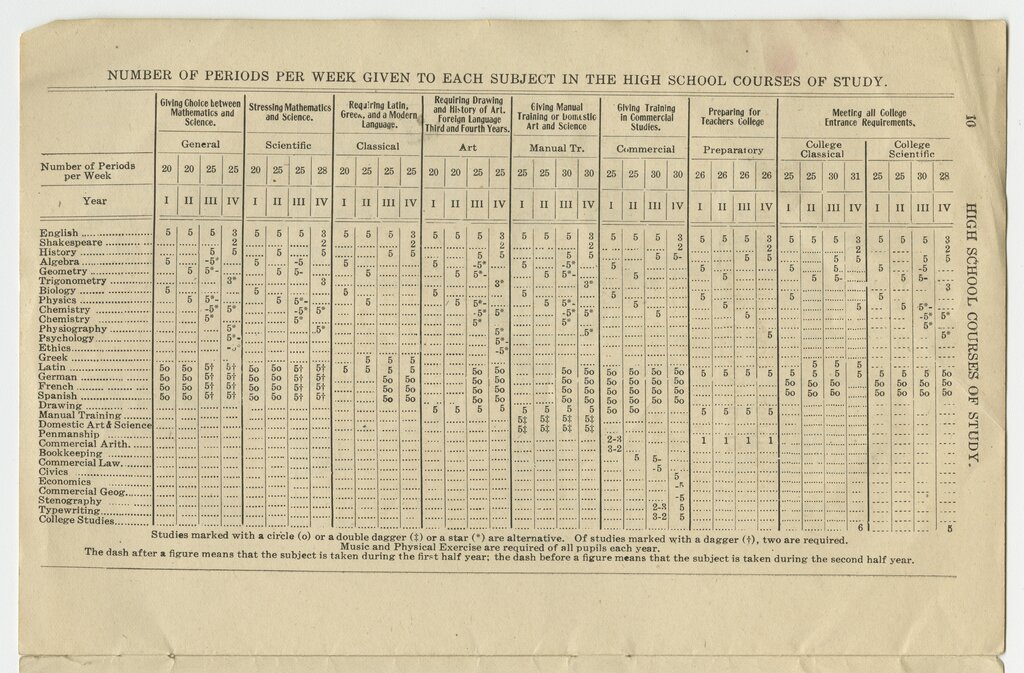
But as universities expanded in the late 19th and early 20th centuries, the number of subjects and courses exploded. Suddenly, institutions needed a way to manage hundreds of classes and guide thousands of students. The course numbering system was born out of this need for order. It was a practical solution to a growing complexity, allowing both faculty and students to navigate an increasingly diverse academic landscape.
Decoding the System
While specific systems vary between institutions, the general principles are remarkably consistent. The numbers aren't random; they’re packed with information.
Course Level: The first digit of a course number usually indicates its level. A 100-level course (like PSYC 101) is typically an introductory class for first-year students. A 200-level course is for sophomores, and so on. Courses numbered 500 and above are often reserved for graduate students.
Prerequisites: This system creates a clear path. To take a 200-level course, you've likely got to pass the related 100-level one first. The numbering makes prerequisites obvious, ensuring students build a solid foundation before tackling more advanced material.
Transferability: A standardized numbering logic also helps when students transfer between schools. An admissions office at one university can look at a transcript from another and quickly understand the level and content of the courses a student has taken. This makes the process of awarding transfer credit much simpler.
| Course Code | Typical Level | Common Description |
|---|---|---|
| ENGL 101 | Introductory | An entry-level composition course for first-year students. No prerequisites. |
| CHEM 210 | Intermediate | A sophomore-level organic chemistry course. Prerequisite: CHEM 101. |
| HIST 450 | Advanced | A senior-level seminar on a specialized topic. Requires junior standing. |
| PHYS 520 | Graduate | An advanced course for students pursuing a master's or Ph.D. |
This structure provides the roadmap for your entire degree, guiding you from one subject to the next.
What was the primary reason for the development of course numbering systems in universities?
Based on standard numbering conventions, which course would most likely be intended for a graduate student?