Decoding CML t9:22
Introduction to Chromosomal Translocations
When Chromosomes Swap Pieces
Your body is built from trillions of cells, and each one contains a complete set of instructions in the form of DNA. To keep this massive amount of information organized, the DNA is tightly coiled into structures called chromosomes. You can think of your 46 chromosomes as a set of encyclopedias, with each volume holding critical information for your cells to function.
Normally, these volumes stay intact. But sometimes, a major error occurs. A chunk of one chromosome can break off and get attached to a completely different chromosome. This mix-up is a type of genetic mutation.
translocation
noun
A type of chromosomal abnormality in which a chromosome breaks and a portion of it reattaches to a different chromosome.
Imagine tearing a chapter out of the history encyclopedia and accidentally gluing it into the middle of the science encyclopedia. The history book is now missing information, and the science book has a chapter that doesn't belong, potentially disrupting its original content. This is essentially what happens during a chromosomal translocation.
How Does This Happen?
Our DNA isn't invincible. Chromosomes can break for various reasons. Sometimes it's due to external factors, like exposure to certain chemicals or high levels of radiation. Other times, breaks happen spontaneously as cells divide and copy their DNA.
Our cells have sophisticated machinery to repair these breaks. Most of the time, they do a perfect job of gluing the broken ends back together. But occasionally, the repair system makes a mistake. It might connect a broken piece from one chromosome to a break on a completely different chromosome. This faulty repair is what creates a translocation.
The Genetic Consequences
The impact of a translocation depends entirely on where the breaks occur. If the breaks happen in an area with no critical genetic information, there might be no effect at all. But if the breaks disrupt important genes, serious problems can arise.
There are two main ways this can happen:
-
Gene Disruption: A break can occur right in the middle of a gene, splitting it in two. The gene's instructions become unreadable, and it can no longer produce the protein it was supposed to make.
-
Fusion Genes: The cell might stitch pieces of two different genes together. This creates a brand new, hybrid gene called a fusion gene. This new gene can issue harmful commands, such as telling the cell to grow and divide uncontrollably, a hallmark of cancer.
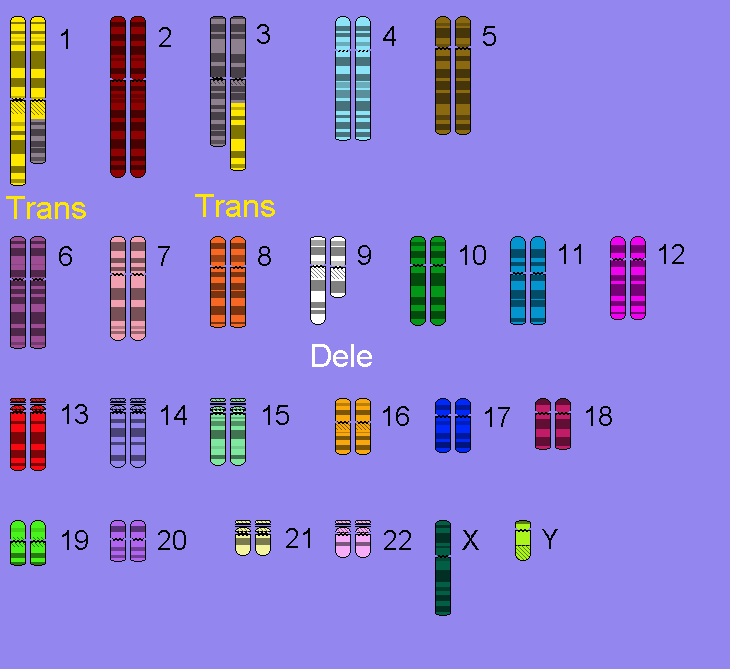
Because they can create these powerful cancer-promoting genes, translocations are often found in hematologic malignancies, which are cancers affecting the blood, bone marrow, and lymph nodes.
For example, a specific translocation between chromosome 8 and chromosome 14 is a key driver of Burkitt's lymphoma, a fast-growing cancer of the immune system.
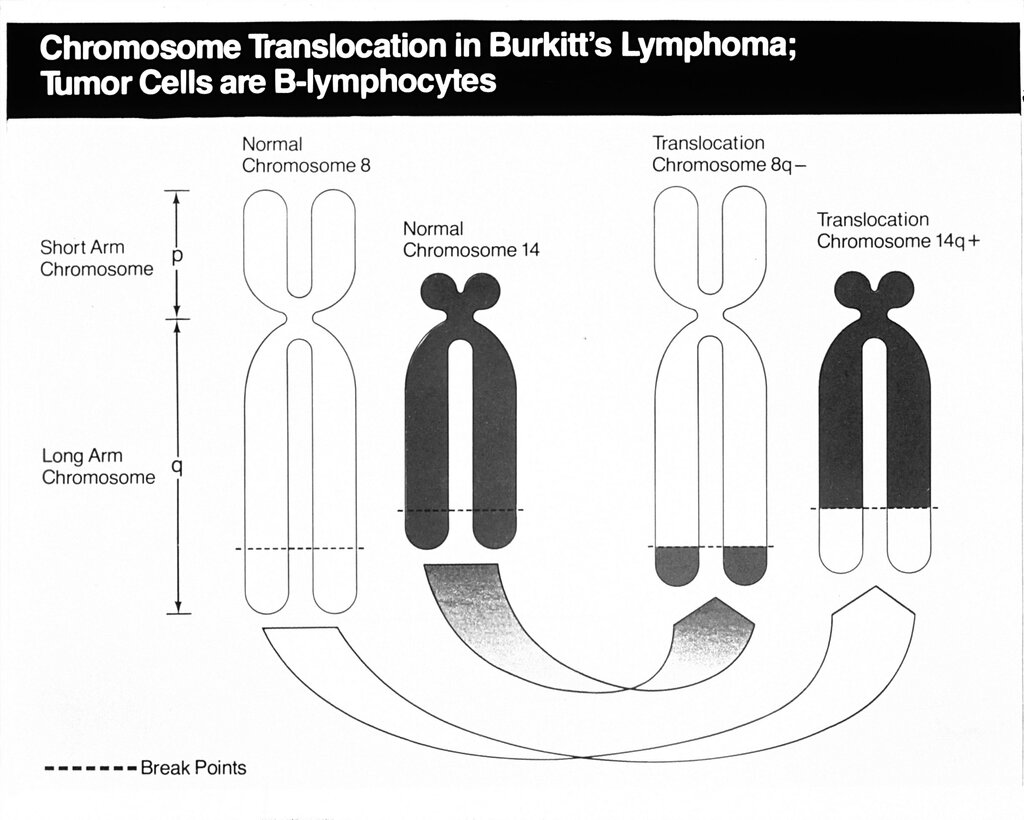
Similarly, a translocation between chromosomes 15 and 17 is the defining feature of Acute Promyelocytic Leukemia (APL). Identifying these specific translocations is crucial for diagnosing these diseases and choosing the right treatment.
Let's review what we've covered about these chromosomal mix-ups.
What is a chromosomal translocation?
Which of the following best describes how a translocation occurs?