Decoding Chemistry Diagrams
Atomic Structure
The Building Blocks of Everything
Everything you see, touch, and breathe is made of atoms. They are the fundamental units of matter. But atoms themselves are made of even smaller pieces called subatomic particles.
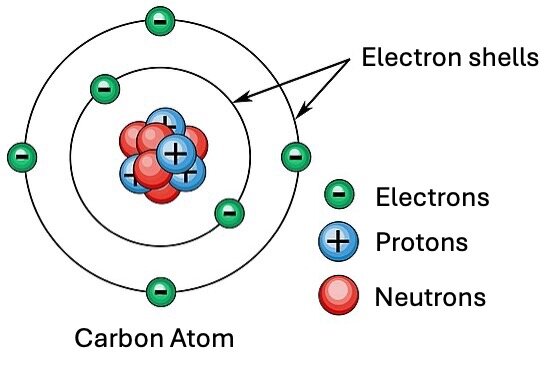
There are three main types: protons, neutrons, and electrons. Protons and neutrons cluster together in the center of the atom, forming a dense core called the nucleus. Electrons, which are much smaller and lighter, zip around the nucleus in a cloud of motion.
Each particle has a distinct electrical charge. Protons are positive (+), electrons are negative (–), and neutrons have no charge at all. In a neutral atom, the number of protons is equal to the number of electrons, so their charges cancel each other out.
| Particle | Charge | Location | Relative Mass |
|---|---|---|---|
| Proton | +1 | Nucleus | ~1 |
| Neutron | 0 | Nucleus | ~1 |
| Electron | -1 | Outside Nucleus | ~1/1836 |
The strong attraction between the positive protons in the nucleus and the negative electrons is what holds the atom together.
An Atom's Identity
What makes one element different from another? It all comes down to the number of protons.
The atomic number (Z) is the number of protons in an atom's nucleus. This number is unique to each element. For example, every hydrogen atom has exactly one proton (Z=1). Every carbon atom has six protons (Z=6). If an atom had seven protons, it would be nitrogen, not carbon.
The mass number (A) is the total count of protons and neutrons in the nucleus. Electrons are so tiny their mass is usually ignored in this calculation.
We can represent an atom's composition using this notation:
Where X is the element symbol, A is the mass number, and Z is the atomic number. For a carbon atom with 6 protons and 6 neutrons, the notation would be .
Atomic Number (Z) = Number of Protons Mass Number (A) = (Number of Protons) + (Number of Neutrons)
Since the atomic number defines the element, it's sometimes omitted. You might just see , because any atom of carbon (C) must have 6 protons.
Same Element, Different Mass
While the number of protons for an element is fixed, the number of neutrons can vary. Atoms of the same element with different numbers of neutrons are called isotopes.
Let's look at carbon again. Most carbon atoms have 6 neutrons, giving them a mass number of 12 (carbon-12). But some have 7 neutrons (carbon-13) or even 8 neutrons (carbon-14). They are all still carbon atoms because they all have 6 protons.
Because they have the same number of protons and electrons, isotopes have nearly identical chemical properties. The main difference is their mass.
Where Electrons Live
Electrons don't just wander randomly around the nucleus. They are organized into specific energy levels called electron shells. Think of these like concentric layers of an onion, with each layer farther from the center representing a higher energy level.
The first shell, closest to the nucleus, can hold a maximum of 2 electrons. The second shell can hold up to 8 electrons, and the third can hold up to 18, though it becomes stable with 8. Electrons will always fill the lowest energy shells first before moving to higher ones.
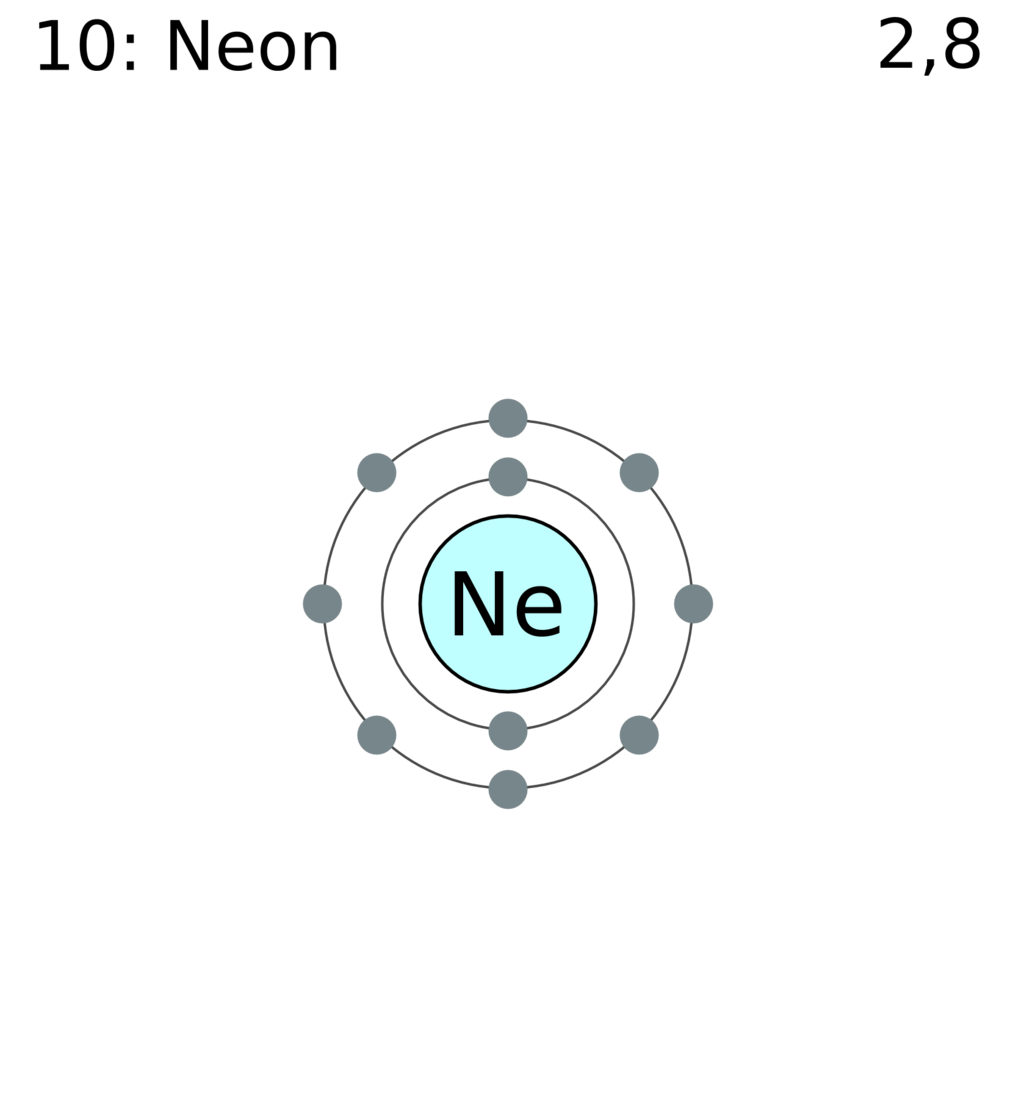
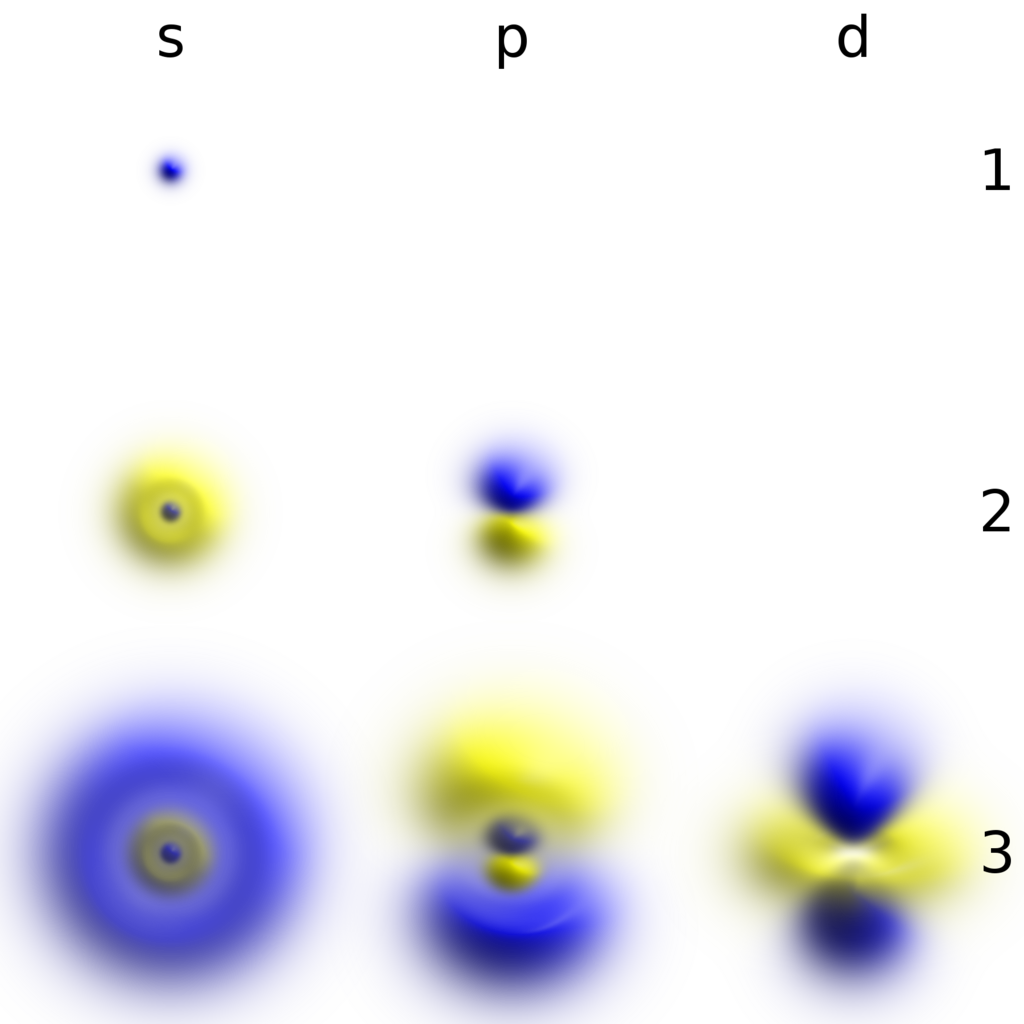
But the model of simple circular shells is a bit too simple. In reality, these shells are made up of one or more sub-regions called orbitals. An orbital is a three-dimensional space where an electron is most likely to be found.
Orbitals come in different shapes, designated by letters like s, p, d, and f. An s-orbital is spherical, while p-orbitals are shaped like dumbbells. Each orbital can hold a maximum of two electrons. Understanding these shells and orbitals is key to understanding how atoms connect to form molecules.
Now let's check your understanding of these core concepts.
Which subatomic particles are found in the nucleus of an atom?
The atomic number (Z) uniquely defines an element.