Decoding Bird Sounds
Introduction to Bird Vocalizations
Songs vs. Calls
Not every sound a bird makes is a song. Ornithologists, the scientists who study birds, generally place bird sounds into two main categories: songs and calls. The difference is all about complexity and purpose.
Think of a song as a bird's prepared speech. It’s often long, complex, and follows a specific pattern. Male birds are the primary singers, and they usually do it to attract a mate or to stake out their territory. You'll hear these intricate melodies most often during the breeding season, especially in the early morning.
A call, on the other hand, is more like a quick shout or a single word. Calls are short, simple sounds used for everyday communication. They're the workhorses of the bird world, used to warn of a predator, point out food, or keep in touch with the flock while flying. Both male and female birds use calls year-round.
Songs are for courting and territory. Calls are for everything else.
The Music of Nature
Learning to listen to birds is a lot like learning to appreciate music. You start by noticing the basic elements of the sound. When you're trying to describe a bird's vocalization, listen for three key features: pitch, tone, and rhythm.
Pitch refers to how high or low the sound is. Is it a high-pitched, thin whistle, or a low, deep hoot?
Tone, sometimes called timbre, is the quality of the sound. Does it sound clear and flute-like, or is it harsh and buzzy? Is it a sharp chip or a liquid gurgle?
Rhythm is the pattern and speed of the notes. Are the notes delivered in a rapid-fire sequence, or are they slow and deliberate? Is there a repeating pattern, like a musical phrase?
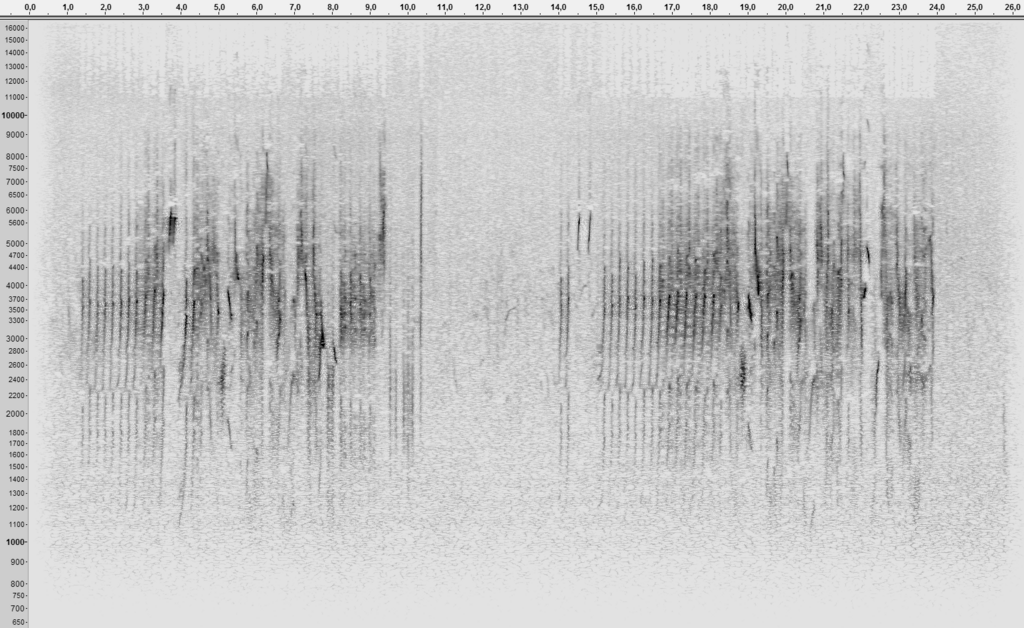
Paying attention to these three elements will help you create a mental sketch of the sound. This makes it much easier to remember and later identify.
Remembering the Sounds
Remembering a bird sound you've never heard before can be tricky. One of the most effective tools for this is using mnemonics. A mnemonic is a memory aid that turns a sound into a memorable phrase or series of syllables.
Instead of trying to recall a complex series of notes, you just have to remember a simple phrase that mimics the sound's rhythm and quality. This technique translates abstract sounds into concrete language, which our brains are very good at remembering.
| Sound | Possible Mnemonic |
|---|---|
| A three-note, slurred whistle | Oh, dear me |
| A quick, rising buzz | Zeeee-up! |
| A cheerful, repetitive chant | Cheer-up, cheer-up, cheerily |
The best mnemonics are often the ones you create yourself. What a bird's song sounds like to you is personal. The key is to find a phrase that sticks in your mind and instantly brings the sound back to you.
Ready to check your understanding? Let's see what you've learned about the basics of bird sounds.
What is the primary purpose of a bird song, as opposed to a bird call?
If you describe a bird's vocalization as "harsh and buzzy," which characteristic of the sound are you focusing on?
By learning to distinguish between songs and calls and paying attention to their musical qualities, you're building a solid foundation for identifying the birds around you just by listening.