Decoding BCBS 637
Introduction to Healthcare Claims Processing
What is a Healthcare Claim?
When you visit a doctor, the story doesn't end when you walk out the door. The clinic or hospital needs to get paid for the services they provided. Instead of sending the full bill directly to you, they send a detailed invoice to your insurance company. This invoice is called a healthcare claim.
A claim is an itemized request for payment that a healthcare provider submits to an insurer. It's the bridge between the medical care you receive and the financial process that covers its cost.
Think of it like this: You use your company credit card for a business lunch. You don't pay out of pocket. Instead, you submit an expense report to your company with the receipt. The company reviews it and pays the credit card bill. A healthcare claim works in a similar way, but with a lot more detail. It lists every single service, from the doctor's time to lab tests and medical supplies, each with a specific code.
The Key Players
Three main groups are involved in every healthcare claim. Understanding their roles makes the whole process easier to follow.
| Player | Role |
|---|---|
| Patient | The person who receives medical care. You. |
| Provider | The entity that delivers the care, like a doctor, clinic, or hospital. |
| Payer | The organization that pays for the care, usually an insurance company. |
Sometimes, another player joins the mix: a clearinghouse. This is a third-party company that acts as a go-between. Providers send their claims to the clearinghouse, which scrubs them for errors and formats them to meet the payer's specific requirements before passing them along. This helps reduce rejections and speeds up payments.
The Claim's Journey
A claim goes through several steps, starting from the moment you leave the provider's office. This entire workflow is often called the Revenue Cycle Management (RCM) process.
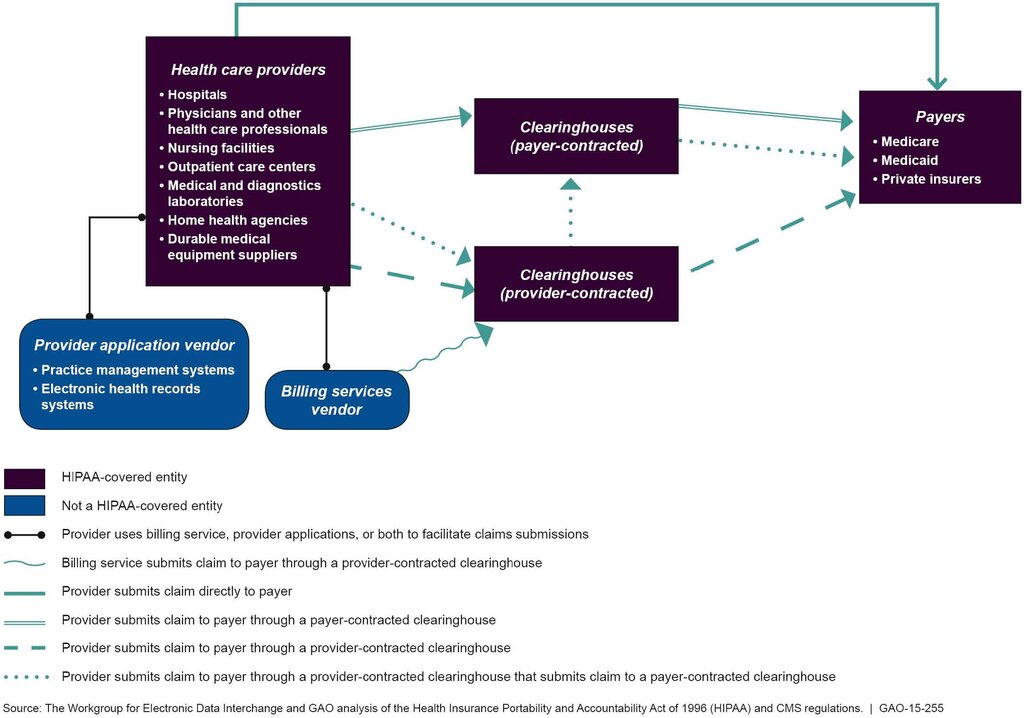
First is claim submission. The provider’s billing department gathers all the information from your visit. They translate the services you received into standardized medical codes and put them onto a claim form. This form includes your personal information, your insurance details, and the codes for your diagnosis and treatments. Then, they send this digital package to the payer, often via a clearinghouse.
Next comes adjudication. This is the review phase. The payer puts the claim under a microscope to make a decision.
adjudication
noun
The process by which an insurance company reviews a claim to determine its financial responsibility.
During adjudication, the insurance company checks several things:
- Is the patient’s policy active?
- Are the services listed on the claim covered by the plan?
- Was the treatment medically necessary?
- Are there any obvious errors in the coding or patient information?
Based on this review, the payer will approve the claim, deny it, or reject it. A denied claim means the payer refuses to pay. A rejected claim is sent back to the provider due to errors, like a typo in a name or policy number. Rejected claims can usually be fixed and resubmitted.
It represents the full financial journey of a patient, from their first appointment and insurance verification to final payment and reconciliation.
Finally, we reach payment. Once a claim is approved, the payer sends payment to the provider for the covered amount. The payer also sends an Explanation of Benefits (EOB) to the patient. This isn't a bill. It's a statement that details what the insurance paid for, what it didn't, and why. At the same time, the provider receives a document called a Remittance Advice (RA) with the same payment details.
If there's any remaining balance after the insurance payment, like a copay, deductible, or coinsurance, the provider will then send a bill to the patient. This final step is called reconciliation, where the provider's books are balanced for that visit.
Ready to check your understanding?
What is the best definition of a healthcare claim?
The process of an insurance company reviewing a claim to check for policy coverage, medical necessity, and errors is called:
That's the basic lifecycle of a healthcare claim. While the details can get complex, the core process follows this path from service to payment.