Decoding Balance Sheets
Balance Sheet Basics
A Financial Snapshot
Think of a balance sheet as a financial photograph of a company, frozen at a single moment in time. It doesn't show performance over a month or a year; it shows exactly where the company stands on one particular day. Its purpose is to present a clear picture of what a company owns and what it owes.
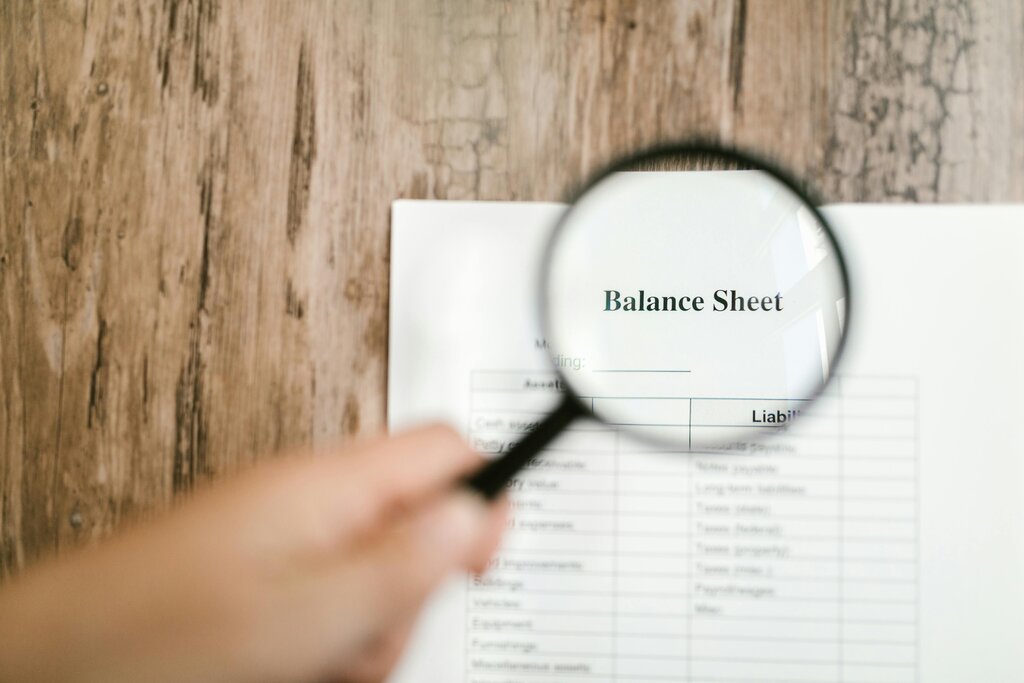
This snapshot is built from three core components. Understanding them is the key to understanding the balance sheet itself.
The Three Components
Every balance sheet is organized into three main sections: assets, liabilities, and shareholders' equity.
Asset
noun
Anything of economic value owned by a company. This includes cash, inventory, equipment, and buildings.
Assets are the resources a company uses to operate and generate future income. They are typically listed first on the balance sheet.
Liability
noun
Anything the company owes to others. This includes loans, accounts payable (bills from suppliers), and wages owed to employees.
Liabilities represent the company's financial obligations. They are claims that outsiders have on the company's assets.
Equity
noun
The value remaining in the company after all liabilities have been subtracted from the assets. It represents the ownership stake of the shareholders.
You can think of shareholders' equity as the net worth of the company. It's what would be left over for the owners if the company sold all its assets and paid off all its debts.
The Accounting Equation
These three components are linked by a simple but powerful rule: the accounting equation. It's the foundation of the balance sheet and the reason it's called a balance sheet.
The equation ensures that a company's assets are always equal to the sum of its liabilities and its shareholders' equity.
The logic is straightforward. Everything a company owns (its assets) must have been financed by either borrowing money (liabilities) or through investment from its owners (equity). There are no other possibilities. The sources of funds must equal the uses of funds.
This equation must always, without exception, be in balance. If it's not, there's an error in the accounting.
By providing this structured view, the balance sheet allows investors, creditors, and managers to quickly assess a company's financial position. It's the starting point for understanding a company's strengths and weaknesses.