Decoding ЙЙ ЯЯ
Russian Keyboard Layouts
The Russian Keyboard
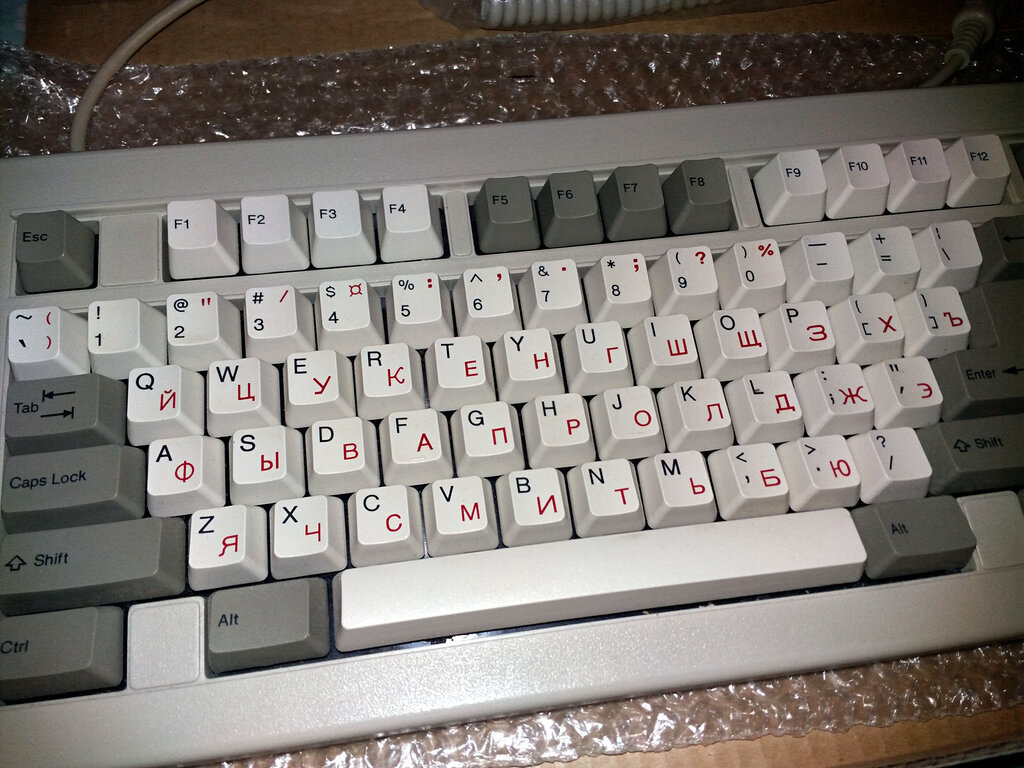
When you sit down at a computer in Russia, you won't find the familiar QWERTY layout. Instead, you'll see a keyboard designed specifically for the Cyrillic alphabet. The standard layout is called JCUKEN (ЙЦУКЕН).
JCUKEN gets its name from the first six letters on the top row of the keyboard: Й, Ц, У, К, Е, and Н.
This might seem intimidating, but the principle behind it is the same as QWERTY. The layout was designed to place the most frequently used letters in the Russian language in the most accessible positions, particularly on the home row. This helps native speakers type quickly and efficiently. Just as 'A', 'S', 'D', and 'F' are under your fingertips in English, common Russian letters like 'О', 'А', 'В', and 'П' are in prime positions on the JCUKEN layout.
A Brief History
The JCUKEN layout has a history that goes back to typewriters. While various layouts existed before, the current standard for computers is based on a version that was formalized in the Soviet Union. This standardized layout made the transition from mechanical typewriters to digital keyboards much smoother for millions of people.
An Easier Alternative
For those who didn't grow up using JCUKEN, learning a completely new keyboard layout can be a challenge. That's where phonetic keyboards come in. These alternative layouts are designed for people who are already familiar with a Latin-based keyboard like QWERTY.
The idea is simple: map Cyrillic letters to Latin keys that make a similar sound. For example, the 'A' key types the Cyrillic 'А', the 'B' key types 'Б', the 'D' key types 'Д', and so on. This is often called a 'translit' keyboard, as it's based on transliteration.
Phonetic layouts make it much easier for learners or non-native speakers to type in Russian without having to memorize a completely new key arrangement. It allows you to 'sound out' the words as you type.
Most modern operating systems allow you to easily switch between the standard JCUKEN and various phonetic layouts. This flexibility means you can choose the method that works best for you. If you plan on typing in Russian frequently, learning the official JCUKEN layout is the most efficient option in the long run. For occasional use, a phonetic layout is a perfectly practical choice.
Let's check what you've learned about these keyboard layouts.
What is the name of the standard keyboard layout for the Cyrillic alphabet in Russia?
The design of the JCUKEN layout is based on the principle of placing the most frequently used letters in the most accessible positions.
Understanding these different layouts is a practical first step for anyone looking to type in Russian.