Decode Company Culture for Behavioral Interviews
Understanding Company Culture
What Is Company Culture?
Think of company culture as the personality of a workplace. It’s the shared set of values, beliefs, and practices that shape how people behave and interact. It’s the office's unwritten rules and its overall vibe—from how people dress and communicate to how they celebrate success or handle failure.
Every organization has a culture, whether it's intentionally created or not. Some are fast-paced and competitive, while others are relaxed and collaborative. One isn't necessarily better than another, but the right culture for you can make a huge difference in your job satisfaction and performance.
Culture is the sum of everyone's actions. It’s what happens when the CEO isn't in the room.
The Building Blocks of Culture
Company culture isn't just one thing; it's a mix of several key components that work together. Understanding these pieces helps you see the bigger picture of what a company is all about.
A great place to start is with the company's mission and vision. The mission statement declares the company's purpose—what it does, who it serves, and why it exists. The vision statement looks to the future, describing what the organization hopes to become. These guiding statements set the tone for the entire company and influence every decision.
Core values are the principles that guide a company's actions. They are the bedrock of its culture. These values define what's important to the organization and set expectations for how employees should behave.
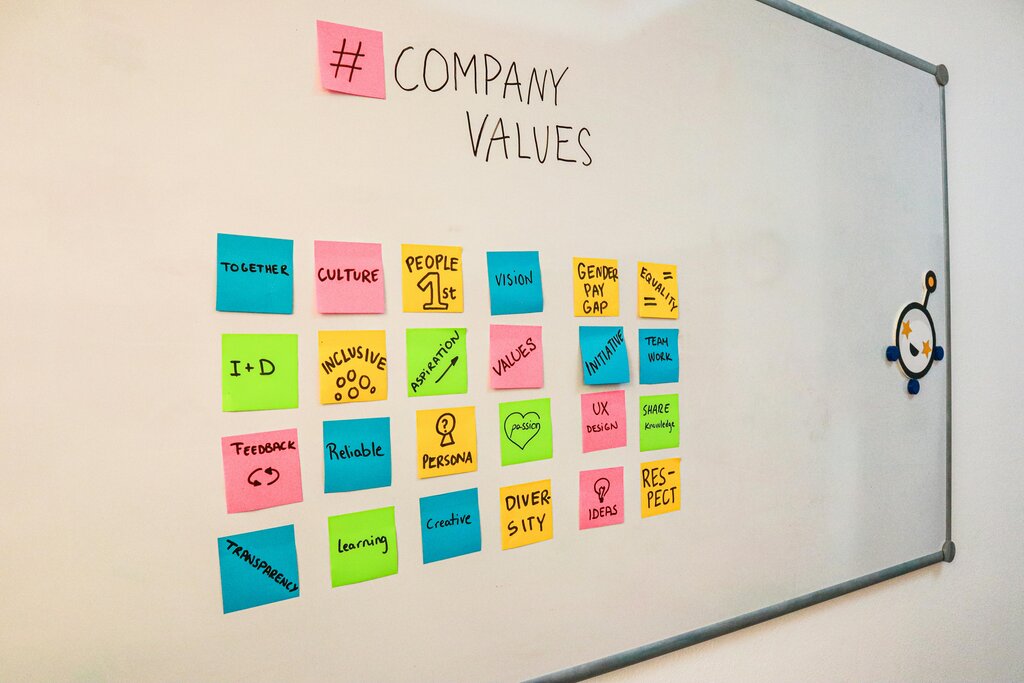
Your company’s core values, vision, and mission are the building blocks of your culture.
The work environment is another crucial piece. This includes the physical setting—is it an open-plan office, a sea of cubicles, or fully remote? It also covers the social atmosphere. Is communication formal or informal? Are working hours flexible or rigid? These elements shape daily life at the company.
Finally, leadership style plays a massive role. How do managers interact with their teams? A top-down, hierarchical style creates a very different culture than a flat structure where collaboration is the norm. The way leaders communicate, make decisions, and give feedback is often the most visible expression of a company's culture.
Why Culture Matters
Finding a job is about more than just the role and the paycheck. The right company culture can be the difference between a job you tolerate and a career you love. When your personal values and work style align with the company's culture, you're more likely to feel engaged, motivated, and happy.
This alignment, often called "culture fit," benefits everyone. For employees, it leads to higher job satisfaction, better performance, and stronger relationships with colleagues. You feel like you belong, which makes it easier to contribute your best work.
A good culture fit means you can be yourself at work, without feeling like you have to change your personality to succeed.
For companies, a strong, positive culture helps attract and retain talented people. It reduces turnover, improves productivity, and creates a more cohesive team. When everyone is rowing in the same direction, guided by shared values, the entire organization is more likely to succeed.
Now, let's test your understanding of these core concepts.
What is the best description of company culture?
Which component of culture declares a company's current purpose—what it does, who it serves, and why it exists?
By understanding these fundamentals, you're better equipped to identify workplaces where you won't just work, but thrive.