Deciphering Scientific Research
Research Article Anatomy
The IMRAD Blueprint
Scientific papers can feel dense and intimidating. But once you understand their structure, they become much easier to navigate. Most research articles in the sciences and social sciences follow a standard format called IMRAD. It stands for Introduction, Methods, Results, and Discussion.
Research papers follow the well-known IMRD format — an abstract followed by the Introduction, Methods, Results and Discussion.
This isn't just an arbitrary convention. The IMRAD structure mirrors the scientific method itself: it starts with a question, describes an experiment to answer it, presents the findings, and then discusses what those findings mean. Think of it as the universal story structure for scientific discovery. Before we break down the IMRAD sections, let's start with the part you should always read first.
The Abstract: Your Roadmap
The abstract is a short, powerful summary of the entire paper, usually around 150-300 words. It's designed to give you a high-level overview so you can quickly decide if the article is relevant to your interests without having to read the whole thing. It's not part of the IMRAD structure, but it's your gateway to it.
A good abstract will briefly state:
- The background: Why was this study done?
- The methods: What did the researchers do?
- The key results: What did they find?
- The main conclusion: What does it all mean?
Because it covers so much ground so concisely, the abstract is often the last part of the paper the authors write. It's your first stop for a quick assessment of any article.
The Introduction: Setting the Stage
The introduction's job is to explain why the research was necessary. It acts like a funnel, starting with the broad background of the topic and gradually narrowing down to the specific problem the paper addresses. It sets the stage for the reader by summarizing the current state of knowledge in the field.
The most crucial part of the introduction is the identification of a "gap." The authors will explain what is already known and then point out what is still unknown or unresolved. This is the gap in the literature that their study aims to fill. The introduction culminates in a clear statement of the research question or —the specific, testable prediction the study was designed to investigate.
A strong introduction convinces the reader that the research question is important and that the study is a logical next step in the field.
Methods, Results, and Discussion
These three sections form the core of the paper, detailing what was done, what was found, and what it means.
The Methods Section This is the recipe book for the study. It provides a detailed account of exactly how the research was conducted. It should be so clear and thorough that another researcher could, in theory, replicate the study just by reading this section. It covers the materials used, the participants or subjects involved, the experimental procedures, and the statistical techniques used for analysis.
The Results Section This section presents the findings of the study in a direct, factual manner, without any interpretation or speculation. It's the raw data. Here you'll find tables, figures, and graphs summarizing the data, accompanied by text that points out the key findings. This is where the authors answer the research question they posed in the introduction.
The Discussion Section If the results section is the "what," the discussion is the "so what?" This is where the authors interpret their findings, explaining what they mean in the context of the field. They will connect their results back to the identified in the introduction, explain how their work helps to fill that gap, and compare their findings to previous studies. It's also where they acknowledge the study's limitations and often suggest directions for future research.
| Section | Key Question | Purpose |
|---|---|---|
| Introduction | Why was the study done? | Provides context and identifies a research gap. |
| Methods | How was the study done? | Details the experimental procedure for replication. |
| Results | What was found? | Presents the raw findings without interpretation. |
| Discussion | What does it mean? | Interprets the results and discusses implications. |
Reading Strategically
Knowing the IMRAD structure allows you to read a paper more efficiently. Instead of reading linearly from start to finish, try this approach for a quick, deep understanding:
- Read the Abstract first. This tells you if the paper is worth your time.
- Jump to the Introduction, but focus on the last paragraph to find the specific research question or hypothesis.
- Then, skip to the Discussion. This is where the authors explain their main conclusions and the significance of their work in their own words.
- Examine the figures and tables in the Results section. A good visual can often tell the story of the findings more clearly than the text.
- Finally, skim the Methods section. You usually only need to read this in detail if you are trying to replicate the study or have specific questions about their experimental design.
By treating a research paper less like a novel and more like a reference map, you can extract the most important information quickly and effectively.
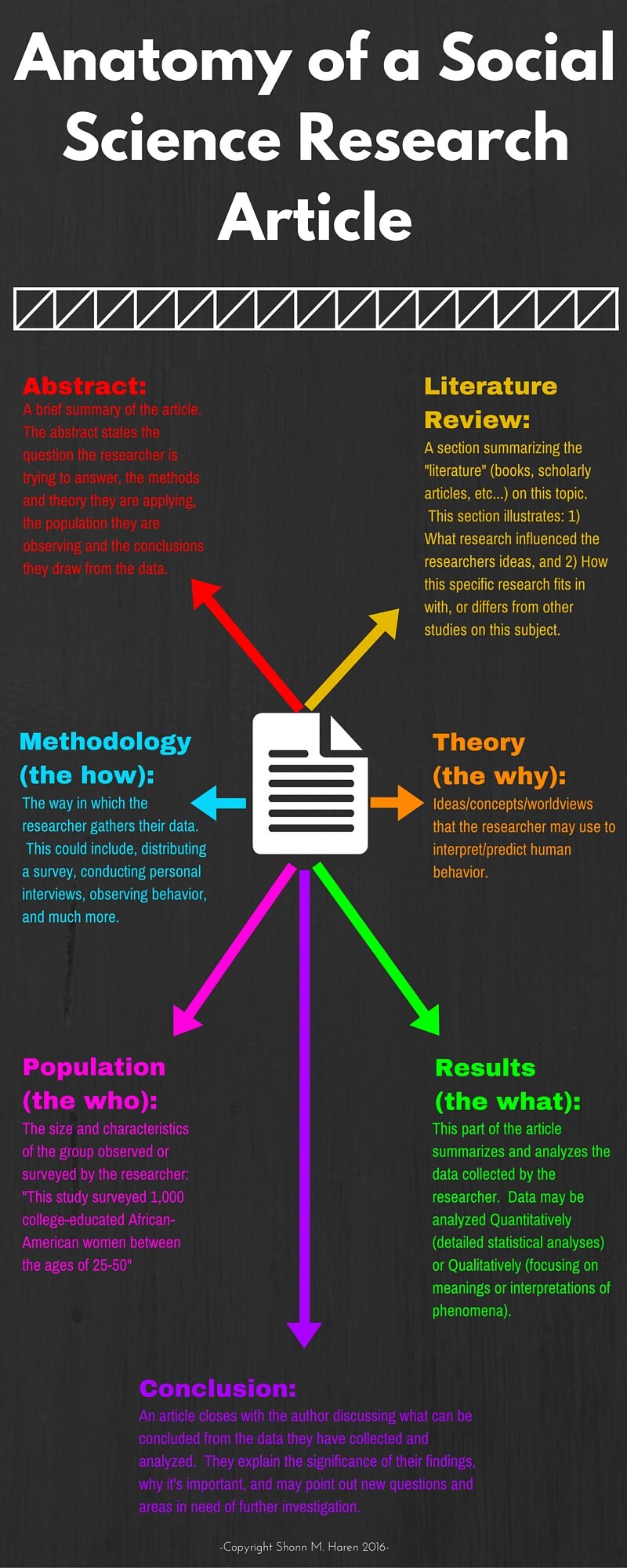
Now you have a solid framework for dissecting almost any research article you encounter. Let's test your understanding.
What does the acronym IMRAD stand for in the context of a scientific paper?
Which section of a paper is designed to be a concise, high-level summary of the entire study, allowing readers to quickly assess its relevance?