Decimals Fractions and Percentages
Understanding Fractions
Parts of a Whole
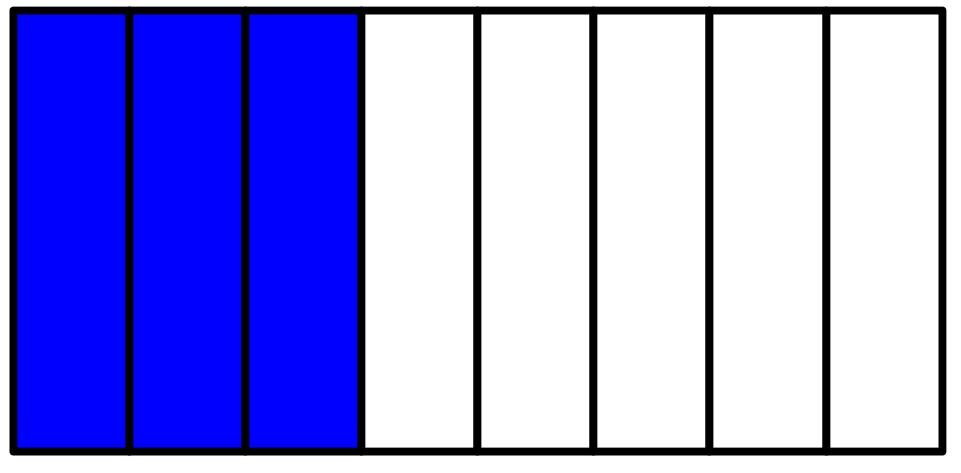
A fraction is just a way of talking about a piece of something. Imagine you have a pizza cut into 8 equal slices. If you eat 3 of those slices, you've eaten a fraction of the pizza. You didn't eat the whole thing, just a part of it.
Fractions are written with one number sitting on top of another, separated by a line. This isn't just for looks; each number has a specific job.
The top number is the numerator. It tells you how many parts you have. The bottom number is the denominator. It tells you how many equal parts the whole is divided into.
In our pizza example, the fraction would be:
The numerator is 3 because you have three slices. The denominator is 8 because the whole pizza was cut into eight slices. Simple as that.
Types of Fractions
Not all fractions look the same. Depending on the numerator and denominator, we give them different names.
Proper Fraction
other
A fraction where the numerator is smaller than the denominator. This represents a value less than one whole.
Most of the fractions you see in daily life are proper fractions, like asking for half a sandwich (1/2) or filling a gas tank three-quarters full (3/4).
Improper Fraction
other
A fraction where the numerator is greater than or equal to the denominator. This represents a value of one whole or more.
An improper fraction might seem strange, but it's just another way to count. If one pizza has 4 slices, and you have 5 slices total, you have 5/4 of a pizza. That means you have one whole pizza and one extra slice.
This leads us to our last type: mixed fractions. A mixed fraction is just an improper fraction written in a different way.
Mixed Fraction
other
A number that consists of a whole number and a proper fraction. It's a more intuitive way to write an improper fraction.
The mixed fraction means "one whole and one quarter." It's the exact same amount as . They are just two ways of saying the same thing.
Simplifying Fractions
Sometimes, a fraction can be written in a simpler way without changing its value. Think about a pizza cut into 4 big slices. If you eat 2 of them, you ate $2/4$ of the pizza. But you also ate half the pizza, right? So, $2/4$ is the same as $1/2$. When we go from $2/4$ to $1/2$, we are simplifying the fraction.
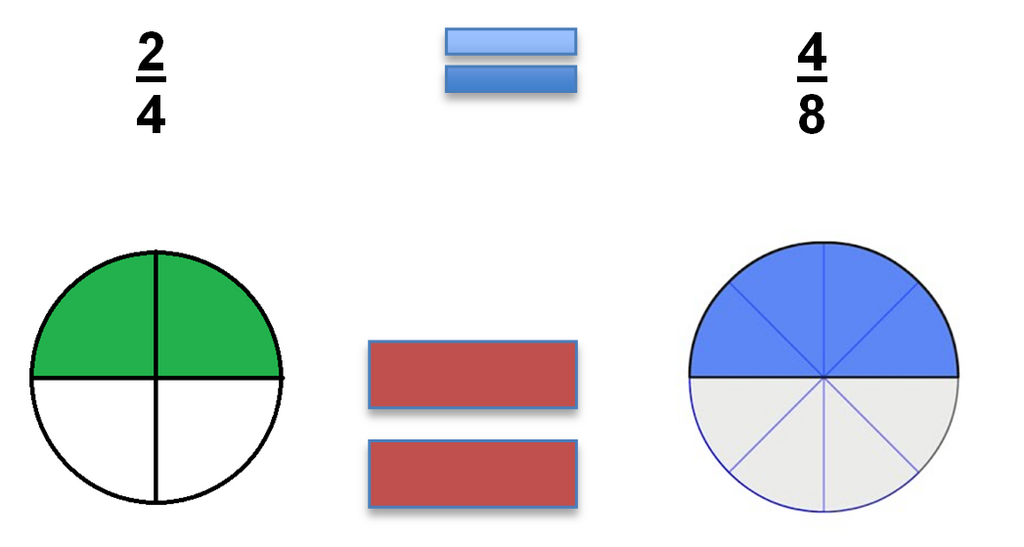
To simplify a fraction, you find the largest number that can divide both the numerator and the denominator evenly. This is called the greatest common factor (GCF).
Let's simplify the fraction $12/18$. What numbers divide evenly into 12? That would be 1, 2, 3, 4, 6, and 12. What about 18? That's 1, 2, 3, 6, 9, and 18. The largest number on both lists is 6. So, we divide both the top and bottom by 6.
So, $12/18$ simplified is $2/3$. We didn't change how much the fraction is worth, just the way it looks. Simplifying makes fractions easier to work with and understand at a glance.