Decentralized vs Centralized Information Markets
Architectural Mechanism Comparison
Order Books vs Code
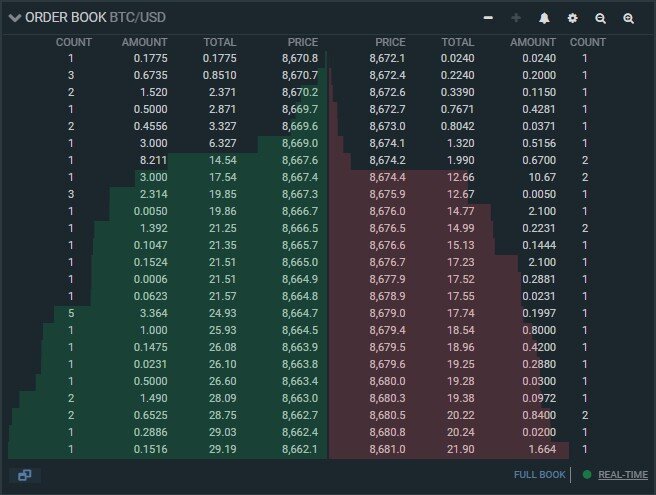
In a centralized prediction market, the architecture mirrors a traditional stock exchange. It uses a Central Limit Order Book (CLOB), which is essentially a digital ledger that matches buy orders with sell orders based on price and time priority. An institution acts as a trusted middleman, managing the order book, clearing trades, and holding user funds. This system is efficient and fast because all operations happen on a private, centralized server.
Think of a CLOB as an auctioneer. It constantly shouts out the best prices available and connects buyers and sellers who agree on a price.
Decentralized prediction markets, like Polymarket, often take a different approach. Instead of a central order book, many rely on an (AMM). An AMM is a smart contract that replaces the traditional buyer-seller matching system with a liquidity pool. Users trade directly against the pool, and an algorithm determines the price based on the ratio of assets in that pool. There is no central operator; the smart contract is the market.
| Feature | Central Limit Order Book (CLOB) | Automated Market Maker (AMM) |
|---|---|---|
| Mechanism | Matches individual buy and sell orders | Trades against a pooled fund (liquidity pool) |
| Price Discovery | Driven by the best bid and ask prices | Determined by a mathematical formula |
| Liquidity | Depends on active buyers and sellers at specific prices | Always available, but price can slip on large trades |
| Infrastructure | Centralized server | Smart contract on a blockchain |
Custody and Counterparty Risk
The most significant architectural split is custody. Centralized platforms are custodial. You deposit funds into an account they control. This introduces counterparty risk—the risk that the platform could become insolvent, get hacked, or freeze your assets. You are trusting the operator to act in good faith and maintain security.
Decentralized markets are non-custodial. Users interact with smart contracts directly from their own crypto wallets. The funds are held by the smart contract, not a company. The rules of engagement are coded and publicly visible on the blockchain. This design minimizes counterparty risk. If the smart contract is well-audited, your funds are only subject to the logic of the code itself, not the whims of a corporate entity.
Execution and Transparency
Trade execution is another key differentiator. In a decentralized market, execution is deterministic. When you send a transaction to a smart contract, it will execute according to its code, provided you pay the required gas fee. The entire process—your trade, its effect on the liquidity pool, and the resulting price change—is recorded publicly on the blockchain. This offers radical transparency. Anyone can verify the entire history of trades and the current state of the market.
On-chain, every transaction is a public record. In a centralized system, the order flow is a black box, visible only to the operator.
However, this transparency and determinism come at a cost. Blockchain transactions require gas fees, which can make market making—placing many small orders—prohibitively expensive, especially on congested networks. Centralized systems have no direct per-trade fees of this nature, allowing for high-frequency trading and more complex order types without the overhead of gas.
What is the primary mechanism many decentralized prediction markets use to facilitate trading, replacing the traditional buyer-seller matching system?
The risk that a platform operator could become insolvent, get hacked, or freeze your assets is known as __________.
Understanding these architectural trade-offs is key to evaluating the strengths and weaknesses of any prediction market.