Debunking the Ionian Myth to Logos Narrative
Orientalist Historiography Critique
The Myth of the 'Greek Miracle'
For a long time, the story of Western philosophy began with a flash of lightning. In the 6th century BCE, on the coast of Ionia in ancient Greece, human thought supposedly took a radical turn. This was the 'Greek Miracle'—a sudden, spontaneous eruption of reason from a world previously steeped in myth. This narrative, often called the shift from 'mythos to logos,' presents early Greek philosophy as a clean break from the past, an isolated event born purely from Greek genius.
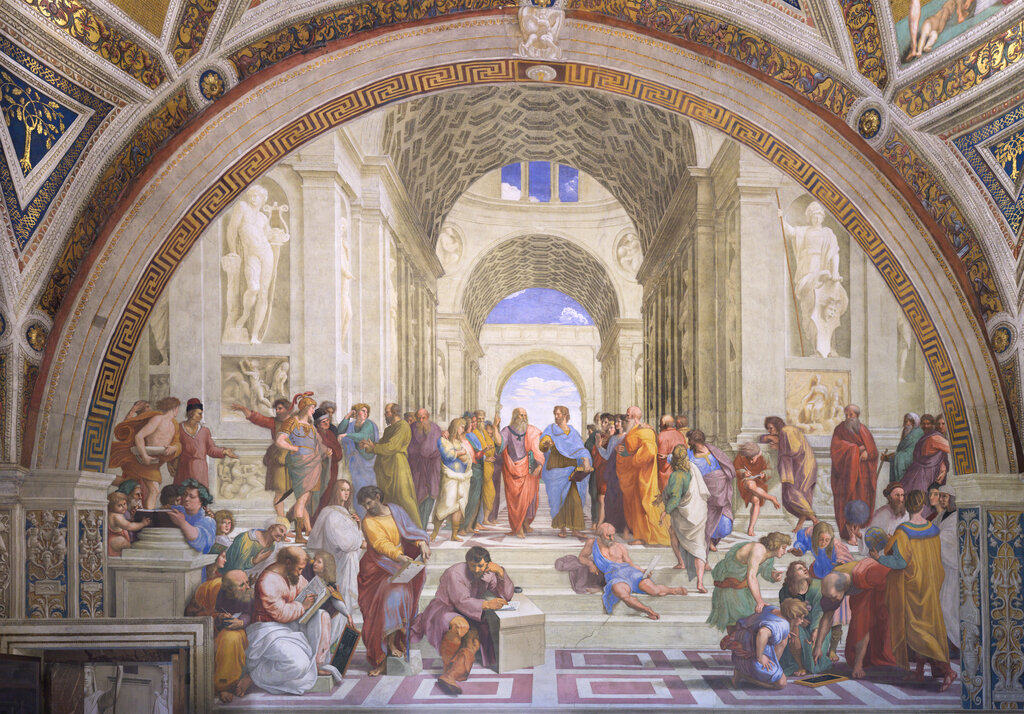
This idea of an intellectual big bang didn't come from the ancient Greeks themselves. It was constructed much later, largely by 19th and early 20th-century European scholars. One of its most influential champions was the Scottish classicist John Burnet. He argued forcefully that Greek philosophy and science were unique and self-contained achievements. In his view, the Ionians' turn toward naturalistic explanations for the cosmos was entirely original, owing nothing to the knowledge of neighboring civilizations in the Near East, like Babylon or Egypt. Burnet’s work helped solidify the idea of Greek thought as a 'pure' and unparalleled phenomenon.
Building a 'Rational' Europe
Why was this narrative so compelling? It served an important ideological purpose for 19th-century Europe. At a time of colonial expansion and rising nationalism, scholars sought to forge a distinct European identity rooted in a prestigious past. The 'Greek Miracle' provided a perfect origin story. It established a direct line from the 'rational' Greeks to modern Europeans, positioning Western civilization as the sole inheritor of logic and scientific thought.
This required creating a sharp division between 'The West' and 'The East.' The Occident, beginning with Greece, was framed as dynamic, progressive, and rational. In contrast, 'the Orient'—a vast and vaguely defined category including Egypt, Persia, and the rest of Asia—was portrayed as static, mystical, and despotic. This intellectual construction helped justify European dominance by suggesting a fundamental difference in how Eastern and Western minds worked. The 'Greek Miracle' wasn't just a historical theory; it was a cornerstone of a Eurocentric worldview.
By framing Greek thought as a sudden rupture, scholars created an intellectual lineage for Europe that was free from 'oriental' contamination.
Beyond a Sudden Spark
Today, this 'sudden rupture' thesis is viewed more as a historical artifact than a factual account. Modern historians and archaeologists see a much more complex picture. The transition from myth to logos was not an overnight switch but a gradual evolution, and mythological thinking continued alongside philosophy for centuries. Furthermore, the Ionian coast was not an isolated backwater; it was a bustling hub of maritime trade and cultural exchange. Ideas, technologies, and stories flowed freely between Greece, Egypt, and the civilizations of the Near East.
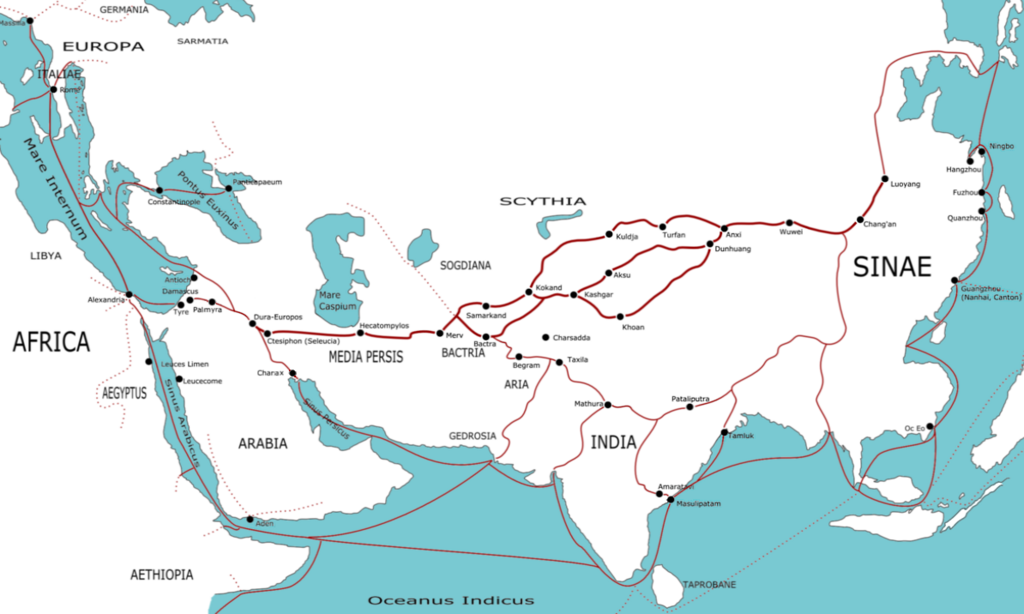
Acknowledging the influence of Babylonian astronomy or Egyptian geometry on early Greek thinkers doesn't diminish their achievements. Instead, it places them in their proper historical context. The real genius of the Ionians wasn't in creating reason out of thin air, but in synthesizing and transforming existing knowledge in new and revolutionary ways. Understanding the 'Greek Miracle' as a 19th-century construction helps us move past a simplistic origin story and appreciate the rich, interconnected world from which philosophy emerged.