Debunking Musonius Rufus: Historiographical Deconstruction
Philological Fragment Critique
The Echo of a Voice
The study of Gaius Musonius Rufus begins with a fundamental problem: he wrote nothing. Like Socrates, his philosophy was practiced through live, oral instruction. What we possess today as his teachings, the 'reliquiae' or remains, is a collection of fragments filtered through multiple layers of transcription and selection. Our primary access to his thought comes from notes taken by a student named Lucius, which were later excerpted and preserved by the 5th-century anthologist in his extensive compilation of Greek literature.
This transmission chain—from Musonius's spoken discourse to Lucius's notes to Stobaeus's anthology—presents a significant philological challenge. We are not reading Musonius directly. We are reading a version of Musonius curated by Lucius and then further filtered by Stobaeus, hundreds of years later. Each intermediary acted as an editor, whether consciously or not.
Intermediaries as Authors
Lucius was more than a stenographer. He structured the notes, likely organizing them into the dialectical format of discourses (διατριβαί) that we see in the fragments. This act of structuring is an act of interpretation. By choosing what to emphasize and how to frame the arguments, Lucius began the process of constructing a specific philosophical persona for his teacher. The 'raw' data of the lectures was immediately shaped into a literary product.
Stobaeus, working four centuries after Musonius, had his own agenda. His purpose was encyclopedic and didactic. He selected passages that fit his thematic structure, often focusing on ethics and practical wisdom. There is an ongoing scholarly debate about the extent of a potential Christianizing influence on his selections, which might have led him to favor certain aspects of Musonius’s Stoicism—particularly its emphasis on asceticism and virtue—while ignoring others that were less compatible with late antique sensibilities.
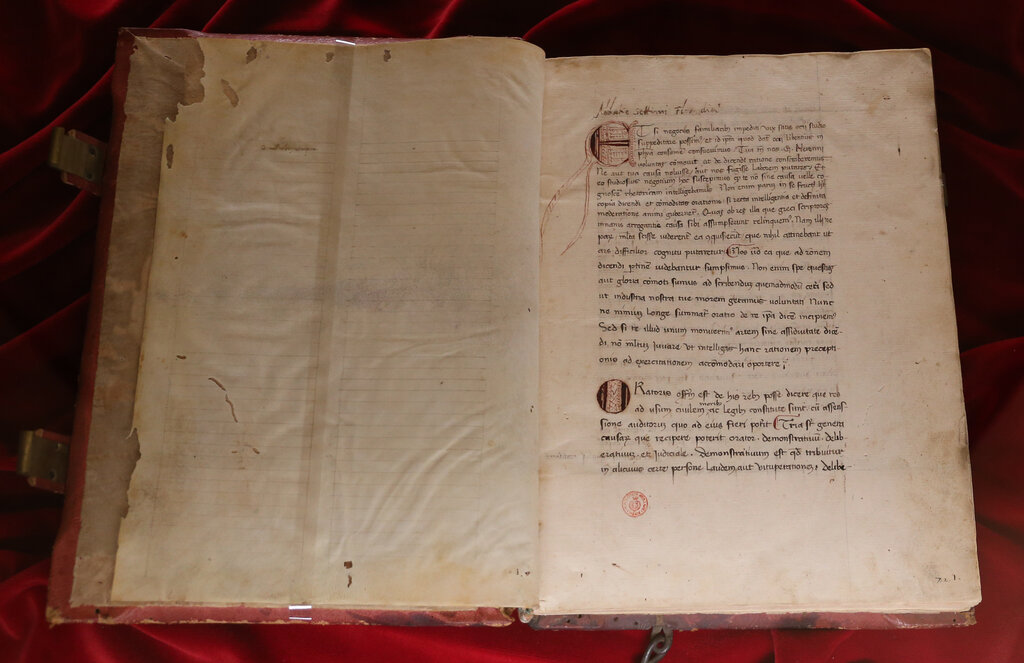
The foundational modern text for this analysis is Otto Hense’s 1905 critical edition, C. Musonii Rufi reliquiae. Hense meticulously compiled the fragments from Stobaeus and other minor sources, establishing the textual baseline. Philological work since Hense involves scrutinizing word choice, syntax, and argumentation to distinguish the different 'voices' in the text. Are certain rhetorical flourishes characteristic of Lucius? Do some thematic clusterings reflect the organizational principles of Stobaeus rather than Musonius? These questions are central to recovering a more authentic, if still incomplete, picture of the philosopher.
The Roman Socrates
One of the most significant editorial choices made by Lucius was the framing of Musonius according to the This is evident in the form of the fragments, which often depict Musonius engaged in question-and-answer dialectic, challenging the assumptions of his interlocutors. He is presented not as a lecturer delivering doctrine, but as a guide forcing students to arrive at ethical truths through their own reasoning.
This portrayal was a deliberate historiographical construction. By casting Musonius as a 'Roman Socrates,' Lucius created a powerful and recognizable image that aligned his teacher with the very archetype of philosophical inquiry. The emphasis on a lived, practical, and conversational ethics, rather than complex metaphysical theory, reinforces this persona. It presents Stoicism in its most accessible and Socratic form.
Since he himself wrote nothing, we have only the surviving fragments of his students Lucius and Epictetus to go on.
The oral tradition of Roman Stoicism was dynamic. A lecture hall with Musonius was an interactive event, not a passive reception of text. The fragments are the textual fossils of these live conversations. The dialectical structure is a ghost of that original performance, capturing the method but losing the spontaneity and specific context of the moment. Therefore, any critical reading of Musonius must remain aware of this gap between the spoken word and the written record. We are studying an echo, not the original voice.
Ready to test your understanding of these critical layers?
What is the fundamental problem facing scholars who study the philosophy of Gaius Musonius Rufus?
What is the correct chronological path through which Musonius Rufus's teachings have been passed down to us?
Ultimately, the challenge of the Musonius Rufus fragments is not a barrier to study but the very heart of it. Acknowledging the text as a construction shaped by Lucius and Stobaeus allows for a more nuanced and historically responsible engagement with the 'Roman Socrates.'